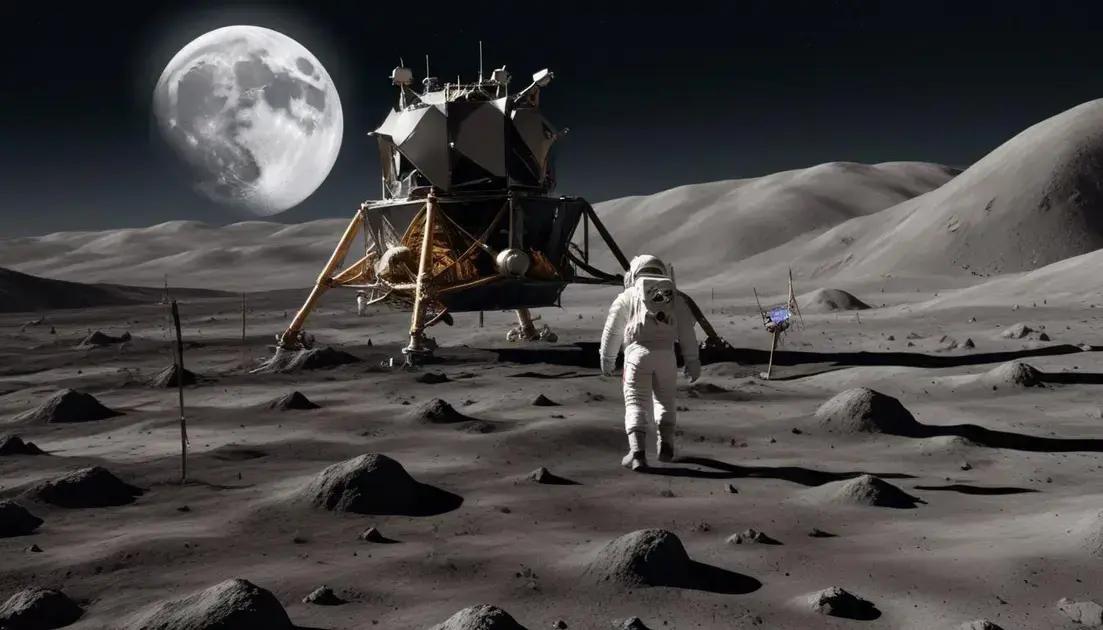
The Moon Landing: humanity’s greatest leap
The Apollo missions, including the historic moon landing, significantly transformed our understanding of space and technology. They ignited public interest in science and inspired future generations to pursue careers in STEM fields. The advancements in engineering and materials from these missions have influenced everyday technology. Additionally, the legacy of Apollo fosters international collaboration in space exploration, demonstrating the importance of teamwork in achieving unprecedented goals. Ultimately, the impact of the moon landing goes beyond space travel, inspiring innovation and exploration that continue to shape our future.
The Moon Landing marked a pivotal moment in human history, showcasing not just technological prowess but also an unyielding spirit of exploration. It’s fascinating to consider how far we’ve come since that first leap for mankind—who knows what else lies ahead?
The story behind the moon landing
The moon landing is one of the most exciting stories in history. On July 20, 1969, humans set foot on the moon for the first time. This giant leap was part of NASA’s Apollo 11 mission. Astronauts Neil Armstrong and Buzz Aldrin walked on the lunar surface while Michael Collins orbited above.
Before the landing, there were many challenges. Scientists and engineers worked hard to build rockets and equipment that could take people to the moon safely. The Saturn V rocket was a key player in this mission. It was the strongest rocket ever built at that time!
On that day, millions of people watched the landing on TV. When Armstrong stepped onto the moon, he famously said, “That’s one small step for man, one giant leap for mankind.” This moment united people worldwide and inspired future generations.
The mission didn’t just explore the moon. It also changed our understanding of space. Sample rocks and soil were brought back to Earth to study. These findings taught us about the moon’s formation and its history.
Moreover, the moon landing showed what humanity could achieve with hard work and cooperation. It proved that with dedication, we can overcome even the toughest obstacles. The story of the moon landing is not just about space; it’s about courage, science, and dreaming big.
Key technologies that enabled space travel
Space travel became possible through various key technologies. Each played a vital role in making missions like the moon landing a success. One major advancement was rocket technology. Rockets need powerful engines to break free from Earth’s gravity.
The Saturn V rocket, used in the Apollo missions, was an engineering marvel. It stood taller than a 36-story building and used multiple engines working together. This allowed it to send astronauts to the moon.
Another important technology is navigation systems. Accurate navigation helps spacecraft know their path in space. The Apollo Guidance Computer was one of the first to use digital technology for navigation. It was small but powerful and guided astronauts to the moon.
Communication systems also played a crucial role. They allowed mission control and astronauts to stay connected. This was important for safety and coordination during the missions. The signals had to travel across vast distances, making this technology complex but essential.
Life support systems ensured that astronauts could breathe and stay safe in space. These systems provided air, water, and food during their journey. They helped maintain a livable environment inside the spacecraft.
Each of these technologies helped build the foundation for space exploration. They show how innovation and teamwork can lead to amazing achievements beyond our planet.
The impact of the moon landing on science and technology
The moon landing had a huge impact on both science and technology. It changed how we explore space and understand our universe. One major effect was the advancement of materials science. Engineers developed stronger and lighter materials for space travel, which are now used in many products.
Imagine how our everyday lives changed! For example, the technology behind the lunar module led to better electronics in devices we use today. Innovations like miniaturization made gadgets smaller and more efficient.
The Apollo missions also sparked interest in science education. Many young people wanted to become scientists or engineers. This created a boost in STEM (Science, Technology, Engineering, and Mathematics) fields. Schools and universities began to focus more on these subjects to prepare future innovators.
Important developments in computers also emerged during this time. The Apollo Guidance Computer, used in missions, was one of the first to use digital technology. This helped pave the way for the modern computers we rely on every day.
Moreover, the moon landing encouraged international cooperation in science. Countries began to work together on space projects. Collaboration became the norm, leading to shared knowledge and resources. This spirit of teamwork continues in current space missions.
The impact of the moon landing reached far beyond just space travel. It inspired new technologies, influenced education, and fostered global partnerships. These changes have shaped the world we live in and opened doors for future explorers.
Legacy of the Apollo missions
The Apollo missions left a lasting legacy in many areas. These missions changed how we view space and exploration. They inspired future generations to dream bigger. Young people wanted to be astronauts, scientists, and engineers. This passion for space led to a surge in interest in STEM fields.
The scientific discoveries made during Apollo missions were groundbreaking. From moon rocks to data about the lunar surface, these findings have helped us understand our solar system better. The information gained continues to be valuable for current and future space missions.
Apollo also established a strong foundation for international collaboration in space. The spirit of working together created partnerships like the International Space Station (ISS). Now, countries share knowledge and resources, opening doors for joint missions.
Additionally, the technology developed during the Apollo program has been used in other fields. Innovations in materials, computer science, and engineering from these missions have impacted everyday life. For instance, advancements in safety gear and medical devices trace their origins back to Apollo tech.
Furthermore, the Apollo missions taught valuable lessons in project management and teamwork. The challenges faced during these missions brought people together, teaching the importance of unity in achieving common goals. This teamwork ethic continues to inspire many industries today.
Overall, the legacy of the Apollo missions is profound. It’s not just about landing on the moon; it’s about inspiring curiosity, innovation, and cooperation for years to come.
Conclusion
In conclusion, the moon landing and the Apollo missions made a big difference in how we understand space and technology. They inspired many people to reach for the stars and pursue careers in science, technology, engineering, and math (STEM). These missions not only brought new knowledge about the moon but also led to amazing advances in materials and engineering.
The legacy of Apollo shows the power of teamwork and innovation. By working together, nations can achieve remarkable things. The lessons learned from these missions encourage us to dream big and tackle future challenges. As we look to the stars, we must remember the spirit of exploration that the Apollo missions sparked.
Overall, the impact of the moon landing goes beyond just space travel. It inspires curiosity, fosters global cooperation, and teaches us that with dedication, anything is possible. Let’s continue to push the boundaries and seek new discoveries in the universe.