The observatory that opened U.S. eyes to the stars
The future of observatories is bright, with enhanced technology and growing public interest in astronomy. Advanced telescopes and space-based missions will unlock deeper cosmic secrets, while educational programs and online resources make space science more accessible. Community events and citizen science initiatives engage the public, allowing everyone to participate in the exploration of the universe. As we advance, ensuring accessibility and fostering curiosity will inspire future generations to discover the wonders of the cosmos.
Astronomy has always been a window to the universe, and it’s incredible how one observatory opened our eyes to the stars…
The Birth of Astronomy
The birth of astronomy goes back thousands of years. Early humans looked at the night sky and wondered about the stars. They created stories around them, linking constellations to myths and daily life. This curiosity laid the groundwork for future exploration.
Ancient Civilizations and the Stars
Many ancient cultures studied the skies. For example, the Babylonians created star charts, which helped them predict events like eclipses. The Egyptians aligned their pyramids with stars, showing their deep connection to astronomy.
Greek Contributions
The Greeks advanced astronomy with theories about the universe. They proposed that Earth was round and offered names for the planets we still use today. Figures like Ptolemy and Aristotle shaped the way we understand space.
The Middle Ages and Beyond
During the Middle Ages, Islamic astronomers preserved ancient texts and made new discoveries. They built observatories and improved tools for viewing the night sky. Their work played a vital role in the revival of astronomy in Europe.
The invention of the telescope in the 17th century brought a major shift. Astronomers like Galileo used it to study planets and moons up close. This allowed us to learn more about our solar system and beyond.
Modern Astronomy
Today, astronomy continues to evolve with technology. Telescopes in space, like the Hubble, have revealed stunning images and important information about the universe. Modern astronomers use advanced equipment and techniques to study galaxies, stars, and black holes.
The birth of astronomy, from ancient civilizations to modern times, shows how our quest for knowledge of the universe remains strong. Each discovery leads to new questions and inspires future generations.
Key Discoveries
Key discoveries in astronomy have shaped our understanding of the universe. From the motions of planets to the nature of stars, these findings have been crucial.
The Heliocentric Model
One major breakthrough came from Copernicus. He proposed that the Sun, not the Earth, is at the center of our solar system. This was a big shift in thinking.
Galileo’s Observations
Galileo Galilei made important observations using a telescope. He discovered moons orbiting Jupiter and studied the phases of Venus. His work provided strong evidence for the heliocentric model.
Newton’s Laws
Isaac Newton introduced the laws of motion and gravity. These laws explained how objects move in space. They help us understand the movement of planets and moons.
Light and Spectroscopy
In the 19th century, scientists discovered that light can reveal a lot about stars. They developed spectroscopy, which studies light from stars. This helps us understand their composition and temperature.
The Expansion of the Universe
In the 20th century, Edwin Hubble discovered that the universe is expanding. This finding changed how we view the cosmos. It showed that galaxies move away from us, indicating a vast and dynamic universe.
Black Holes and Dark Matter
Astronomers have also learned about black holes and dark matter. Black holes are regions of space with strong gravity. Dark matter is an unseen substance that makes up most of the universe’s mass.
Each of these key discoveries has added layers to our understanding of space. They inspire us to keep exploring and asking questions about the universe.
Impact on Space Exploration
The impact on space exploration has been significant over the years. Advances in astronomy have paved the way for new missions and discoveries beyond our planet.
Improved Technology
Improvements in telescope technology have allowed scientists to see farther into space. This has led to the discovery of new planets and moons. Telescopes like Hubble have changed how we view the universe.
Robotic Missions
Robotic missions have played a crucial role. Landers and rovers have explored planets like Mars. These missions help us understand if life could exist elsewhere.
Human Space Travel
NASA and other space agencies have made great strides in human space travel. The International Space Station (ISS) is a great example of international cooperation. Here, astronauts conduct important experiments in microgravity.
New Frontiers
New missions are targeting unique destinations. For instance, missions to asteroids and comets are providing insight into the early solar system. These explorations could reveal the origins of life.
Public Interest and Funding
The discoveries in astronomy have sparked public interest in space. This has led to increased funding for space programs. More people are excited about the possibilities of exploring new worlds.
Future of Space Exploration
As technology continues to advance, the future of space exploration looks bright. We can expect new missions to distant planets and even our neighboring moons. Each discovery brings us closer to understanding our place in the universe.
Future of Observatories
The future of observatories looks exciting and full of possibilities. New technology is changing how we study the universe. Observatories are evolving to meet new challenges and discoveries.
Advanced Telescopes
Next-generation telescopes will offer clearer views. These telescopes will help us see further and in more detail than ever before. Innovations like adaptive optics improve image quality by correcting distortion caused by the Earth’s atmosphere.
Space-Based Observatories
Space-based observatories allow us to view the universe without atmospheric interference. Missions like the James Webb Space Telescope will explore distant galaxies and stars in infrared light. This new perspective will help answer many cosmic questions.
Collaborative Efforts
Collaboration among observatories worldwide is crucial. Scientists are sharing data and resources to expand our understanding. Global networks can tackle large projects and collect more data than one observatory could alone.
Public Engagement
Future observatories aim to engage the public more. They plan to host workshops and offer access to virtual observations. This approach can inspire more people to take an interest in astronomy.
Sustainable Practices
With growing concerns about climate change, observatories are focusing on sustainability. They are adopting eco-friendly technologies to minimize their impact on the environment. This includes using renewable energy sources and reducing waste.
Emerging Technologies
Exciting technologies are on the horizon. Machine learning and artificial intelligence will help in data analysis. This will allow astronomers to process vast amounts of information efficiently.
As we look ahead, the future of observatories promises to be brighter and more connected. These advancements will lead to deeper insights into the universe and enhance our understanding of our place within it.
Public Interest and Accessibility
Public interest and accessibility in astronomy are growing rapidly. More people want to learn about the universe and our place in it. This interest drives the need for accessible and engaging information.
Educational Programs
Many observatories offer educational programs for the public. These programs can include workshops, lectures, and star parties. They allow people to connect with astronomy in a hands-on way.
Online Resources
The internet makes astronomy more accessible. Websites and apps provide information about stars and planets. Many observatories stream events live, bringing lectures and tours right into people’s homes.
Citizen Science
Citizen science projects invite the public to participate in real research. These projects allow anyone to help classify galaxies or identify new asteroids. This helps scientists gather and analyze data faster.
Social Media Engagement
Social media platforms are powerful tools for engagement. Astronomers and observatories share discoveries and updates on these platforms. This connection keeps people excited and informed about space science.
Accessibility for All
Making astronomy accessible is essential. Efforts to include people with disabilities are growing. Special tools and programs help everyone enjoy the wonders of the universe.
Community Events
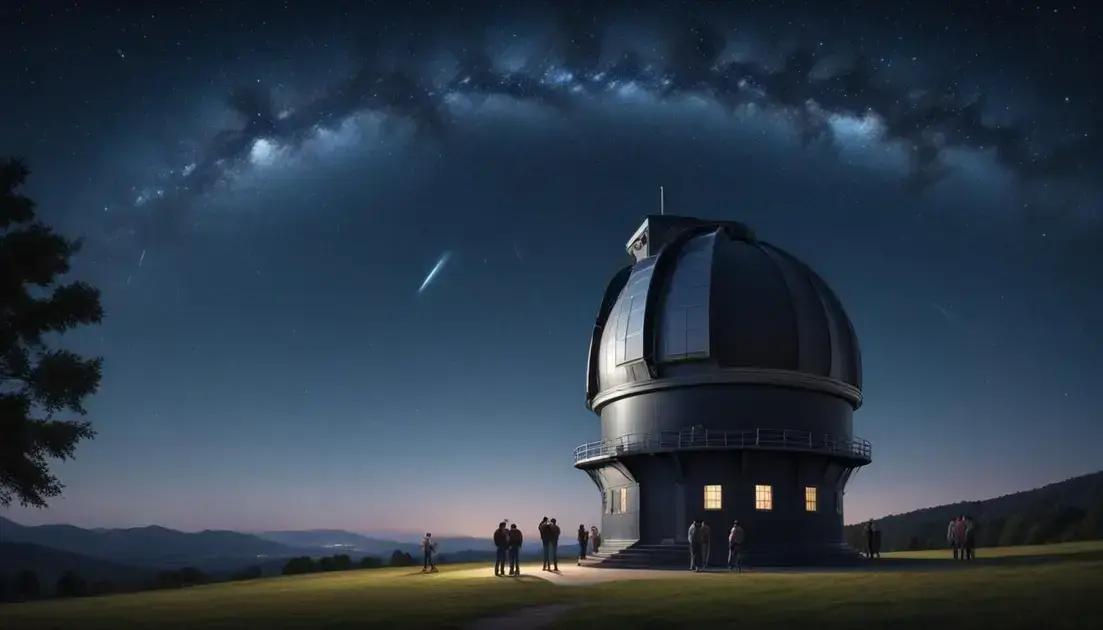
Local community events can spark interest. Observatories often host open houses and viewing nights. These events allow families and individuals to explore the night sky together.
As public interest in astronomy grows, so does the accessibility of information and experiences. Engaging with the universe is now easier than ever for everyone.
Conclusion
In conclusion, the future of astronomy and observatories holds great promise for all of us. With advancements in technology, we can explore the universe in new and exciting ways. Public interest is growing, and accessibility is improving, allowing more people to connect with space science. Educational programs, online resources, and community events invite everyone to participate in this journey of discovery.
As we continue to learn about the stars and beyond, it’s essential to ensure that these opportunities remain open to all. Whether through citizen science projects or social media engagement, everyone can play a part in exploring the cosmos. By fostering curiosity and providing access, we can inspire future generations to reach for the stars.
Tags: