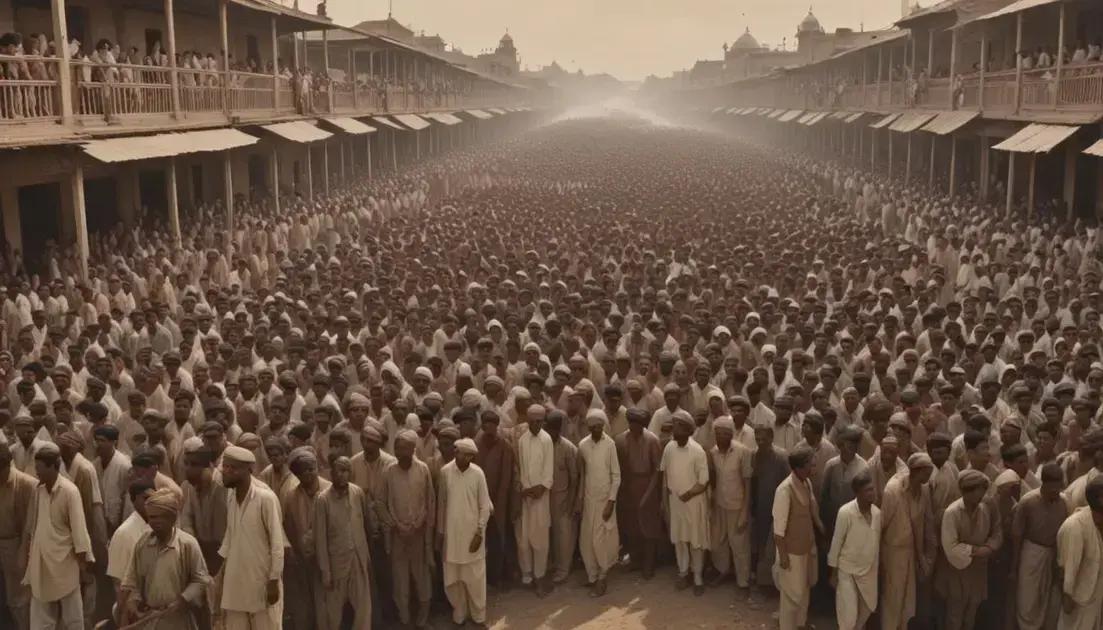
The Salt March: Gandhi and Symbolic Civil Disobedience
The Salt March, led by Gandhi in 1930, was a pivotal event in India’s fight for independence. This 240-mile protest against British salt taxation highlighted the power of nonviolent civil disobedience. It united diverse groups across India, inspired global civil rights movements, and emphasized that change can occur through peaceful resistance. Gandhi’s legacy teaches us that compassion and unity are essential in the struggle for justice and equality.
Have you heard about the Salt March? It’s one of those pivotal moments in history that showcases the power of peaceful protest. This article dives into how Gandhi’s march shaped the quest for India’s independence.
Introduction to Gandhi’s Life and Influence
Gandhi was a remarkable leader known for his peaceful methods. He played a vital role in India’s fight for freedom from British rule. Born in 1869 in Porbandar, India, he was educated in law in London. Gandhi’s journey began when he went to South Africa, where he faced discrimination. This experience shaped his beliefs about justice and human rights.
Throughout his life, Gandhi focused on nonviolence, which he called “Ahimsa.” He believed that fighting against oppression could be done without hurting others. This idea inspired many around the world. His methods of civil disobedience, like the Salt March, showed people how to resist unfair laws peacefully.
Gandhi’s influence went beyond India. His ideas inspired civil rights movements in America, led by figures like Martin Luther King Jr. He taught that love and understanding could bring about change, even in tough times.
His legacy continues today. People remember Gandhi as a symbol of peace and compassion. His life reminds us that we can challenge injustice with kindness and courage.
Overview of the Salt March
The Salt March was a powerful event in India’s struggle for freedom. It took place in March 1930 and lasted for 24 days. Gandhi led a group of supporters on a 240-mile walk to the Arabian Sea. They aimed to protest the British salt tax, which was unfair and harsh.
During this march, Gandhi and his followers gathered salt from the sea. This symbolized their resistance against British authority. The act showed that ordinary people could challenge injustice without using violence.
The march gained attention worldwide. News spread quickly, and many people joined in the protest. Gandhi’s actions inspired countless others to take a stand against oppression. The Salt March became a key moment in the Indian independence movement.
The British government reacted with force. Many protesters were arrested during and after the march. Despite this, the Salt March united people across India. It sparked a national movement for freedom and equality.
Gandhi’s nonviolent approach changed how people viewed protesting. His leadership turned the Salt March into a symbol of hope and determination. This event is remembered as a vital step toward India’s independence in 1947.
Impact on Indian Independence
The Salt March had a huge impact on Indian independence. It showed that peaceful protest could be powerful. When Gandhi led the march, it inspired many Indians to join the freedom struggle.
As people walked with Gandhi, they felt united. The march created a sense of purpose. People from all backgrounds participated, breaking social barriers. This unity was crucial for the independence movement.
Gandhi’s methods attracted global attention. News about the Salt March spread quickly. It raised awareness of India’s struggle against British rule. Many people around the world began to support India’s fight for freedom.
The British government faced pressure. The Salt March revealed their harsh treatment of peaceful protesters. This changed public opinion, both in India and abroad. People started to see Gandhi’s nonviolent approach as a legitimate way to seek change.
After the march, more protests followed. Gandhi and other leaders organized campaigns against injustices. This momentum helped solidify the fight for independence. It also encouraged other nations to consider nonviolent resistance as a strategy.
The Salt March remains a key event in Indian history. It not only challenged colonial rule but also inspired future civil rights movements around the world. Gandhi’s legacy of peace continues to influence activists today.
Symbolism of Civil Disobedience
The Salt March stands as a powerful symbol of civil disobedience. Gandhi believed that breaking unjust laws could spark change. This idea inspired many people to join him in the march. They walked for days, showing their commitment to freedom.
By collecting salt from the sea, they challenged British laws. The act of gathering salt wasn’t just about the salt itself; it represented freedom and resistance. It showed that people could stand up to authority peacefully.
Civil disobedience means resisting laws peacefully. Gandhi used this concept to mobilize masses. His approach inspired others worldwide to use nonviolent actions to seek justice.
The Salt March became a lesson in how to fight against wrongs without violence. The participants showed that ordinary people could make a difference. Their determination had a strong impact on India’s fight for independence.
Today, civil disobedience inspires movements across the globe. Many activists follow Gandhi’s example, using nonviolence to bring attention to important issues. The symbol of the Salt March reminds us that change is possible through peaceful means.
Gandhi’s Legacy
Gandhi’s legacy is a testament to the power of nonviolence. His teachings have inspired countless movements around the world. Gandhi showed that peaceful protest could bring about real change. His methods continue to influence leaders today.
One of his key ideas was Ahimsa, which means nonviolence. This principle guided him in his fight for Indian independence. It also shaped how others approach social justice issues. People are drawn to his example of compassion and understanding.
Gandhi’s impact goes beyond India’s borders. His approach inspired civil rights leaders like Martin Luther King Jr. and Nelson Mandela. They adopted his strategies to fight against injustice in their own countries. This shows that Gandhi’s influence is truly global.
Today, his teachings remain relevant. Many activists still refer to his methods. They emphasize love and understanding in their struggles. Gandhi’s legacy encourages people to stand up for their rights without harming others.
His life teaches us an important lesson: change can happen through peaceful means. It reminds us to seek justice with kindness and courage. Gandhi’s impact will always be felt, making him a symbol of hope for future generations.
Conclusion
In conclusion, Gandhi’s legacy reminds us of the power of nonviolence and peaceful protest. His methods inspired many to fight for justice. As we reflect on the Salt March and its impact, we see that change is possible without violence.
Gandhi’s teachings encourage us to stand up for our rights with compassion and understanding. They show that united action can lead to significant change. By following his example, we can continue to fight for equality and justice around the world.
His message still resonates today, motivating new generations to strive for peace. Let us remember that every small act of resistance can build toward a better future for all.
Tags: