The Space Race: how America reached the moon
The Space Race was a defining period in history characterized by intense competition between the United States and the Soviet Union. This rivalry led to significant advancements in technology and science, culminating in the historic Apollo 11 Moon landing in 1969. Key milestones included the launch of Sputnik and the first human in space, Yuri Gagarin. The legacy of the Space Race continues to influence global space exploration and foster international collaboration, inspiring generations to pursue careers in STEM fields and leading to ongoing discoveries beyond Earth.
Have you ever wondered about the incredible journey of the Space Race? Starting from fierce competition between nations, it led us to the Moon and beyond!
The Cold War backdrop
The Cold War was a period of tension and competition between the United States and the Soviet Union. This rivalry shaped many global events. Nuclear weapons were a big part of this struggle, creating fear and urgency for both sides. Each country wanted to show its strength and superiority, not just militarily but also in technology and space exploration.
During the Cold War, propaganda played a crucial role. Both sides used media to promote their ideologies. The U.S. highlighted freedom and democracy, while the USSR focused on equality and socialism. This battle of ideas fueled public interest in space missions.
Many significant events occurred during this time. The launch of Sputnik in 1957 by the Soviet Union shocked the world. It marked the start of the space race. The U.S. responded by increasing its space efforts, leading to the creation of NASA in 1958.
Not long after, Yuri Gagarin became the first human in space in 1961. This was a major victory for the Soviets. The U.S. knew it had to catch up. This urgency pushed American scientists and engineers to work harder and faster.
The Cold War backdrop set the stage for the historic Apollo 11 mission. With the Moon landing in 1969, the U.S. showcased its technological advancements and determination. This mission wasn’t just about exploring space; it was a powerful statement of victory in the ongoing rivalry.
Key players in the race: USA vs USSR
The Space Race featured two main players: the United States and the Soviet Union. Both countries aimed to prove their technological superiority. Each side wanted to achieve significant milestones first, creating a fierce competition.
The Soviet Union was the first to make a big impact. In 1957, they launched Sputnik, the first artificial satellite. This shocked the world and set the stage for the race. The Soviets continued their success by sending Yuri Gagarin into space in 1961. He became the first human to orbit the Earth, which was a huge moment in history.
The United States responded with determination. They worried about falling behind. In 1958, the U.S. created NASA to lead its space efforts. NASA focused heavily on human spaceflight and advanced technology projects. This was a crucial step to catch up with the Soviets.
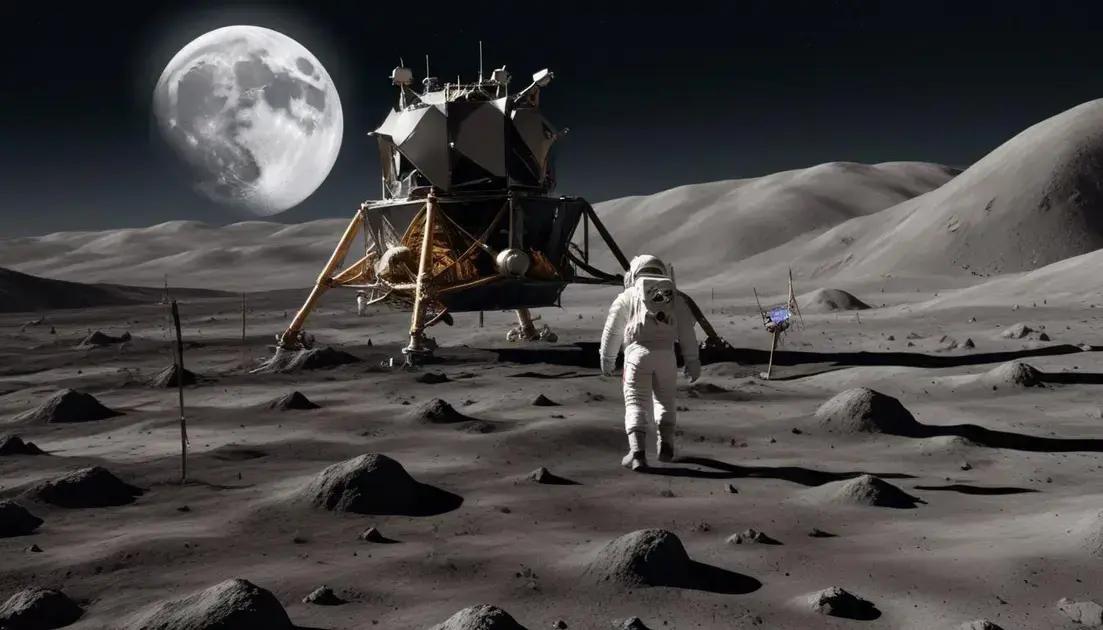
In 1969, the U.S. achieved a landmark victory by landing Apollo 11 on the Moon. Neil Armstrong and Buzz Aldrin took humanity’s first steps on the lunar surface. This event changed everything and showcased American ingenuity.
The competition between the USA and USSR pushed both nations to innovate. They invested heavily in education, engineering, and science. This rivalry also inspired generations to dream big and pursue careers in technology and space.
Milestones leading to Apollo 11
Several key milestones led to the successful Apollo 11 mission. Each step was crucial in proving that humans could reach the Moon. The journey began in the 1960s when space exploration was gaining momentum.
In 1961, President John F. Kennedy made a bold promise. He stated that America would land a man on the Moon before the decade ended. This set the nation on an ambitious path.
Then came the Mercury and Gemini programs. These early missions tested human spaceflight and devised essential procedures for travel beyond Earth. Mercury was the first crewed space program. It included flights with astronauts like Alan Shepard and John Glenn.
Next, the Gemini missions improved on these techniques. They focused on spacewalks and docking maneuvers. Astronauts learned how to work and live in space for longer periods. This was key for future Moon missions.
In 1966, NASA launched the Apollo 1 mission. Unfortunately, a tragic fire killed three astronauts during a test on the ground. This incident forced NASA to make major safety improvements before proceeding.
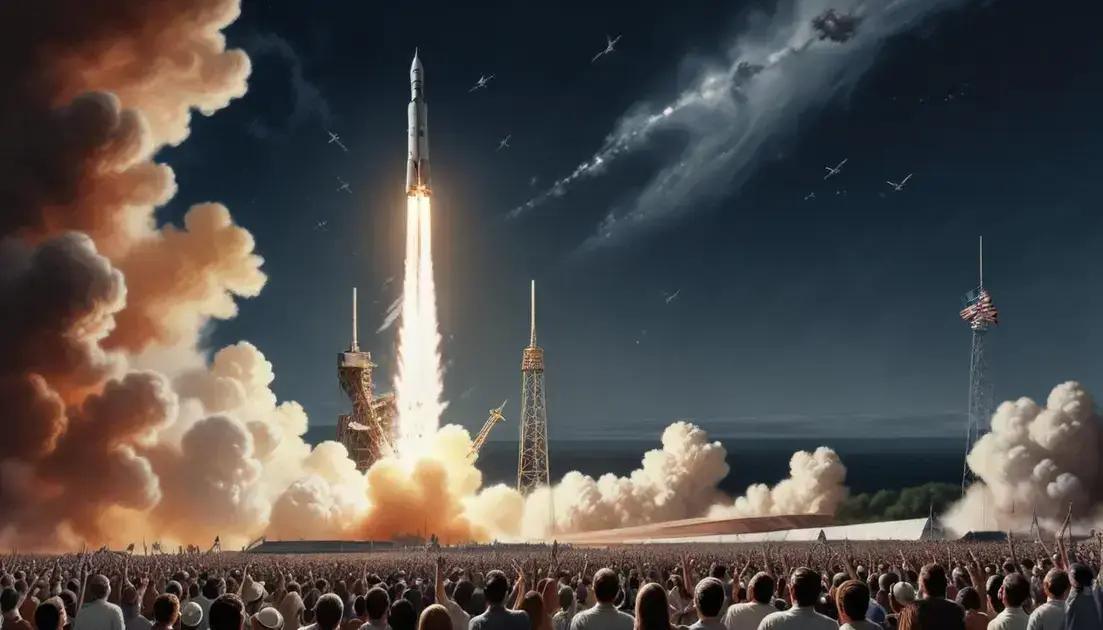
Finally, in July 1969, Apollo 11 was ready for liftoff. The mission included astronauts Neil Armstrong, Buzz Aldrin, and Michael Collins. Armstrong and Aldrin landed on the Moon, while Collins orbited above. This mission marked a historic achievement for humanity.
The significance of the Moon Landing
The Moon landing in 1969 was a defining moment in history. It showed what humans can achieve when they work together. When Neil Armstrong stepped onto the lunar surface, he said, “That’s one small step for man, one giant leap for mankind.” This phrase captures the essence of the mission.
The significance of the Moon landing goes beyond just science. It marked a victory for the United States in the Space Race against the Soviet Union. This achievement boosted national pride and showed American technological prowess.
On the scientific front, the Moon landing provided invaluable data. The samples collected enriched our understanding of the Moon’s surface and geological history. Scientists still study these samples today to learn more about our solar system.
The mission also inspired generations. Children watched the event on television and dreamed of becoming astronauts. The idea of space exploration has since influenced many careers in science, technology, engineering, and math (STEM).
Besides inspiring individuals, the Moon landing united people across the globe. It was a moment that showed the power of cooperation and ambition. The world rallied behind this milestone, reminding us all of our shared humanity.
The event led to more space missions and exploration. It paved the way for future projects like the Mars rover programs and international collaborations in space. The legacy of Apollo 11 continues to spark interest in the mysteries of space.
Legacy and impact of the space race
The Space Race left a lasting legacy that shaped the future of space exploration. It ignited interest in science and technology around the world. This intense competition led to remarkable advancements that changed our lives.
One major impact was the rapid development of new technologies. During the Space Race, both the United States and the Soviet Union made breakthroughs in various fields. These innovations included materials science, telecommunications, and computers. Many of these technologies are now part of our daily lives.
The Space Race also established space exploration as a priority. Countries recognized the need to invest in research and development. This led to various space agencies forming worldwide, including ESA in Europe and CNSA in China.
International cooperation in space has grown since that era. Today, countries work together on projects like the International Space Station (ISS). This collaboration shows how space exploration can unite nations for a common purpose.
The legacy of the Space Race continues to inspire new generations. Young people today are more interested in science, technology, engineering, and math (STEM) fields. Many dream of becoming astronauts or working in related industries.
Lastly, the Space Race paved the way for exploring beyond our planet. Missions to Mars, asteroids, and beyond build on the foundations laid during this time. The excitement of living in space and exploring new frontiers remains strong.
Conclusion
In conclusion, the Space Race was a remarkable chapter in human history. It brought major advancements in technology, science, and international cooperation. The achievements during this time inspired generations to dream big and pursue careers in space exploration and STEM fields.
The legacy of the Space Race continues to impact our lives today. Many technologies we use stem from that era, and international partnerships in space have grown stronger. As we look toward the future, exploring new frontiers remains an exciting goal.
By reflecting on the Space Race, we can appreciate how competition can drive innovation and unite people. This spirit inspires ongoing discoveries and adventures beyond our planet. The dream of reaching beyond Earth is just as vibrant today as it was in the 1960s.
Tags: