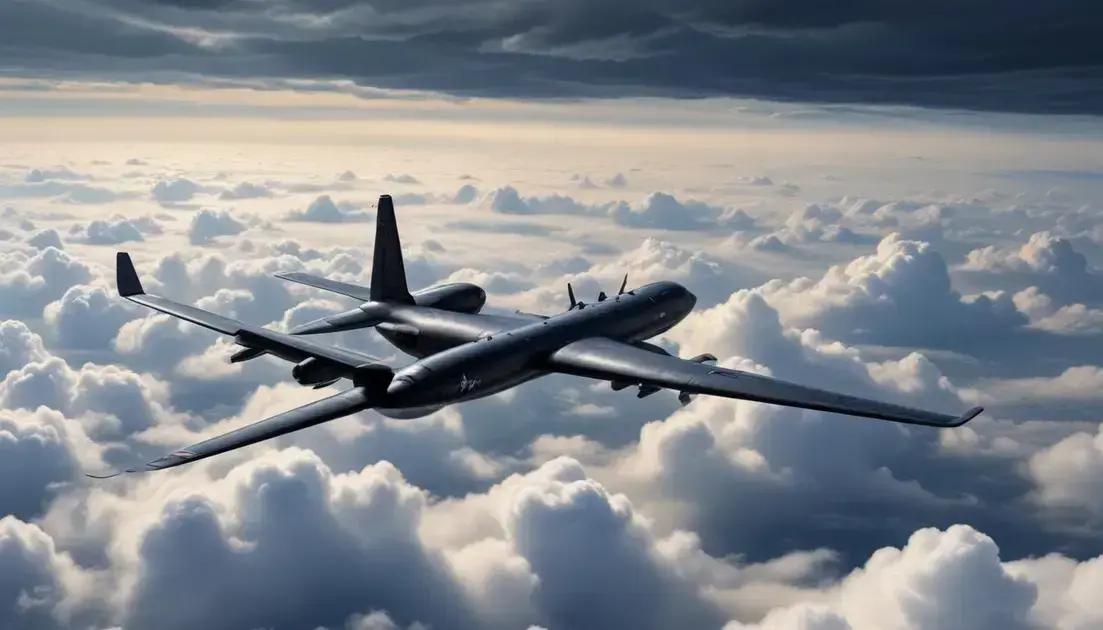
U-2 and beyond: the sky spies of the Cold War
The U-2 spy plane has had a significant impact on intelligence gathering during the Cold War and beyond. Known for its high-altitude flights, the U-2 provided critical information about Soviet military capabilities and influenced major events like the Cuban Missile Crisis. Its legacy continues, as modern surveillance technologies are shaped by its innovations, emphasizing the importance of reliable intelligence in maintaining global security.
Cold War secrets lie behind the curtain of history, where the U-2 spy plane soared high, changing the game of aerial surveillance forever. Curious about its impact? Let’s dive in!
Historical context of the Cold War
The Cold War was a tense period that started after World War II. The world was split into two main camps. The United States led the Western side, while the Soviet Union led the Eastern side. This division caused many challenges and changed the way countries interacted.
During this time, both superpowers aimed to spread their own ideologies. The United States promoted democracy and capitalism, while the Soviet Union supported communism. This clash created fears and conflicts around the globe.
Key events defined this era. The Berlin Blockade in 1948 was one of the first major conflicts. The US and its allies fought back by airlifting supplies to West Berlin. The Korean War in the early 1950s was another significant event, where North Korea, backed by the Soviets, clashed with South Korea, which had US support.
As the Cold War progressed, the arms race heated up. Both sides built up massive stockpiles of nuclear weapons, leading many to fear a potential war. The Cuban Missile Crisis of 1962 was a peak moment, when the world came very close to nuclear conflict.
Despite the tense relations, the Cold War also spurred innovation. It led to advancements in technology and space exploration, as both superpowers sought to outdo each other. The space race eventually led to landing a human on the moon in 1969.
Understanding the Cold War context helps us see how it shaped modern international relations. It wasn’t just a fight between two countries; it affected people all over the world. The echoes of this period still influence global politics today.
The role of U-2 in espionage
The U-2 spy plane played a crucial role in espionage during the Cold War. It was designed to fly at very high altitudes. This made it hard for enemy defenses to spot it. The U-2 could gather valuable intelligence without being seen.
The first U-2 flights began in the 1950s. Pilots flew the plane over Soviet territory to capture photos and gather signals. These missions provided vital information about military sites and missile bases. This intelligence was key to keeping the US informed.
One famous incident happened in 1960. A U-2 pilot named Francis Gary Powers was shot down over the Soviet Union. His capture created a major international crisis. The US initially denied the mission, but later had to admit the truth. This event showed the risks and stakes involved in spy work.
The U-2 wasn’t just about gathering images. It also collected electronic signals. This helped the US understand Soviet communications and activities better. The data from these missions influenced many important decisions.
Even after the Cold War, the U-2 continued to be used for military and intelligence purposes. It evolved with new technology, maintaining its relevance. Today, the U-2 serves in various roles, showing its lasting legacy in espionage.
Notable missions and outcomes
The U-2 spy plane has been involved in many notable missions throughout its history. These missions played a key role in shaping the outcome of the Cold War. One famous mission took place over Cuba in 1962. During the Cuban Missile Crisis, U-2 flights provided critical information about Soviet missile sites. This helped the US make informed decisions during a tense standoff.
Another significant mission happened in the 1960s over Vietnam. U-2 planes gathered intelligence on enemy troop movements and supply routes. This information proved vital for US forces, helping them understand the battlefield better.
The U-2 also supported missions in the Middle East. It monitored events and tracked military activities. This intelligence was crucial for US policy decisions in the region.
Each U-2 mission produced valuable data. This information offered insights not just for military strategies, but for diplomatic relations too. The details gathered often changed the course of events during the Cold War.
Even today, the legacy of U-2 missions continues. The data collected helped build a foundation for modern aerospace surveillance. The U-2 remains a symbol of intelligence gathering and national security.
Impact on US-Soviet relations
The U-2 spy plane had a major impact on US-Soviet relations. Its missions often laid bare the realities of the Cold War. Intelligence gathered by the U-2 helped the US understand Soviet military capabilities and intentions.
One notable moment was the U-2 incident in 1960. When Francis Gary Powers was shot down over the Soviet Union, it created a huge diplomatic crisis. Initially, the US denied it was a spy mission. However, the Soviets presented evidence that turned public opinion against the US.
This incident strained relations significantly. It soured talks between the two superpowers and highlighted the risks of espionage. While it was meant to gather intelligence, it escalated tensions instead.
In the years that followed, the U-2 played a role in shaping strategies. US leaders used information from U-2 flights to make important decisions. This intelligence helped avoid misunderstandings and miscalculations during critical moments, such as during the Cuban Missile Crisis.
The ongoing use of the U-2 showed how important intelligence was in the Cold War. It became a tool not just for spying but for diplomacy. This highlights how the U-2 influenced the balance of power between the US and the Soviet Union.
Legacy of U-2 and future implications
The U-2 spy plane has a lasting legacy in aviation and intelligence. It changed how countries conduct surveillance. By flying at high altitudes, it set new standards for gathering information. This capability influenced many military strategies for years to come.
Even after the Cold War, the U-2 adapted and evolved. It remained in service, proving its value in various missions. The U-2’s design has led to improvements in other aircraft technologies. Its focus on high-altitude flight continues to inspire modern spy planes.
Today, the U-2 plays a role in global security. It helps monitor threats and gather important data. The information it collects is crucial for military and diplomatic efforts. This shows that even after decades, the U-2 is still relevant.
Looking to the future, the U-2’s technologies may influence upcoming aircraft. Drones and other innovative systems might learn from its capabilities. As global tensions grow, having reliable intelligence will become even more critical.
The legacy of the U-2 reminds us how important it is to adapt in a changing world. It highlights the ongoing need for effective surveillance to ensure safety and security around the globe.
Conclusion
In conclusion, the legacy of the U-2 spy plane is a vital part of aviation and intelligence history. Its unique ability to gather information at high altitudes has set important standards for future surveillance technologies. Even today, the U-2 remains relevant, adapting to new challenges and helping ensure global security.
As we look forward, the lessons learned from the U-2 can help shape the future of surveillance. With ongoing advancements in technology, the importance of reliable intelligence will only grow. Understanding this legacy can guide nations in maintaining safety and adapting to new threats.
Overall, the U-2 teaches us that innovation is key. As we explore new skies, we must learn from the past to create a safer future.
Tags: