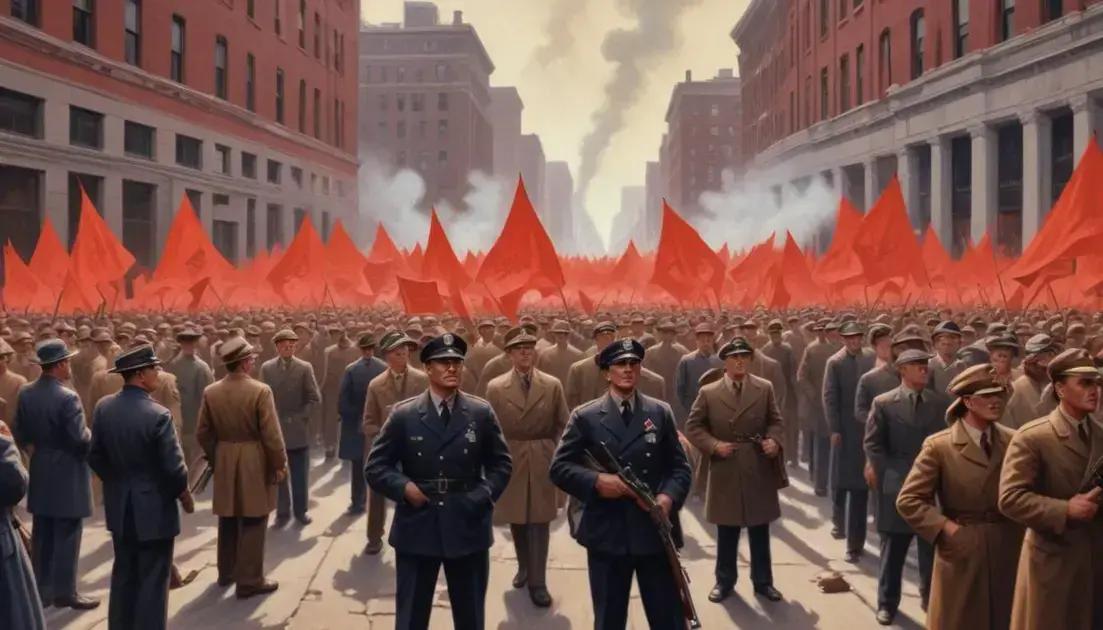
Witch Hunt: Red Scare and McCarthyism
The impact of anticommunism and McCarthyism in the 20th century reshaped American society significantly. Fears of communism led to widespread paranoia, prompting government actions that violated civil liberties. Notable figures like Senator Joseph McCarthy and events such as the Army-McCarthy hearings exemplified this era’s intensity. Today, the legacy of this period continues to encourage discussions about freedom of speech and civil rights, reminding us of the importance of protecting individual liberties in a diverse society.
Anticommunism reshaped American society, driving intellectuals and artists into the shadows. Curious about how this unfolded? Dive in!
Introduction to Anticommunism
Anticommunism became a powerful force in American life during the 20th century. It arose mostly because of fears about communism. Many people worried that communists would take over the government and change society.
In the 1950s, this fear grew even stronger. It led to the Red Scare, a time when the government and citizens hunted for suspected communists. McCarthyism was a key part of this movement. Senator Joseph McCarthy claimed to expose communists in the U.S. government.
This period caused a lot of people to lose their jobs and reputations. Many artists and intellectuals faced harsh treatment. They were accused without solid proof. Creativity and freedom of thought suffered greatly under this pressure.
Understanding this dark chapter helps us see how fear can shape policies and lives. The impact of anticommunism is still felt today. It reminds us to protect freedom and support fair treatment for everyone.
The Origins of the Red Scare
The Red Scare began after World War I. People in the U.S. feared communism would spread worldwide. Communism is a system where the government controls everything. This idea scared many Americans.
In 1917, the Russian Revolution changed everything. The Bolsheviks took power, pushing their communist agenda. This made Americans anxious about a similar uprising in their country.
In the early 1920s, many bombings occurred. Anarchists targeted important figures. People thought these attacks were linked to communism. This fear led to widespread panic and suspicion.
In response, the U.S. government launched the Palmer Raids. They arrested many suspected radicals without solid evidence. This quickly escalated fear and paranoia across the nation. Ordinary citizens were often caught in the crossfire.
This period marked the start of a long battle against perceived communist threats. Understanding its roots helps us see how fear can shape history and impact lives.
Impact of McCarthyism on American Society
McCarthyism had a big impact on American society in the 1950s. Senator Joseph McCarthy led the charge against supposed communists. Many people feared being labeled a communist.
This fear resulted in a wave of accusations. Even common citizens felt the pressure. People lost jobs for having liberal views or for just speaking out.
Many artists and intellectuals suffered. Filmmakers, writers, and actors faced blacklisting. Their careers ended because of mere allegations. This limited creative expression during a crucial time in American culture.
Schools and workplaces became tense environments. Teachers and workers feared sharing their political beliefs. McCarthyism silenced many voices and stifled debates. The atmosphere was full of distrust.
Despite this oppressive climate, some stood up against it. People organized to defend free speech and civil rights. This pushback laid groundwork for future movements advocating for justice and equality.
Notable Figures and Events
Many key figures shaped the story of McCarthyism in the United States. Senator Joseph McCarthy led the charge. He claimed to have lists of communists in the government, leading to mass hysteria.
Another major figure was J. Edgar Hoover, the director of the FBI. He supported McCarthy’s efforts and pushed for aggressive investigations. Hoover’s influence helped spread fear across the nation.
One notable event was the Army-McCarthy hearings. These hearings brought McCarthy’s tactics into the spotlight. They showed how he bullied witnesses. Many people began to turn against him.
Another important moment was the Hollywood blacklist. Many artists and filmmakers were accused of communist connections. This led to the loss of careers and reputations, creating a chilling effect on creativity.
These figures and events highlight the extremes of the period. Their stories serve as reminders of the need for justice and fairness in society.
The Legacy of Anticommunism Today
The legacy of anticommunism still affects us today. Many people remember the fear and distrust from that era. It shaped how Americans view radical ideas and political movements.
The impact on civil liberties is significant. McCarthyism raised questions about freedom of speech. People still debate how much security we need without losing our rights.
Contemporary political discourse reflects this legacy. Accusations of being unpatriotic or radical continue to surface. These claims can silence important discussions. They remind us of the past’s dangers.
Additionally, societal divisions trace back to this period. The fear of communism fostered a “us versus them” mentality. This attitude can still be seen in today’s politics.
Understanding the legacy helps us recognize the importance of protecting individual rights. It shows the need to support open dialogue and promote tolerance. In a diverse society, these values are essential.
Conclusion
In conclusion, the era of anticommunism and McCarthyism left an important legacy. It taught us about the dangers of fear and suspicion in society. Today, we still feel these effects in how we discuss politics and freedom.
People must remember the past to protect their rights. Open dialogue is essential for a healthy democracy. When we listen to different views, we learn and grow as a nation. Overall, the lessons from this time remind us to safeguard our freedoms and embrace diverse opinions.