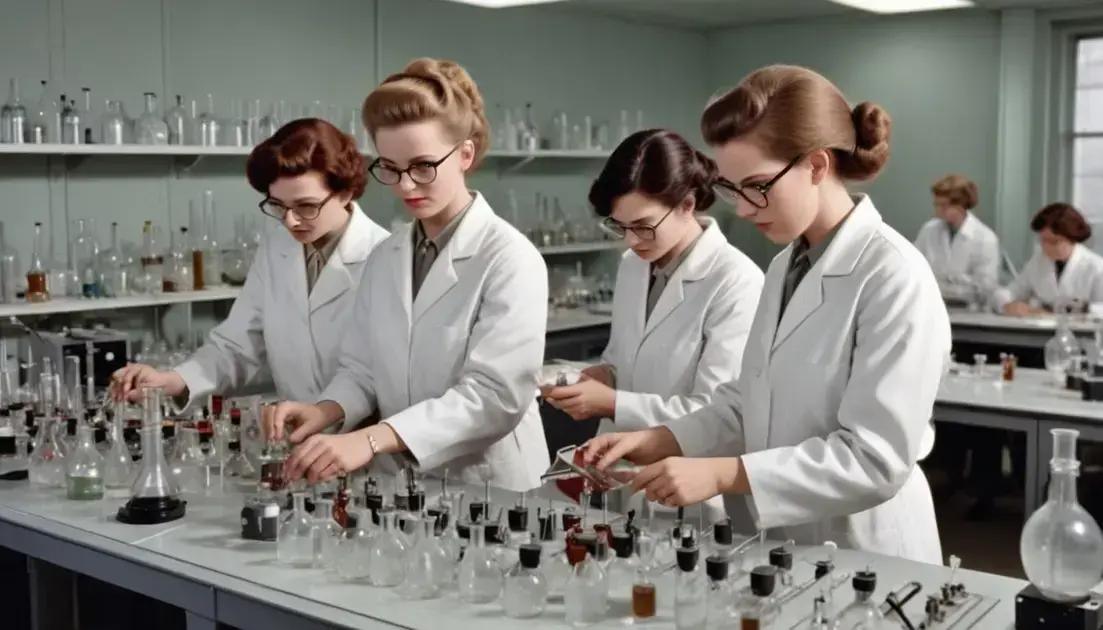
Women Who Changed Science During the Cold War
The contributions of women scientists during the Cold War significantly advanced various fields, including physics, genetics, and environmental science. Pioneers like Chien-Shiung Wu and Rachel Carson broke barriers, paving the way for future generations in STEM. Their legacies inspire young girls today to pursue careers in science, showcasing the importance of diversity and inclusion in scientific communities.
Women in Science played a pivotal role during the Cold War, breaking barriers and making significant advancements despite the odds. Ready to dive into their inspiring stories?
Introduction to Women Scientists of the Cold War
During the Cold War, many women scientists overcame obstacles to make important contributions to various fields. Their work often went unrecognized due to social norms and expectations. Yet, these women played a vital role in shaping science and technology during a critical time.
For instance, one incredible figure was Marie Curie, who won two Nobel Prizes for her research on radioactivity. Although she worked before the Cold War, her accomplishments inspired many women scientists to follow in her footsteps.
Another notable scientist is Rosalind Franklin, known for her contributions to understanding DNA’s structure. Her research was crucial but faced significant challenges because of gender biases in science.
Moreover, women like Chien-Shiung Wu contributed to physics, particularly in the study of particle physics. Her experiments challenged existing theories and laid the groundwork for future discoveries.
These women, along with many others, not only advanced science but also paved the way for future generations of female scientists. They showed that dedication and passion can break through barriers, setting a powerful example for others to follow.
Major Contributions to Science
Many women made major contributions to science during the Cold War. These contributions changed our understanding of various scientific fields. For example, Chien-Shiung Wu played a key role in physics. Her work on beta decay helped confirm a new theory in particle physics.
Barbara McClintock discovered jumping genes, or transposons, in corn plants. This groundbreaking research opened new doors in genetics. Her discoveries earned her a Nobel Prize in Physiology or Medicine.
Similarly, Rachel Carson‘s work on environmental science made a huge impact. Her book, Silent Spring, raised awareness about pesticide use and its dangers. Carson’s writings fueled the modern environmental movement.
In the realm of computer science, Ada Lovelace is often called the first programmer. Her work laid the foundation for computer algorithms we use today. Though she lived long before the Cold War, her legacy inspired many female computer scientists.
These examples show how women scientists shaped our world. They pushed boundaries and pioneered research in their fields. Their legacies continue to inspire future generations.
Legacy and Impact on Future Generations
The legacy of women scientists from the Cold War is powerful and inspiring. Their work created paths for future generations. They showed young girls that science is a place for everyone. Mentorship became important as these women guided the next wave of scientists.
Many programs now encourage girls to pursue careers in STEM. STEM stands for science, technology, engineering, and mathematics. Organizations share resources and role models to help girls succeed.
Today’s women scientists continue to build on the work of their predecessors. They contribute to vital fields like medicine, environmental science, and space exploration. This progress is a direct reflection of the efforts of women from the past.
As more women enter these fields, they inspire even more girls. Schools offer clubs and events focused on science. These activities spark interest and develop skills in young students.
The impact of previous female scientists is clear. They changed perceptions and opened doors. Their stories remind us that anyone can make a difference in science.
Conclusion and Reflection
Women scientists from the Cold War left a rich legacy that continues to inspire today. Their breakthroughs in science changed how we see the world. They also opened doors for future generations in many fields.
It’s important to remember their struggles and triumphs. These women faced many challenges, yet they persisted. Their determination helps encourage today’s young scientists to follow their dreams.
In education, more focus is on creating equal opportunities for everyone. Schools now promote science programs that welcome girls and boys alike. They understand that diverse teams produce better solutions.
As we reflect on the past, we should celebrate these women’s contributions. Their work reminds us that anyone can impact science. We must continue to support and uplift future female scientists in their journeys.
Their stories are a reminder of what is possible when we challenge norms. Together, we can create a future where all voices are heard in science.
Conclusion
In conclusion, the contributions of women scientists during the Cold War are vital to our understanding of science today. Their determination and hard work paved the way for future generations. We owe much of our progress in various fields to their remarkable efforts.
As we move forward, it’s important to continue supporting women in science. Encouraging young girls to explore STEM and providing them with resources can change the future. Their stories inspire and remind us that everyone has the potential to make a difference.
By celebrating their legacies, we can build a more inclusive scientific community. When we lift up all voices in science, we open doors to new ideas and innovations. Together, we can ensure that everyone has a chance to impact the world through science.