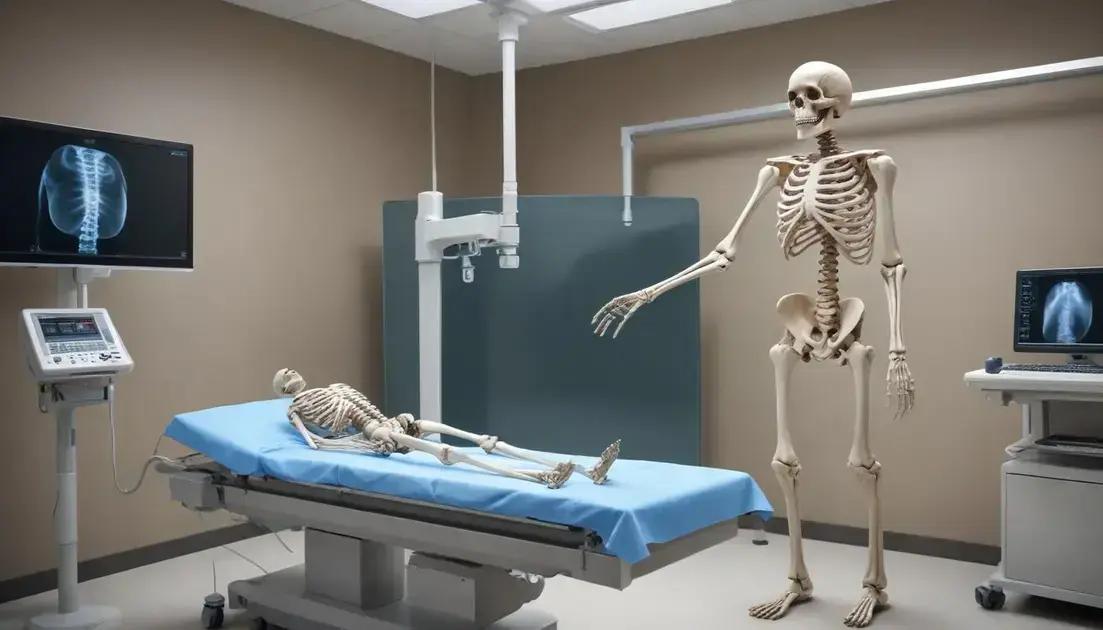
X-Rays: Revealing the Invisible
X-Rays revolutionized medical diagnostics by allowing doctors to see inside the body without invasive procedures. Discovered by Wilhelm Röntgen in 1895, X-Rays are now essential for identifying fractures, tumors, and infections. Contemporary uses of X-ray technology include advancements like CT scans and 3D imaging, improving accuracy in healthcare. With ongoing innovations, the future of X-ray imaging promises enhanced safety and efficiency, making it a vital tool for both diagnosis and treatment in modern medicine.
X-Rays have transformed medical diagnosis in ways we never imagined. They offer a clear view into the human body, revealing what lies beneath the surface. But how exactly do they work, and what secrets can they uncover? Let’s dive in!
Understanding X-Rays
Understanding X-Rays is key to grasping their importance in healthcare. So, what exactly are X-Rays? They are a form of electromagnetic radiation. This means they can pass through the body and create images of internal structures.
When you get an X-Ray, you stand in front of a machine that sends out these invisible waves. They hit a special film or detector on the other side. The areas where the waves pass through easily appear dark, while denser areas, like bones, show up brightly on the image.
X-Rays are safe and quick, making them a go-to tool for doctors. They help spot broken bones, infections, and even tumors. Everyone from kids to adults can get X-Rays without any major risks.
Sometimes, doctors may use a contrast material to make certain areas show up better. This helps them see details more clearly. Overall, X-Rays play a crucial role in diagnosing health issues.
The Discovery of X-Rays
The Discovery of X-Rays changed medicine forever. This amazing technology was discovered by Wilhelm Röntgen in 1895. Röntgen was curious about cathode rays, which are streams of electrons. He noticed something strange. While experimenting, he saw a faint glow from a nearby screen.
Röntgen realized the rays he created could pass through solid objects. He knew he found something special! He carefully placed his wife’s hand in front of the rays. The result? An image of her bones appeared on the screen. This was the first X-Ray ever taken.
His discovery was groundbreaking. It opened new doors in medicine. Doctors could now see inside the body without surgery. This made diagnosing problems much easier. X-Rays quickly became a vital tool in healthcare.
People were amazed by this new technology. Röntgen received the first Nobel Prize in Physics in 1901 for his work. His discovery led to countless advancements in medical imaging, helping doctors save lives every day.
Impact on Medical Diagnostics
Impact on Medical Diagnostics has been huge thanks to X-Rays. They changed how doctors diagnose health problems. Before X-Rays, doctors relied heavily on physical exams and guesswork. Now, they can see inside the body directly.
X-Rays allow for quick assessments. Doctors can quickly identify issues like fractures, infections, and tumors. This saves time and leads to faster treatment. For example, a broken bone can be spotted almost instantly, helping patients get the care they need without delay.
Additionally, X-Rays can be used for preventive care. Regular screenings can catch problems early. This helps prevent serious health issues later on. It’s clear that X-Rays have made diagnosing disease more effective and accurate.
The use of X-Rays has also led to the development of advanced imaging techniques. These include CT scans and MRIs, which provide even clearer images. Each of these tools builds on the foundation Röntgen established with his discovery.
In summary, X-Rays revolutionized medical diagnostics. They make healthcare more precise and efficient, ultimately saving lives.
How X-Rays Work
How X-Rays Work is fascinating and quite simple. X-Rays are a type of radiation, just like light. They travel in waves and can pass through the body. When X-Rays go through an object, some areas absorb more rays than others.
In an X-Ray exam, a machine sends out these invisible rays. The rays hit the body and create an image on a special plate. Dense areas, like bones, block many rays and appear white. Softer tissues let more rays through and look darker on the X-Ray.
For a clear picture, the patient needs to stand or lie still. Movement can blur the image. Sometimes doctors use contrast materials, like barium, to highlight specific areas. This way, they can see things like the stomach or blood vessels more clearly.
X-Rays are usually quick and pain-free. The whole process can take just a few minutes. Once the images are taken, a radiologist checks them. They can spot fractures, tumors, or infections more easily with these images.
X-Rays are safe, but patients wear a lead apron for extra protection. This keeps other body parts safe from radiation. Overall, X-Rays are a key tool in modern medicine.
Contemporary Uses of X-Ray Technology
Contemporary Uses of X-Ray Technology are wide-ranging and vital in today’s medical field. X-Rays are not just for broken bones anymore. They’re essential for diagnosing many health issues. Doctors use them to check for tumors, infections, and more.
X-Ray technology helps in various medical specialties. For example, in dentistry, X-Rays reveal cavities and tooth alignment. In the chest area, X-Rays can spot pneumonia or other lung problems. This makes them a first step in assessing many health conditions.
Advanced forms of X-Rays, like CT scans, offer even more detailed images. These scans slice through the body, providing cross-sectional views. This helps doctors see organs and tissues clearly. CT scans are often used in emergency situations for quick assessments.
Furthermore, X-Rays are used for treatment, not just diagnosis. Radiation therapy uses high-energy X-Rays to target and kill cancer cells. This approach plays a crucial role in cancer care.
In addition to healthcare, X-Rays are also found in security. Airports use them to scan luggage for dangerous items. This use shows how versatile and important X-Ray technology is in many fields.
Future of X-Ray Imaging
The Future of X-Ray Imaging looks promising and exciting. New technologies are constantly improving how we use X-Rays. Innovations aim to make them safer and more efficient. Future X-Ray machines will likely use lower doses of radiation.
One significant development is the integration of artificial intelligence. AI can help analyze X-Ray images quickly and accurately. This means doctors can get results faster and make better decisions about treatment.
Another area of growth is 3D X-Ray imaging. This advanced technique allows for detailed views of the body’s structures. With 3D images, doctors can see soft tissues and organs clearly. It’s especially useful in planning surgeries.
Doctor-patient communication will also improve. Digital platforms will allow patients to access their X-Ray images easily. They can show these images to specialists without needing to carry physical copies.
Moreover, portable X-Ray machines are becoming more common. This makes it easier to conduct X-Ray exams in various locations. From hospitals to remote clinics, these devices can greatly increase accessibility.
Overall, the future of X-Ray imaging promises to enhance medical care. With advancements in technology, we can look forward to clearer images and faster diagnoses.
Conclusion
In conclusion, X-Ray technology has greatly changed the way we diagnose and treat health issues. Since Wilhelm Röntgen’s discovery, X-Rays have evolved and become a crucial tool in medicine. They help doctors spot everything from broken bones to serious diseases.
Today, X-Rays not only aid in diagnosing health problems but also contribute to treatments like radiation therapy. With ongoing advancements like AI and 3D imaging, the future looks even brighter. As technology continues to improve, X-Rays will become safer, faster, and more precise.
Understanding X-Rays and their uses helps us appreciate their impact on healthcare. With each new development, X-Rays will play an even more vital role in protecting our health and enhancing patient care.