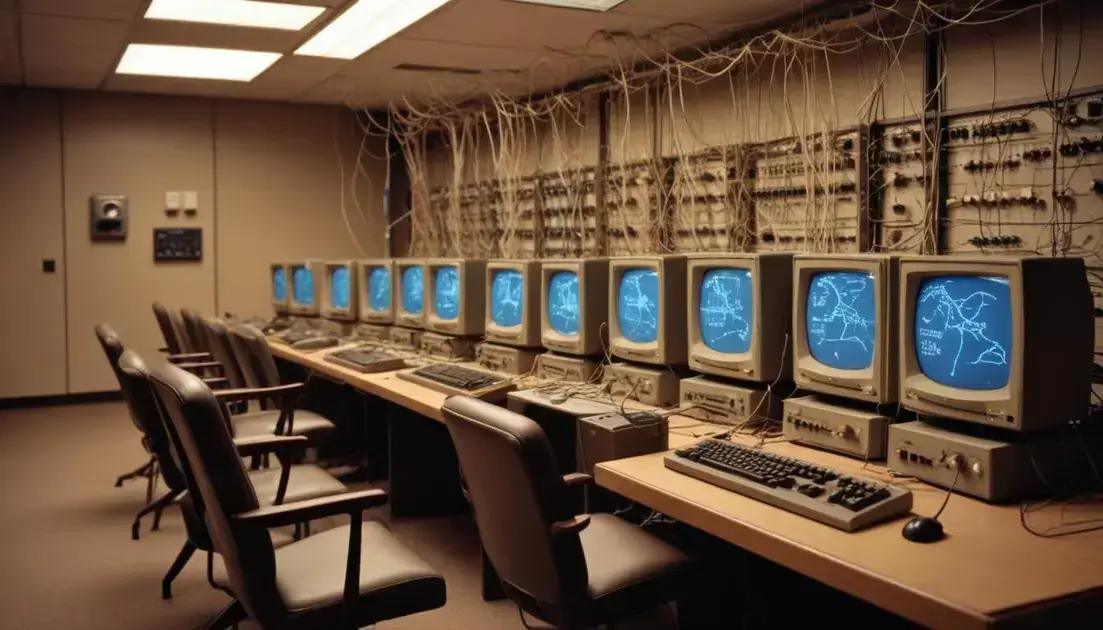
Cybernetics and ARPANET: The Embryo of the Internet
ARPANET was the pioneering network that set the groundwork for the modern Internet by introducing vital concepts like packet switching and TCP/IP protocols. Its development greatly improved the speed and efficiency of communication, leading to today’s global interconnectedness. By transitioning from military research to a commercial platform, ARPANET enabled instant access to information and fostered collaboration across various fields, making it a cornerstone of modern digital communication.
Ever thought about how the concept of Internet was born? From military needs to modern communication, it’s a fascinating journey!
Introduction to Cybernetics and ARPANET
Cybernetics is a field that studies communication and control in living beings and machines. It combines ideas from various disciplines, such as biology, engineering, and psychology. The main goal is to understand how systems interact and adjust to changes. ARPANET was one of the first networks to use these principles. Developed by the U.S. Department of Defense, it connected different computers to share information securely.
Back in the late 1960s, there was a real need for reliable communication between military bases. Scientists and engineers worked hard to create a system that could handle this need. ARPANET used packet switching technology, breaking data into smaller pieces for quicker transmission. This was a game-changer!
As ARPANET grew, it inspired new ideas about how we could connect computers all around the world. It linked university research centers and paved the way for today’s Internet. Can you imagine how different things would be without it? Thanks to ARPANET, we now enjoy instant communication and access to information from anywhere!
The Military’s Role in Internet Development
The military played a key role in shaping the Internet as we know it today. In the late 1960s, there was a need for a secure way to communicate. ARPANET was created by the Defense Department for this very purpose. It aimed to link various military research centers and share resources.
Using packet switching technology, ARPANET allowed data to be sent in smaller packets. This made communication faster and more reliable. If one part of the network went down, messages could still get through another route. This was crucial for military operations where every second counted.
As ARPANET grew, it expanded beyond military use. Researchers and universities began connecting as well. The military’s early investment in this technology led to many advancements. Today, we owe much of our Internet structure to those early military projects.
The focus on security also influenced Internet protocols. Ensuring data safety was vital for military communications. This concern set the stage for ongoing cybersecurity measures we rely on now. Overall, the military’s involvement was foundational in developing the Internet.
Key Innovations in Early Networking
Early networking saw some amazing innovations that shaped our digital world. One of the biggest breakthroughs was packet switching. This method breaks data into smaller pieces, called packets. Sending packets separately makes communication faster and more efficient.
Another key innovation was the Transmission Control Protocol (TCP). TCP helps manage data transmission over the network. It ensures that packets arrive in the correct order. If any packets get lost, TCP requests them again. This reliability was crucial for both military and civilian applications.
Ethernet technology also played a significant role. It allowed computers to connect through local area networks (LANs). Ethernet made it easier for devices to communicate in homes and offices. With Ethernet, sharing resources like printers and files became simple.
Lastly, the development of networked computers led to a new way of sharing information. Early users could send emails and access remote data. This laid the groundwork for the Internet we know today. Each innovation built upon the last, making communication and connectivity a reality.
The Transition from ARPANET to the Internet
The transition from ARPANET to the Internet was a significant change in communication. ARPANET started as a military project to connect research centers. As time passed, it began to grow beyond its original purpose.
In the 1970s and 1980s, many universities and businesses joined ARPANET. They saw the potential for sharing information quickly. This took networking to a whole new level. As more users joined, the need for a better system grew.
The development of new protocols was essential. The introduction of Transmission Control Protocol/Internet Protocol (TCP/IP) allowed different networks to communicate. This laid the groundwork for the Internet. In 1983, ARPANET fully adopted TCP/IP. This event marked the official birth of the Internet as we know it.
In the following years, commercial and private networks started popping up. The early 1990s witnessed the rise of web browsers, which made the Internet user-friendly. Suddenly, anyone could access information with just a click.
By the mid-1990s, the Internet had transformed from a research tool into a global network. Businesses, schools, and homes began connecting. This shift changed how we communicate and access information forever. Today, we rely on the Internet for nearly everything in our lives.
The Impact of ARPANET on Modern Communication
ARPANET made a huge impact on how we communicate today. It was a pioneering network that laid the foundation for the modern Internet. By connecting computers, ARPANET paved the way for sharing information instantly.
Before ARPANET, communication was slow and often depended on paper. With ARPANET, messages could travel quickly between computers. This speed changed everything! People could send emails and share documents without delay.
The ability to connect different networks helped develop protocols we still use. For example, TCP/IP emerged from ARPANET’s needs. This protocol is essential for transmitting data over the Internet today. Thanks to these innovations, we can easily connect and communicate worldwide.
ARPANET also influenced how we think about collaboration. Researchers from different fields could share their work and ideas easily. This opened the door for joint projects and advancements in many areas. Today, we often collaborate online using platforms that have their roots in ARPANET.
Overall, ARPANET set the stage for our current digital communication landscape. It taught us the value of connectivity, speed, and collaboration, which remain crucial in our fast-paced world.
Conclusion
In conclusion, the journey from ARPANET to the Internet changed how we communicate forever. ARPANET’s innovative ideas paved the way for our modern digital world. Today, we enjoy instant communication, collaboration, and access to information at our fingertips.
Understanding the impact of ARPANET helps us appreciate the Internet we have today. It taught us the importance of connectivity and sharing knowledge. As we continue to grow in this digital age, let’s remember the lessons from ARPANET and stay focused on improving communication and collaboration for everyone.