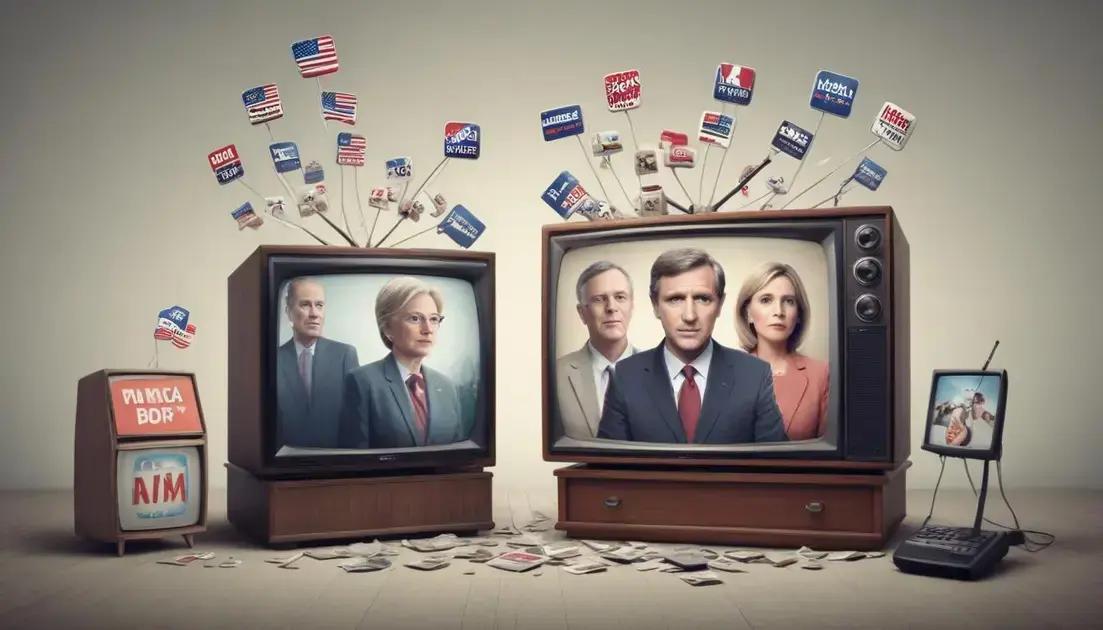
Modern propaganda: from TV to social media
Modern political marketing has transformed significantly due to social media and data analytics. Campaigns now leverage targeted advertising to engage voters more effectively and personally. Successful examples include Obama’s use of social media in 2008 and Trump’s messaging strategy in 2016, both emphasizing the importance of audience connection. Algorithms play a crucial role in shaping voter behavior by providing personalized content and understanding preferences, although they can also lead to polarization. Studying successful campaigns offers valuable insights for future strategies in political advertising.
In today’s digital age, Political Marketing has transformed dramatically. From traditional TV ads to targeted social media campaigns, the way politicians connect with voters is evolving. Have you ever wondered how these shifts impact your choices? Let’s explore!
The evolution of political marketing
Political marketing has changed a lot over the years. It started with simple flyers and posters. Now, it’s all about high-tech tools and social media. Candidates use these platforms to share their messages directly with voters. It makes communication faster and more personal.
From TV to Online
In the past, most political ads aired on television. But now, social media and online ads are the new frontiers. Candidates can target specific groups that might support them. This way, they reach the right audience more effectively.
The Role of Data
Data plays a huge role in modern political marketing. Campaigns analyze voter behavior and preferences using data analytics. This helps them craft messages that resonate with different groups. They can adjust their strategies quickly based on what works.
Building a Brand
Today, candidates must build a strong personal brand. It’s not just about policies anymore; it’s also about personality. Voters want to connect with someone they feel they know, so authenticity is key. Candidates often share personal stories to create this connection.
Engaging with Voters
Direct engagement with voters has also grown. Social media allows candidates to respond to questions and comments in real-time. This creates a dialogue, making voters feel more valued and heard. It’s much different from the one-way communication of traditional advertising.
Understanding these changes in political marketing is vital for anyone interested in politics today. The landscape will keep changing, and staying aware of these trends can help you navigate your political choices better.
Television’s role in political propaganda
Television has played a big part in political propaganda for decades. It serves as a powerful tool for reaching a large audience quickly. Candidates use TV ads to share their messages and shape public opinion.
The Power of Visuals
Visuals are key in these advertisements. They grab viewers’ attention and make messages stick. A strong image or slogan can become memorable, influencing how people vote. Ads often show candidates in a positive light.
Targeting Audiences
TV allows campaigns to target specific groups. They can choose when and where their ads air. This way, they reach the right viewers at the right time. Political ads are often shown during popular shows to maximize exposure.
Influencing Public Perception
Political propaganda on TV also shapes how voters see issues. Candidates highlight certain topics that matter to them and downplay others. This can alter public perception and focus attention on their key messages.
The Rise of Negative Ads
Negative advertising has become common in politics. Candidates attack their opponents to sway public opinion. This strategy can lead to more significant reactions from voters, but it often divides public opinion.
Despite the rise of social media, TV remains a critical player in political propaganda. Many people still trust and engage with news on television. Understanding its role helps voters make informed decisions during elections.
The rise of social media advertising
Social media advertising has exploded in recent years. Platforms like Facebook, Instagram, and Twitter allow campaigns to reach millions of people quickly. This new way of advertising changes how candidates connect with voters.
Targeted Advertising
One of the biggest advantages of social media is targeting. Campaigns can focus on specific demographics, like age, location, and interests. This means ads can reach the right people at the right time.
Creating Engagement
Social media helps candidates engage directly with voters. They can respond to questions and comments in real-time. This interaction builds trust and helps create a sense of community.
Affordable Marketing
Compared to TV ads, social media marketing is often cheaper. Even small campaigns can make a big impact. Candidates can run ads for a fraction of the cost of traditional media, reaching more people.
Sharing Stories
Social media is all about storytelling. Candidates use posts, videos, and live streams to share their stories. This helps humanize them and makes voters feel more connected.
The rise of social media advertising has changed the political landscape. It empowers voters and makes campaigns more dynamic and interactive. Understanding this shift is important for anyone following politics today.
The impact of algorithms on voter behavior
Algorithms are changing how candidates interact with voters. These powerful tools analyze large amounts of data to understand what people like and want. This information guides campaign strategies and advertising.
Personalized Messaging
Thanks to algorithms, campaigns can create personalized messages. When someone interacts with a post or ad, algorithms track that behavior. Then, they show similar content that matches the voter’s interests. This keeps the candidate’s message relevant.
Understanding Voter Preferences
Algorithms help campaigns learn about voter preferences. They analyze polling data, online behavior, and social media interactions. This information allows campaigns to adjust their focus and strategies.
Shadowing Behavior
They also track what issues matter most to voters. If many engagement happens around healthcare, campaigns can emphasize this topic. This ensures they speak to voter concerns directly, improving their chances of success.
The Dark Side of Algorithms
But there’s a downside. Algorithms can create echo chambers. They show users more of what they already believe. This can lead to polarization and misinformation spreading easily.
Understanding the impact of algorithms on voter behavior is crucial. As they continue to evolve, they will shape future elections and political engagement.
Case studies of successful campaigns
Case studies of successful campaigns show the power of political marketing. They highlight creative strategies that worked well in real-life elections. By studying these examples, we can learn valuable lessons for future campaigns.
Obama’s 2008 Campaign
President Obama’s 2008 campaign is a classic example. They mastered social media, using it to engage young voters. His team used targeted ads and email marketing effectively. This helped him build a strong community of supporters.
Trump’s 2016 Campaign
Donald Trump’s 2016 campaign also used innovative techniques. They focused on delivering a strong message that resonated with many voters. His campaign effectively utilized online videos and rallies to energize supporters. It showed how important messaging and media mix can be.
Brexit Campaign
The Brexit campaign in the UK is another example. It used social media ads to influence voter opinions quickly. The campaign highlighted key issues, like immigration, that stirred public interest. This helped them connect with specific voter concerns.
Current Examples
More recent campaigns continue to build on these strategies. Campaigns today incorporate data analytics to refine their tactics. By understanding what voters want and respond to, they can devise successful methods to reach them.
These case studies illustrate that creativity, strategy, and understanding the audience are key. Learning from these successful campaigns can help future candidates improve their approaches.
Conclusion
In conclusion, modern political marketing has evolved significantly with the rise of social media and data-driven strategies. Candidates now can engage with voters more personally and effectively than ever before. Understanding the successes and challenges of past campaigns helps future candidates improve their strategies.
As we’ve seen in various case studies, successful campaigns use creativity and targeted messaging to connect with voters. By leveraging technology and data, candidates can better understand voter needs and preferences. This creates a stronger connection, ultimately leading to more informed voting decisions.
Ultimately, the key to success in political marketing lies in adapting to changes and using innovative approaches. These strategies not only shape public opinion but also help candidates resonate with the electorate in meaningful ways.