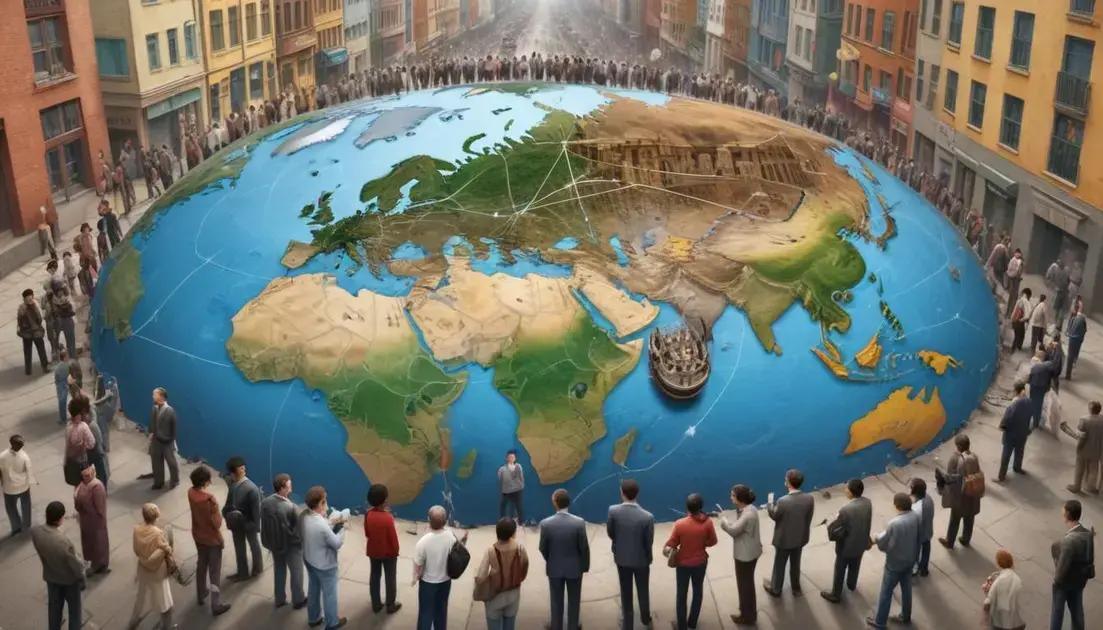
Globalization: the illusion of a borderless world
Globalization alters our world by creating connections while revealing deep economic disparities. The illusion of a borderless society promotes unity but often conceals inequalities and new dependencies. As globalization progresses, understanding its impacts on culture, economics, and technology is crucial for navigating future challenges effectively.
Globalization has reshaped our world but at what cost? The illusion of a borderless world hides deep inequalities and dependencies that we must confront. Join me.
Understanding Globalization
Understanding Globalization is key to seeing how our world connects. Over the last few decades, our lives have intertwined in ways we may not fully realize. Trade, technology, culture, and even politics have all changed. Now, goods and services cross borders like never before.
This means we can enjoy products from around the globe. But it also creates challenges. For instance, when factories move overseas for cheaper labor, local jobs may vanish!
Did you know that the internet has played a huge role? It allows small businesses to reach customers worldwide. With just a click, someone can shop from anywhere. This globalization brings us closer but has downsides too.
We must ask ourselves: Are we losing our identities? Sometimes, cultures blend beautifully. Other times, they clash. It’s a complex dance!
Understanding these dynamics is vital. By looking closely, we see both the good and the bad that comes with this interconnected world. We are together in this journey, facing new realities each day.
The Facade of Unity
The Facade of Unity often masks underlying issues in our global society. We might feel connected, but there are many inequalities beneath the surface. Different countries and cultures do not always share the same opportunities.
This illusion of unity can lead to confusion. For instance, globalization helps us share ideas, but it also can hurt local businesses. When big companies dominate, small shops struggle to survive.
People may think everyone benefits equally. But that’s not true. Many communities still face poverty and lack of access to resources. It’s important to recognize these differences.
Media plays a role too. We see images of successful people or prosperous cities. But those images may not reflect the reality for everyone. Not all nations enjoy the same advantages.
Understanding this facade is essential. By looking closely, we can challenge the narrative. We need to advocate for fairer systems that support everyone, not just a select few.
Economic Disparities
Economic Disparities highlight the gap between rich and poor worldwide. Even in a globalized society, not everyone shares equal wealth. Many countries struggle while a few thrive. This imbalance can spark tension and unrest.
For example, large corporations often benefit from globalization. They can make profits that reach billions. Meanwhile, local businesses may face unfair competition and closing doors.
These disparities affect people’s daily lives too. In wealthier areas, schools, healthcare, and jobs may be better. In poorer communities, those resources are often lacking.
It’s essential to recognize these differences. Awareness can lead to action. Many groups work to create fairer economic systems. They advocate for policies that support equality for all.
Understanding economic disparities is crucial. By discussing these issues, we can push for change that benefits everyone. Together, we can bridge the gap and ensure a more balanced future.
Emergence of New Dependencies
Emergence of New Dependencies refers to how globalization creates fresh needs between countries. As nations become more linked, they depend on each other for resources, technology, and skills.
This change is quite noticeable in various sectors. For example, many countries rely on imported goods like electronics and food. This dependency can make local economies vulnerable to global shifts.
Another area to consider is technology. Many businesses depend on international tech firms for software and services. If those firms face issues, it can directly impact operations worldwide.
People also depend on each other. Cultural exchanges happen as we share ideas and traditions. This enriches societies but can sometimes lead to misunderstandings. It’s important to respect differences while learning from one another.
Understanding these dependencies is vital. By recognizing how interconnected we are, we can better navigate challenges and build a stronger global community together.
Future of a Borderless World
The Future of a Borderless World promises exciting possibilities and new challenges. As technology advances, we can connect across nations more easily. Imagine people collaborating from every corner of the globe!
However, this also raises important questions. How will laws and regulations adapt? Different countries have various rules. Finding common ground will be essential to manage these changes.
Economically, a borderless world can offer more opportunities. Businesses can reach wider markets, helping them grow. This could lead to better products and lower prices for everyone. But smaller companies must be supported to compete.
Culturally, we can share more experiences and ideas. This blending can foster greater understanding and respect among nations. Yet, it’s crucial to preserve unique cultural identities.
Thinking about the future also means considering sustainability. How will we care for our planet while expanding connections? A balance between progress and environmental protection must be a priority.
Conclusion
In conclusion, the discussions around globalization, economic disparities, and the future of a borderless world reveal both opportunities and challenges. Understanding how our world connects helps us navigate the complexities of modern life. While globalization allows for better communication and collaboration, it also highlights the inequalities many still face.
As we look ahead, we must strive for a balance. We can embrace the benefits of a connected world while advocating for fairness and sustainability. By recognizing our interdependencies, we can work together to create a future that benefits everyone. Ultimately, fostering understanding and cooperation is key to thriving in this rapidly changing landscape.