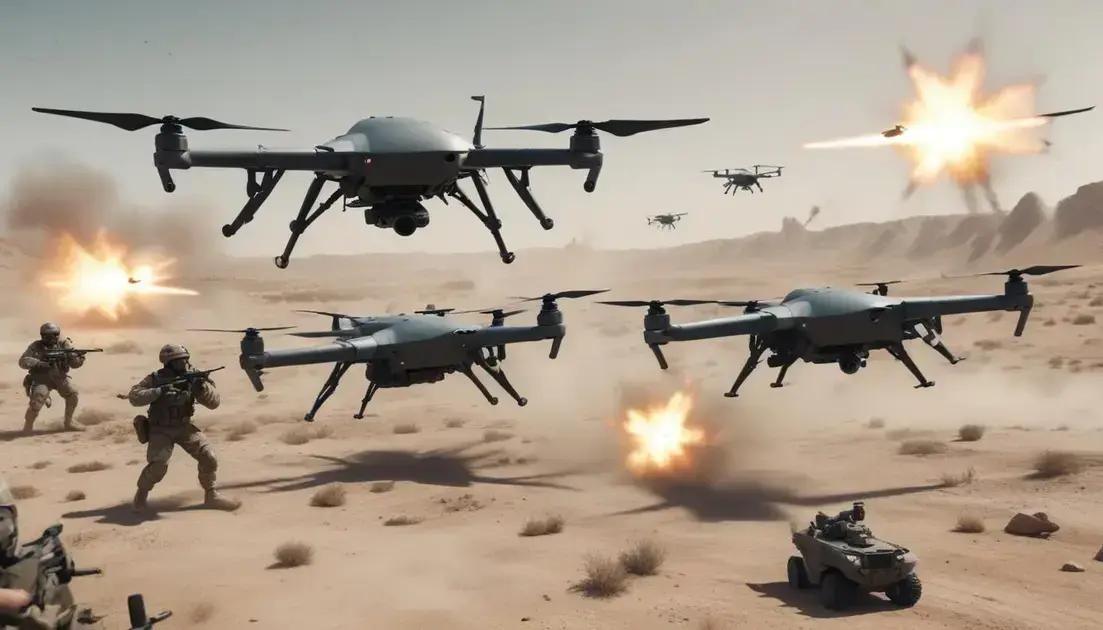
Drones and automation: the soldier of the future
The integration of drones in military operations significantly alters combat dynamics. Drones enhance safety and efficiency while raising ethical questions around privacy, accountability, and the psychological effects on soldiers. As automation increases, the potential for AI in drones will lead to faster decision-making on the battlefield. Future implications include new uses in humanitarian aid and a need for clear operational guidelines to balance technological advancement with moral responsibilities.
Are drones the future of warfare? As technology advances, the role of machines in combat is becoming increasingly significant. In this article, we explore the transformative impact of drones on the battlefield and military ethics.
Introduction to Drone Technology
Drones are becoming more common in military operations. These flying machines help gather information and provide support during missions. They can perform tasks that keep soldiers safer. For example, they can survey areas before troops arrive.
Thanks to drone technology, the military can see enemy movements without putting people in danger. Drones fly at high altitudes, allowing them to capture important images and data. This helps commanders make better decisions on the ground.
There are different types of drones, each designed for specific tasks. Some are used for reconnaissance, while others might deliver supplies. The technology behind drones is also improving every day. New advancements make them faster, smarter, and more reliable.
However, the rise of drones in combat raises some tricky questions. What happens to privacy and ethics when machines take over roles in war? It’s important for us to think about these issues as drone use expands.
As we look ahead, the role of drones in warfare will continue to grow. Understanding how they work and their impact on modern combat is crucial. They might just redefine how wars are fought in the future.
The Role of Automation in Combat
Automation is changing the way combat is conducted. It involves using technology to perform tasks without human intervention. In military operations, automation can increase efficiency and reduce risks to soldiers.
One major use of automation in combat is in unmanned vehicles, like drones and ground robots. These machines can gather intelligence and carry out missions that would be dangerous for human soldiers. For instance, drones can fly over enemy territory and provide real-time video feedback.
Automation also helps with logistics. Military robots can transport supplies and equipment where they are needed. This not only saves time but ensures that soldiers get the support they need quickly.
However, automation in combat raises important questions. How does it affect the decisions made during warfare? Who is held accountable if a machine makes a mistake? These are serious issues that need careful thought.
As technology continues to develop, automation will likely play an even bigger role in the military. Understanding its benefits and challenges is essential for adapting to this new battlefield landscape.
Ethical Considerations of Drones
Using drones in warfare brings up important ethical issues. These flying machines can gather information and even strike targets without human involvement. This raises questions about accountability when things go wrong.
One major concern is privacy. Drones can fly over areas and collect data without anyone knowing. This may invade the privacy of innocent people. It’s crucial to think about how drones are used in populated areas.
Another issue is the impact on military decision-making. With automated strikes, decisions can happen quickly without deep human thought. This can lead to errors or unintended harm to civilians.
Also, there is the question of how using drones affects soldiers. When machines take on dangerous tasks, it can change how soldiers view combat. They might become detached from the reality of war.
As drone technology evolves, having discussions about these ethical considerations is key. Understanding the moral implications of using drones can help shape rules for their use in the future.
Future Implications of Military Drones
The future of military drones holds many possibilities. As technology evolves, we can expect to see improvements in their abilities. Drones may become more capable of complex tasks, such as carrying heavier payloads or navigating tricky environments.
One potential development is the use of artificial intelligence. AI can help drones make decisions during missions. This could allow them to respond faster in changing situations, enhancing their effectiveness on the battlefield.
We might also see drones being used in new roles. For instance, they could assist in humanitarian missions by delivering aid to remote areas. This ability could save lives and help communities in need.
However, the rise of military drones also raises concerns. As they become more advanced, it’s essential to have clear guidelines for their use. Questions about accountability and ethical considerations will be more crucial than ever.
Lastly, the arms race in drone technology may lead to increased global tensions. Nations could feel pressured to enhance their drone capabilities, affecting international relations.
Conclusion
In conclusion, the rise of drones and automation in the military is reshaping how we think about warfare. These technologies offer new advantages, like increased safety for soldiers and improved efficiency in operations. However, they also bring important ethical questions that we need to address.
As military drones continue to evolve, it’s crucial for us to consider their future implications. This includes their potential roles in humanitarian aid, the impact of artificial intelligence, and the need for clear guidelines in their usage. Balancing the benefits of technology with the ethical responsibilities it entails will be key as we move forward.
Ultimately, understanding the changing landscape of drones in combat will help us navigate the challenges and opportunities they present. By being proactive and engaging in thoughtful conversations, we can ensure that these advancements contribute positively to both military operations and global society.