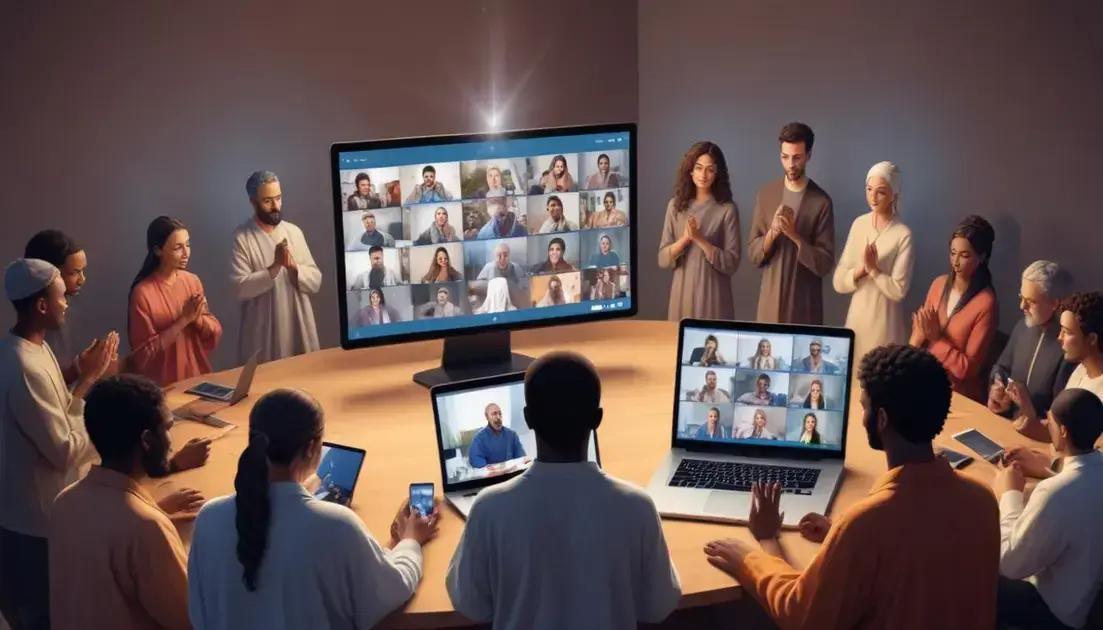
Faith reborn in the digital age
The future of religion in society is being shaped by evolving beliefs and practices. As technology plays a larger role, people are finding new ways to express their spirituality, both online and offline. The focus on inclusivity and social justice within faith communities is growing, helping to inspire younger generations. Overall, the adaptability of religious practices ensures that they remain relevant, fostering deeper connections among individuals and communities.
Digital age: in a world where technology shapes our lives profoundly, religion is adapting and finding fresh expressions. This article delves into how faith is reborn amidst challenges and opportunities. Ready to explore?
Introduction to religion in the digital age
Religion in the digital age is changing fast. People use technology to express their faith. Many find inspiration online through videos, podcasts, and social media.
Connecting Through Technology
Churches are now streaming services online. This helps people join in even if they can’t attend in person. They can watch from anywhere, which broadens the reach of their message.
Finding Community Online
Online communities are growing. People connect on social media to share their beliefs and experiences. This helps them feel less alone in their spiritual journey.
The Role of Apps
There are many apps dedicated to faith. These can help with daily prayers, reading scriptures, and learning new teachings. They make it easier to stay engaged with one’s faith each day.
Challenges in the Digital Space
With all these changes, there are challenges, too. Misinformation can spread quickly online. It’s important for seekers to reflect and create a critical lens when examining spiritual content.
Despite these challenges, the digital age offers new pathways for people to explore their faith. They can participate in discussions, share insights, and even connect through virtual events.
Impact of technology on faith practices
Technology has a big impact on faith practices today. It changes how people connect with their beliefs. Many use apps and websites to engage with their spirituality.
Online Worship
People can attend church from home. Streaming services let everyone join in, no matter where they are. This has made it easier to worship.
Social Media as a Community
Faith communities are growing on social media. People share their thoughts and support each other. It’s a great way to connect and stay inspired.
Digital Resources for Learning
There are plenty of resources online. Websites and podcasts provide teachings that help people grow in their faith. Many can listen to sermons or read texts whenever they want.
Keeping Faith Personal
Through technology, people can personalize their faith experience. They can choose what content they want to explore and how they want to practice it.
However, technology can also distract. It’s important to balance online activities with real-life connections. Overall, technology opens new doors for engaging with faith.
Political challenges to faith communities
Faith communities face many political challenges today. These challenges can affect how they operate and connect with others. Understanding these issues is important for everyone.
Issues of Freedom
One major challenge is the issue of freedom. Some laws can limit how faith groups express their beliefs. This can make it hard for them to gather and practice openly.
Political Division
Political division can also create tension within communities. When people disagree about politics, it can spill over into their faith. Discussions that should be uplifting can turn negative.
Funding and Support
Sometimes, faith communities struggle to get funding. Political decisions can influence how resources are allocated. This can affect the programs and services they offer to their members.
Advocacy and Support
Many faith groups feel a need to advocate for change. They work to support policies that align with their values. This can lead to activism, helping to address social issues.
Despite these challenges, faith communities often find ways to thrive. They adapt to their political environment and continue to serve their members.
New forms of religious expression online
Online platforms are changing how people express their faith. Many find new ways to connect with spirituality through digital means. This shift is shaping the future of religion.
Virtual Worship Services
Many churches now hold virtual services. This allows people to attend from anywhere. Even those who are homebound can join in the worship.
Creative Spiritual Content
People create various forms of content for sharing their faith. Blogs, videos, and podcasts offer fresh perspectives. These mediums help reach a wider audience.
Engaging Social Media
Social media is a big part of faith expression today. Many share daily scriptures, inspirational quotes, and personal stories online. This builds a sense of community and connection.
Online Prayer Groups
Virtual prayer groups are popping up everywhere. They let people pray together, despite distances. This can create strong bonds among participants.
Online platforms also encourage discussions about faith. This openness can lead to deeper understandings and connections among believers.
The future of religion in society
The future of religion in society is always evolving. As people change, so do their beliefs and practices. It’s exciting to think about where faith might head next.
Shifts in Belief Systems
We see changes in how people practice their faith. Many seek personal connections over traditional settings. This means more individuals might explore spirituality on their own terms.
Greater Inclusion
In the future, religion may become more inclusive. Diverse voices are rising, bringing new ideas and practices. This can lead to a richer understanding of faith.
Technology’s Role
Technology will keep shaping religious experiences. Virtual services and online communities are here to stay. They provide greater access to faith for many around the world.
Focus on Social Justice
Many faith communities are increasingly focused on social justice issues. They engage in activism to improve society. This can inspire younger generations to get involved.
Overall, the future of religion is about adapting and growing. It’s a journey towards deeper connections and understanding in a changing world.
Conclusion
In conclusion, the future of religion in society is full of possibilities. As beliefs evolve, we see more personal connections and inclusive practices emerging. Technology continues to play a major role, helping people engage with their faith in new ways.
Moreover, the focus on social justice inspires many to get involved and create positive change. This evolving landscape invites everyone to explore and grow their spiritual journeys. Embracing these changes can lead to a richer, more connected community for all.