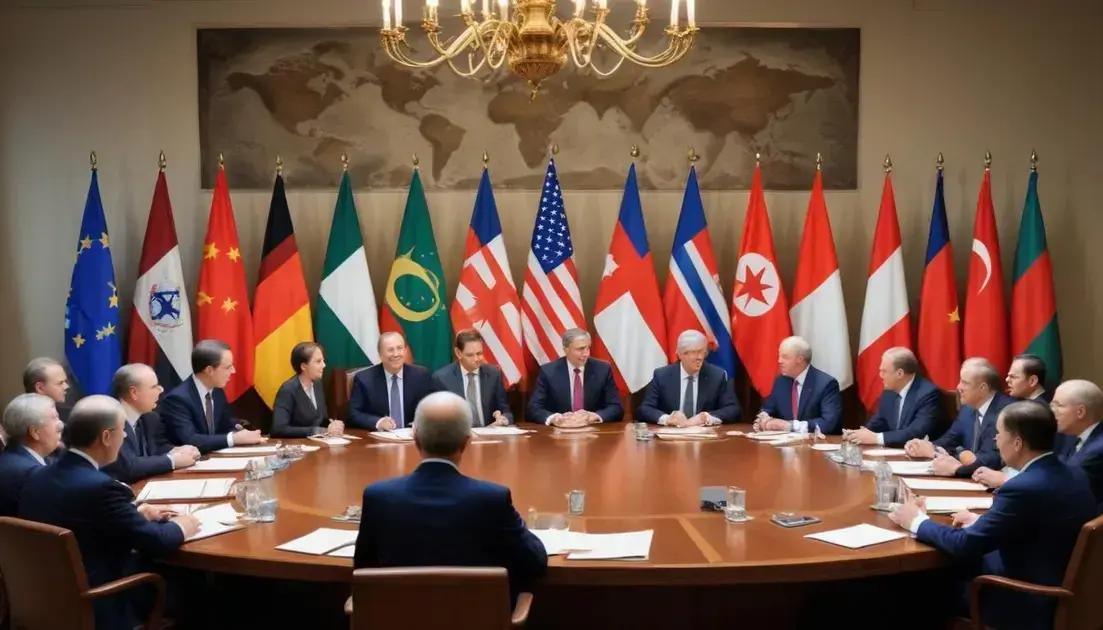
Sanctions through history: the politics of punishment
Sanctions have a significant impact on global politics, serving as tools for nations to express disapproval and apply pressure on governments to instigate change. While some view sanctions as essential for maintaining international order, critics argue they can harm innocent civilians. The future may see smarter sanctions focusing more on specific targets rather than entire economies, requiring greater global cooperation and the use of technology for effectiveness. Ultimately, understanding sanctions and their evolving role is crucial for navigating today’s complex international landscape.
Sanctions have a complex history that reflects changing global dynamics. They’re not just tools of power; they shape nations and influence change. So, how do these measures work, and what’s their impact?
The evolution of sanctions through time
Sanctions have a long history that reflects the ways nations interact. In ancient times, countries used various forms of sanctions to express disapproval or to force change. For example, during the Roman Empire, trade restrictions were common towards rival territories.
Early History of Sanctions
In the ancient world, sanctions were often blunt instruments. Nations would cut off trade to punish others. This could lead to serious shortages and hardships. For instance, Athens used economic sanctions against Megara during the Peloponnesian War. This event highlighted how powerful sanctions can be in shifting political power.
Modern Era Developments
Fast forward to the 20th century, and sanctions evolved. After World War I, the League of Nations tried to use sanctions to maintain peace. However, results were often mixed. Sanctions were seen as both a tool for justice and a way to cripple economies.
Types of Sanctions Today
Today, we see targeted sanctions more often. These focus on specific individuals or entities, like freezing assets. This approach aims to limit impact on ordinary citizens while punishing those in power. Countries like the U.S. use these tactics against nations that violate international laws.
Recent examples include sanctions against North Korea over its nuclear program. These measures are meant to protect global security. However, they can also lead to suffering for innocent people. Finding the right balance is crucial.
Global Perspectives
Views on sanctions vary globally. Some believe they are necessary for encouraging change. Others argue they cause more harm than good. This debate continues as nations navigate complex relationships. Each situation is unique and requires careful consideration.
Understanding the evolution of sanctions gives us insight into international relations. As the world changes, so do the tools we use to address conflicts and maintain order.
Key historical examples
Many key historical examples show how sanctions can impact nations. One of the earliest uses of sanctions was during the Peloponnesian War. Athens imposed sanctions on Megara to weaken its rival. This action led to economic struggles for Megara.
Soviet Union and the Cold War
Another significant example occurred during the Cold War. The United States used sanctions against the Soviet Union after its invasion of Afghanistan in 1979. These sanctions aimed to pressure the Soviet government and showed a united front against aggression.
South Africa and Apartheid
In the 1980s, international sanctions targeted South Africa due to its apartheid policies. Countries around the world joined these efforts to end racial segregation. These actions played a crucial role in bringing about change and ending the unjust practices.
Recent Examples
More recently, sanctions have been applied to Iran. The U.S. aimed to limit its nuclear program through economic restrictions. These sanctions sparked debates about their effectiveness and humanitarian impacts.
Each of these cases highlights how sanctions can sway political outcomes. They can force nations to rethink their actions. However, the human cost should always be considered, as innocent citizens often bear the brunt of such measures.
The impact of sanctions on international relations
Sanctions can deeply affect international relations. They serve as tools for countries to express disapproval or pressure others. When a nation imposes sanctions, it often creates tension and can lead to conflict.
Changing Alliances
Sanctions can reshape alliances between countries. Nations may band together against sanctions to support one another. For example, countries targeted by sanctions often create new partnerships for trade and support.
Economic Consequences
Economic impact is another significant effect. Sanctions can cripple an economy by cutting off trade and finances. This can lead to shortages of food and goods for the citizens of the targeted nation.
International Image
The way sanctions are viewed globally can impact a nation’s reputation. Countries imposing sanctions may be seen as proactive, while those sanctioned might portray themselves as victims. This differences can influence public opinion and diplomatic relations.
Negotiation Tactics
Sanctions also play a role in negotiations. Countries often use them as leverage in talks. They signal that certain behaviors are unacceptable. However, they can also complicate negotiations if not handled carefully.
Overall, sanctions significantly shape international relations. Their effects rippled through economies, alliances, and public perceptions, driving the global conversation on security and diplomacy.
Contemporary viewpoints on sanctions and their effectiveness
Today, viewpoints on sanctions vary widely. Some see them as essential tools for urging change. Others believe they do more harm than good, often hurting innocent people.
Support for Sanctions
Many argue that sanctions can be effective in pressuring governments. They often serve as a peaceful alternative to military action. For instance, sanctions on Russia aim to change behavior without armed conflict.
Criticism of Sanctions
Critics point out that sanctions can lead to unintended consequences. These measures often hurt everyday citizens instead of leaders. This can spark frustration and anger against those imposing the sanctions.
Measuring Effectiveness
How do we measure the success of sanctions? It’s complex. Some argue that progress takes time. Others want immediate results. Often, sanctions lead to negotiation but may not change behavior as quickly as hoped.
International Collaboration
Many believe successful sanctions require global cooperation. If some countries do not comply, sanctions may lose their power. Unified actions can increase impact and pressure on targeted nations.
The debate continues on whether sanctions are effective. Understanding different perspectives is vital in a world that often seeks change through economic measures.
Future of sanctions in global politics
The future of sanctions in global politics looks complex. As the world changes, so do the ways nations use sanctions. They may evolve into more targeted approaches, focusing on specific individuals or entities.
Smart Sanctions
One possible direction is the rise of smart sanctions. These aim to minimize harm to ordinary citizens while still applying pressure on leadership. For example, freezing assets of key figures might reduce overall economic damage.
Increased Global Collaboration
We might also see increased collaboration among nations. Countries are recognizing that working together can make sanctions more effective. Joining forces can strengthen the impact of these measures on targeted nations.
Technological Influence
Technology will play a role in shaping future sanctions. Data analytics can help identify targets and measure the effectiveness of sanctions. This can lead to more precise and adaptive strategies.
Changing Global Landscape
As global power dynamics shift, so will the use of sanctions. Emerging powers may challenge traditional approaches, leading to new methods of enforcing or avoiding sanctions. This can affect international relations in significant ways.
The future is uncertain, but it is clear that sanctions will remain a key tool in global politics. Adapting to the changing landscape will be essential for their continued relevance.
Conclusion
In conclusion, sanctions play a crucial role in shaping international relations and global politics. They can press governments to change while sparking debate about their effectiveness. While some view sanctions as necessary tools, others worry about their impact on ordinary people.
The future of sanctions may involve smarter approaches, focusing on individuals rather than entire economies. As global alliances shift and technology evolves, nations will need to adapt their strategies. Understanding these dynamics is key to navigating the complex world of international relations and maintaining peace.