The typewriter: how America invented the written machine
The typewriter revolutionized communication by transforming writing from a slow, manual process to a fast and efficient method. Invented in the late 19th century, it allowed for clear, uniform documents that influenced how people shared information. Today, its legacy is evident in modern keyboards and writing practices, making it a crucial element in the history of written communication.
The typewriter revolutionized how we communicate, making the act of writing not just efficient but also accessible. Have you ever wondered how this invention shaped our daily lives? Let’s dive in!
Introduction to the typewriter’s inception
The history of the typewriter is fascinating and full of innovation. It all began with a desire to make writing easier and faster. In the early 1800s, inventors started creating machines to help with this task.
The First Typewriter
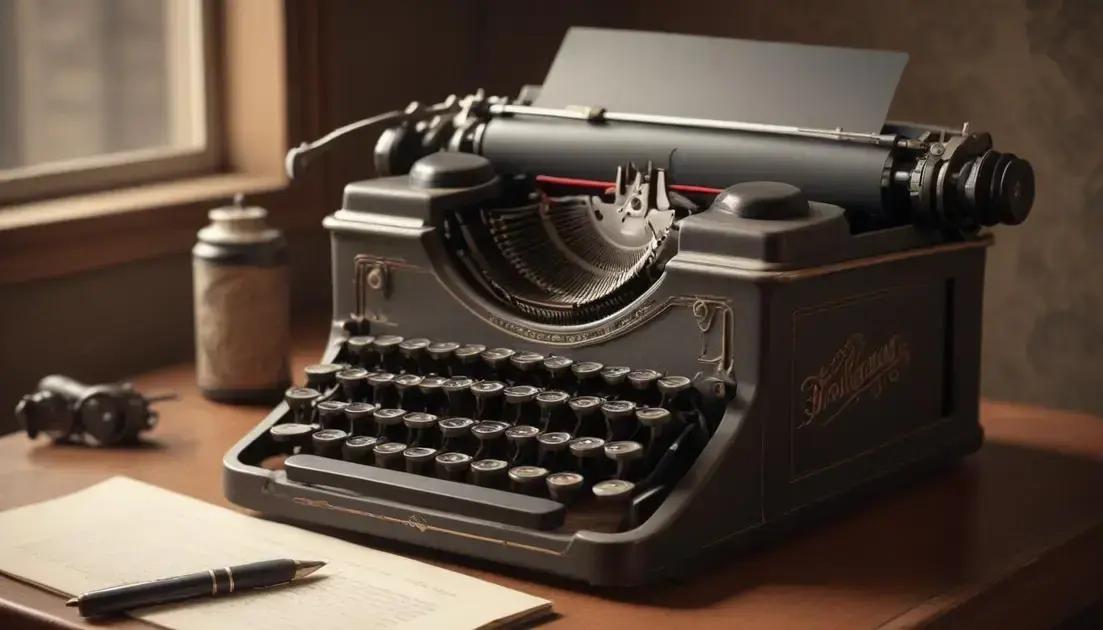
The first practical typewriter was invented by Christopher Latham Sholes in 1868. It had a QWERTY keyboard layout, which we still use today. This design aimed to reduce jamming by placing commonly used letters apart.
How it Changed Writing
Before typewriters, people wrote by hand, which was often slow and messy. With the typewriter, writing became neater and more efficient. It opened doors for writers, journalists, and offices everywhere.
Impact on Society
As typewriters became popular, they transformed communication. Businesses found them helpful for typing letters and reports. Writers could produce books and articles much quicker, making publishing more accessible.
Legacy of the Typewriter
Today, the typewriter’s legacy lives on in computers and modern keyboards. Its invention marked a significant step in the evolution of writing and communication.
The evolution and impact of the typewriter
The typewriter has evolved significantly since its creation. Early models were basic and often flawed. However, inventors kept improving them to make writing easier.
Improvements Over Time
After Sholes’ design, many inventors added features. They introduced new materials and better mechanisms. These changes made typewriters more reliable and user-friendly.
Typewriters in the Workplace
By the late 1800s, typewriters became essential in offices. They allowed faster document creation. Businesses could produce letters and reports quickly.
Influence on Writing Styles
Typewriters also changed how people wrote. With a typewriter, there was less focus on neat handwriting. Instead, people embraced the machine’s uniform appearance.
Modern Impact
Today, while we mostly use computers, the typewriter’s influence remains. The keyboard layouts we use now are based on typewriter designs. This shows how impactful this invention was on modern technology.
How the typewriter changed communication
The typewriter changed communication in many ways. Before its invention, people relied on handwriting. This method could be slow and messy.
Speed and Efficiency
With the typewriter, writing became much faster. It allowed people to produce clear and professional-looking documents quickly. This was a game changer for businesses.
Expansion of Written Communication
Typewriters made it easier to create letters, newspapers, and books. Suddenly, writing wasn’t just for a few; it was for everyone. More people began to express their ideas in print.
Access to Information
As more typewriters appeared in offices and homes, information spread quickly. This led to increased literacy and engagement with the news. It was easier for people to stay informed about events happening around them.
A Shift in Workplace Culture
Typewriters also transformed the workplace. They changed how people worked together. Team members could collaborate more easily on documents and reports.
Legacy of the typewriter in modern writing
The typewriter has left a lasting legacy in modern writing. Its influence can be seen everywhere in how we write today. Though technology has changed, many aspects of typing remain the same.
From Typewriters to Keyboards
When computers became popular, they took over for typewriters. Yet, the keyboard layout we use today comes from typewriter designs. It makes typing feel familiar for many users.
Impact on Writing Style
The typewriter also changed how people approach writing. It encouraged clarity and directness. Writers learned to be concise because typing was faster than writing by hand.
Maintaining the Typewriter Culture
Typewriters have a nostalgic charm. Many writers still use them for artistic reasons. Some even prefer the feel of typing on a physical machine over a computer.
Influence on Modern Publishing
The publishing world was shaped by typewriters. They made mass production of texts possible. This led to the rise of magazines, newspapers, and books that we enjoy today.
Conclusion
In conclusion, the typewriter has had a significant impact on how we write and communicate. Its invention transformed writing from a slow, tedious process into a quicker and more efficient way to share ideas. Even today, we see its influence in modern keyboards and writing styles.
The legacy of the typewriter continues to inspire new generations of writers. It reminds us of the power of words and how technology can enhance our communication. By appreciating the history of the typewriter, we can better understand how far we’ve come and where we’re headed in the world of writing.