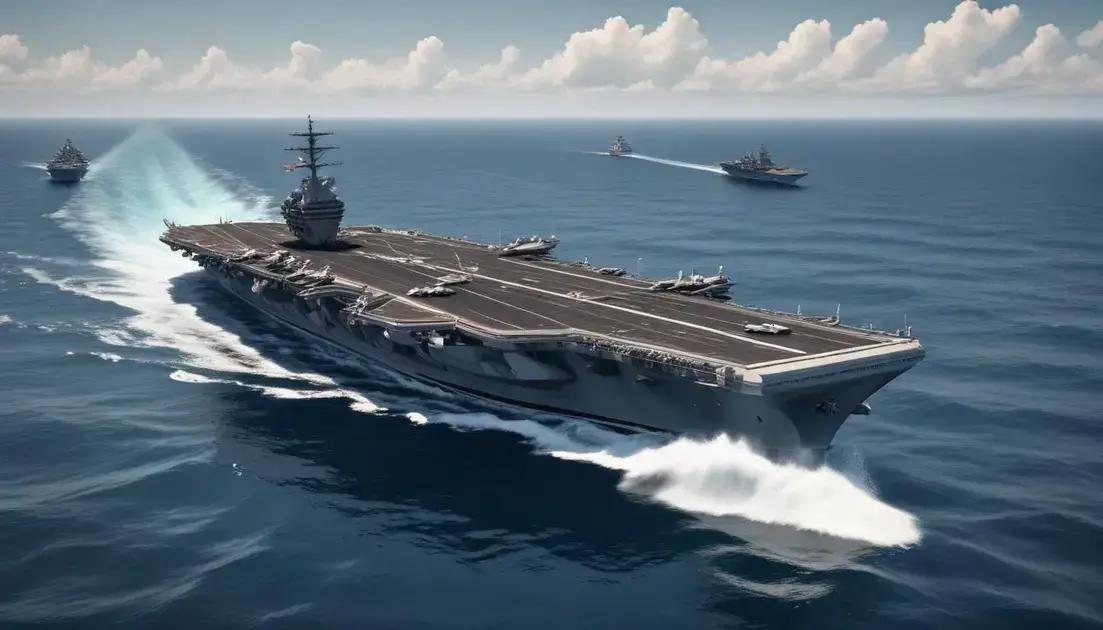
How the U.S. Navy became the guardian of the seas
The U.S. Navy plays a crucial role in ensuring maritime security and stability through advanced technological capabilities and strategic naval presence. Aircraft carriers serve as mobile airbases, allowing for rapid response to threats and supporting humanitarian efforts. Collaboration with allies enhances their effectiveness, while continuous investment in innovation keeps the Navy prepared for modern challenges. These efforts ensure safe trade routes and promote regional peace, highlighting the importance of naval strength in today’s global landscape.
U.S. Navy has transformed maritime operations, becoming a key player in global security. Dive in to understand its pivotal role.
Introduction
The U.S. Navy plays a crucial role in keeping our oceans safe and secure. They operate a powerful fleet that includes massive aircraft carriers. These vessels are not just for defense; they help with humanitarian efforts and peacekeeping missions as well.
Did you know that aircraft carriers serve as floating base stations? They allow Navy pilots to launch aircraft from anywhere in the world. This ability makes them vital during conflicts and emergencies.
Each carrier can host a large number of aircraft, from fighter jets to helicopters. The presence of these carriers can help deter threats and maintain stability in regions that need support.
The Navy also focuses on strategic alliances with other countries. By working together, they enhance maritime security and promote international cooperation.
Overall, the U.S. Navy ensures freedom of navigation and protects vital sea lanes that carry global trade. Their commitment to maintaining peace on the seas is essential for a stable world.
The Role of Aircraft Carriers
Aircraft carriers are the backbone of the U.S. Navy. They act as mobile airbases that can operate anywhere in the world. These ships carry a fleet of planes, giving the Navy a powerful strike capability.
Each carrier is equipped with advanced technology. This includes radar systems and communication tools that help coordinate missions. With these tools, they can respond quickly to threats.
Aircraft carriers also support humanitarian missions. For instance, they can deliver aid and supplies during disasters. Their ability to reach remote areas makes them invaluable in emergencies.
Training is key for pilots and crew on these floating giants. The environment is unique, and practice is essential. They conduct drills to ensure readiness for any situation.
Furthermore, having carriers in strategic locations helps prevent conflicts. Their presence can deter hostile actions from other nations. This increases security and stabilizes regions that might otherwise be tense.
Strategic Importance of Naval Presence
Naval presence is crucial for maintaining peace and stability across the globe. The U.S. Navy protects vital shipping routes. These routes are essential for trade and the economy.
When a Navy ship is near, it shows strength and readiness. This often stops conflicts before they start. Other nations see the presence of the U.S. Navy and think twice before causing trouble.
Naval ships can respond quickly to emergencies. Whether it’s a natural disaster or a crisis, they can provide help and support. Their flexibility is a significant advantage.
Working with allies enhances this presence. Joint exercises and missions with other nations build trust and cooperation. This teamwork makes all countries stronger and safer.
Furthermore, the Navy’s role includes gathering intelligence. Ships and submarines collect data about potential threats. This information is key to making informed decisions.
Technological Advancements
Technological advancements have changed the way the U.S. Navy operates. Modern ships are equipped with cutting-edge tools. These tools help improve accuracy and safety in missions.
New weapons systems increase effectiveness. For example, precision-guided munitions allow for accurate strikes. This means fewer mistakes and better results during operations.
Communication technology has also made a big difference. Ships can share information in real-time. This helps crews coordinate and respond quickly to threats.
Additionally, surveillance technology aids in monitoring activities at sea. Drones and satellites provide valuable data. They help the Navy stay one step ahead of potential challenges.
Cybersecurity is another focus. Protecting data and systems from cyber threats is vital. The Navy invests in strong defenses to secure its operations.
Conclusion
The U.S. Navy’s advancements are essential for modern defense. These changes keep our nation safe in a complex world.
From new technologies to improved strategies, the Navy adapts to meet challenges. Their flexibility is key to responding to diverse situations.
As global tensions rise, maintaining a strong naval presence is vital. This ensures freedom at sea and encourages international stability.
Collaboration with other nations strengthens alliances. Together, they can face common threats and protect shared interests.
With continued investment in innovation, the Navy stays ahead of potential dangers. Their commitment to protecting our waters is unwavering.
Conclusion
In conclusion, the role of the U.S. Navy is vital for global security and stability. With powerful aircraft carriers and advanced technology, they can respond quickly to any threat. Their presence not only deters potential conflicts but also promotes peace in troubled regions.
Through teamwork with allies and constant innovation, the Navy is prepared for modern challenges. They protect our seas, ensuring safe passage for trade and humanitarian efforts. As threats evolve, so does the Navy, demonstrating its commitment to safeguarding our nation and the world.
Ultimately, investing in naval strength and technology is essential for a safe future. The U.S. Navy stands ready to defend our interests and maintain freedom on the seas.