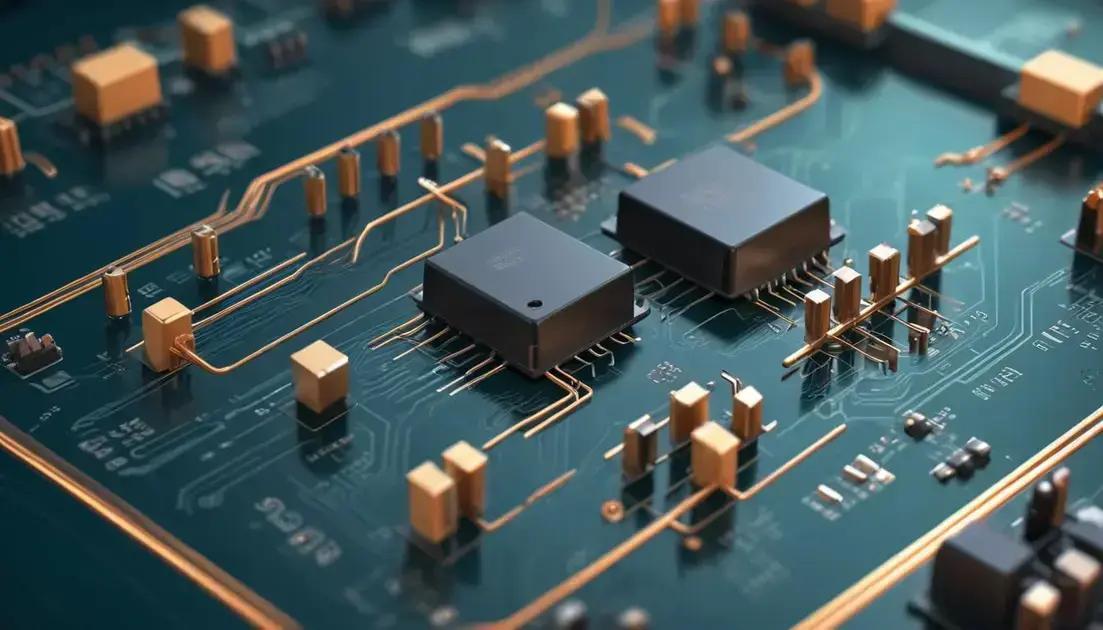
The transistor: the invention that started the digital age
The transistor revolutionized technology by acting as a tiny electronic switch that controls electrical currents. It made devices smaller, faster, and more efficient, playing a crucial role in the digital age. Transistors are essential in smartphones, computers, and the internet, enabling quick communication and processing of information. As technology advances, future trends include the development of nano-sized transistors and new materials like graphene, which promise to improve device performance further. Understanding transistors helps us appreciate their impact on everyday technology and their role in future innovations.
Ever wondered how a tiny transistor can have such a colossal impact on the world? This groundbreaking invention ignited the digital age and transformed global communication.
Introduction to the transistor
The transistor is a small yet mighty component that has changed how we live and communicate. It acts like a switch or amplifier. This means it can turn on or off electrical signals and amplify them when needed. Imagine it as a traffic cop, guiding the flow of electricity.
Invented in 1947, the transistor sparked the beginning of the digital revolution. Before transistors, technology depended on bulky vacuum tubes. These were big, used a lot of power, and were not very reliable. Transistors, on the other hand, are tiny, efficient, and last much longer.
They are the building blocks of modern electronics. From smartphones to computers, transistors help our devices work smoothly. They can be found in nearly every gadget we use today.
As technology continues to advance, the role of transistors grows even more. New designs keep making them smaller and faster, leading to even more powerful devices. The transistor’s journey is a great example of innovation driving progress.
Impact on global communication
The transistor has had a huge impact on global communication. It allowed devices to become smaller and more efficient. This meant that people could connect with others across the world like never before.
Before transistors, communication relied on large, heavy equipment. Now, we can have powerful devices in our pockets. Transistors make smartphones, radios, and computers possible. These devices help us talk, share, and access information instantly.
With transistors, the internet grew faster than anyone expected. Faster connections mean easier access to social media, news, and education. People can learn and share ideas quickly.
The rise of video calls and live streaming is another benefit. Thanks to transistors, families can connect no matter the distance. Friends can see and hear each other, keeping bonds strong.
In short, transistors have changed how we communicate. They have made the world feel smaller and more connected. Because of this innovation, our daily lives are more linked than ever.
Role in the digital revolution
The transistor plays a vital role in the digital revolution. It enabled technology to leap forward in ways we hardly imagined. By replacing bulky vacuum tubes, transistors made devices smaller, faster, and more reliable.
This change laid the groundwork for modern computers. Today’s laptops, desktops, and servers use millions of transistors to process information. Without them, computing as we know it wouldn’t exist.
Transistors also paved the way for advanced programming and software. They allow software to run smoothly, helping us accomplish tasks quickly. From simple apps to complex games, everything relies on transistors at some level.
Moreover, the growth of the internet depended heavily on transistors. They made it possible for servers to communicate and handle vast amounts of data. This connection has changed how we work, learn, and socialize.
Thanks to transistors, innovations keep coming. Now, we are seeing developments in artificial intelligence and machine learning. These technologies push the digital revolution even further, highlighting the importance of transistors in our everyday lives.
How transistors work
Transistors work like electronic switches. They control the flow of electricity in a circuit. When a small current flows through one part of the transistor, it allows a larger current to flow through another part. This is how they amplify signals.
There are two main types of transistors: BJT (bipolar junction transistors) and FET (field-effect transistors). BJTs use current to control the flow, while FETs use voltage. Both types are essential for different applications.
In a simple circuit, when you turn on the transistor, it connects the electric current, letting it flow. This action can power a light bulb or send a signal through a device. It’s fascinating how a tiny component can have such a big effect.
Transistors can also switch on and off very quickly. This speed makes them perfect for digital devices. They help store and process data, which is crucial for computers and smartphones. Without transistors, our modern devices wouldn’t work as we expect.
As technology advances, engineers keep finding new ways to build and use transistors. The goal is to make them smaller and more efficient, packing more power into everyday gadgets.
Future of transistor technology
The future of transistor technology looks bright and exciting. Engineers are always searching for ways to improve transistors. They want to make them faster, smaller, and more efficient. This will help devices use less power and perform better.
One big trend is the development of nano-sized transistors. These tiny components allow more transistors to fit on a single chip. This means we can create more powerful devices that still fit in our pockets.
Another promising area is the use of new materials. Engineers are exploring materials like graphene and silicon carbide. These materials can handle higher speeds and temperatures than traditional silicon. They could lead to faster computers and improved energy efficiency.
Quantum computing is another frontier where transistors play a key role. Quantum transistors could revolutionize how we process information, making calculations much faster. This could lead to breakthroughs in areas like medicine, finance, and artificial intelligence.
As we move forward, the demand for smart devices will only grow. The future of transistors will directly impact how we connect and communicate. It’s thrilling to think about the possibilities that lie ahead.
Conclusion
In conclusion, the impact of transistors on our world is profound. They’ve changed the way we communicate, work, and live. Without transistors, modern technology as we know it wouldn’t exist.
As we look ahead, the future of transistor technology is bright. Advancements in materials and size will lead to even smarter and faster devices. This means our gadgets might become more powerful and efficient than ever.
Understanding how transistors work helps us appreciate their role in the digital revolution. They not only support our current devices but also pave the way for future innovations. Embracing these changes will keep us connected and informed in our fast-paced world.
Tags: