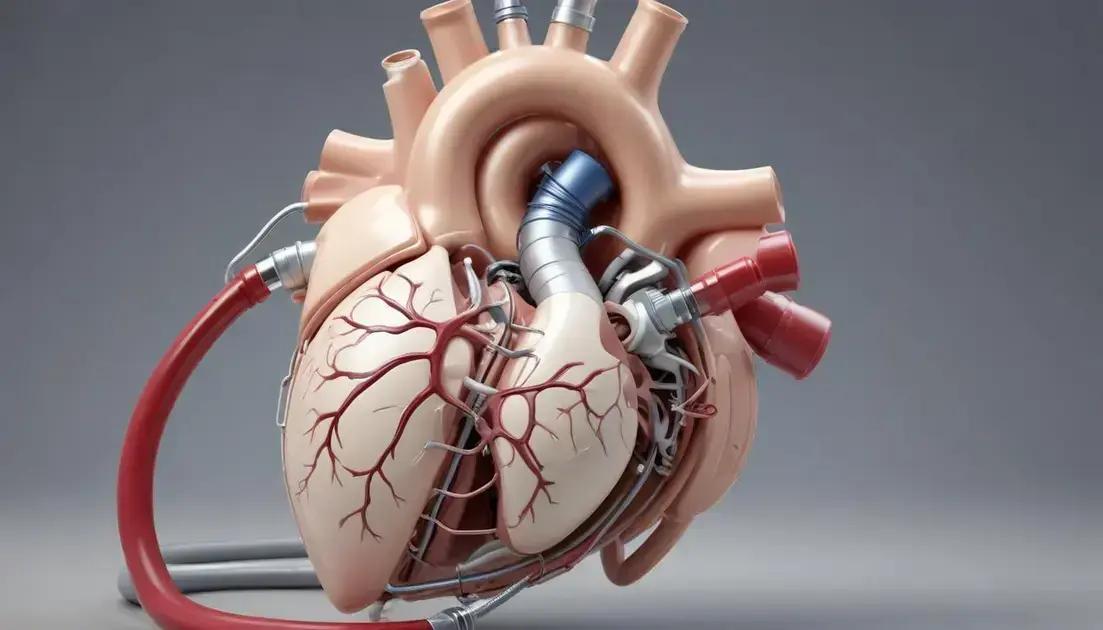
The artificial heart: a medical miracle
The advancements in artificial heart technology have revolutionized treatment options for patients with severe heart conditions. With real-world impacts reflected in inspiring patient stories, these devices have provided renewed hope and improved quality of life. As we look to the future, ongoing innovations in engineering and medical science may lead to even more personalized solutions, including fully implantable artificial hearts and advanced wearable health monitors, ensuring that heart disease can be confronted with optimism and cutting-edge technology.
Artificial heart technology has changed the landscape of medicine, offering hope to those with severe heart conditions. But how does it really work? Let’s explore!
The genesis of the artificial heart
The journey to create the artificial heart began decades ago. Scientists and doctors were determined to find solutions for patients with heart disease. They wanted to give people another chance at life.
The first successful attempts at creating an artificial heart were groundbreaking. In the 1980s, Dr. Barney Clark became the first person to receive a permanent artificial heart. This moment marked a big leap in medical technology.
Progress continued with many inventors, each building on the work of those before them. The goal was to create a heart that functions like a natural one. This meant finding materials that are safe and durable inside the human body.
Researchers studied the natural heart’s mechanics. They looked at how blood flows and how the heart pumps. Understanding these details helped them develop better designs for artificial hearts.
A major milestone came in 2001 when the AbioCor was tested. It was the first fully implantable artificial heart capable of working without wires or external connections. Patients who received this device experienced a new way of living.
Today, artificial hearts continue to evolve. New technology and materials allow for better performance and longevity. The journey of the artificial heart is still ongoing, with researchers working tirelessly to improve outcomes for patients.
Medical breakthroughs and engineering marvels
In the world of medicine, breakthroughs like the artificial heart are remarkable. These advances show how engineering and medicine come together. With each new invention, lives are changed.
One key breakthrough was the development of ventricular assist devices (VADs). These devices help patients with weak hearts. They support the heart’s function while waiting for a transplant.
Innovation doesn’t stop there. Researchers have created devices that can replace heart valves too. These heart valves can be repaired or replaced using less invasive methods.
Technology also plays a big role. 3D printing is changing how artificial organs are made. This allows for precise shapes and sizes. Doctors can create patient-specific models for better outcomes.
New materials are another exciting development. Manufacturers are using biocompatible materials that work well in the body. This means fewer risks of rejection and complications.
Digital health technology is gaining traction too. Wearable devices help monitor heart health in real time. They provide valuable data to both patients and doctors. This information can lead to better treatment plans.
Real-world impact and patient stories
The real-world impact of artificial hearts has been profound. Many patients have shared inspiring stories of their journeys. These devices have given them a new lease on life.
Take the case of John, for example. He received an artificial heart after battling severe heart disease. This device allowed him to return to activities he loved, like hiking and spending time with family.
Another inspiring story is that of Maria. After her heart surgery, she regained her strength. The artificial heart helped her to see her grandchildren grow up. These testimonials show how technology can change lives.
Patients often describe their experience with the artificial heart as life-changing. Many say it gave them hope when they thought they had none. They cherish each moment with their loved ones.
The support networks for these patients are also important. Many share tough times and victories with each other. This community helps everyone cope with their challenges.
Doctors report improvements in quality of life for patients with artificial hearts. Patients can lead more active lives and enjoy better health.
Future of heart technology
The future of heart technology looks bright and full of promise. Researchers are working hard to create even better solutions for heart problems. Advances in science and engineering are leading the way.
One exciting area is the development of fully artificial hearts. These devices aim to replicate the natural heart almost perfectly. They could allow people to live without needing a transplant.
Another innovation is personalized heart devices. With 3D printing, doctors can create models that fit each individual. This can lead to better outcomes and fewer complications.
Wearable technology is also set to grow. Devices that monitor heart health in real-time will help people stay informed. This can lead to quicker responses in a crisis.
Artificial intelligence (AI) is transforming the field too. AI can help analyze patient data and predict risks. This means doctors can provide better care tailored to each patient’s needs.
As research continues, the goal remains the same: better health for everyone. Heart technology has come a long way, and the best is yet to come.
Conclusion
In conclusion, the advancements in artificial heart technology represent a remarkable leap forward in medicine. These innovations have not only saved lives but also improved the quality of life for many. As we look to the future, the promise of even more breakthroughs excites us.
With continuous research, new materials, and smarter technologies, we can expect even more efficient solutions for heart health. Each patient’s story shows us the real-world impact of these developments. Together, we move toward a future where heart disease is faced with hope and innovation.