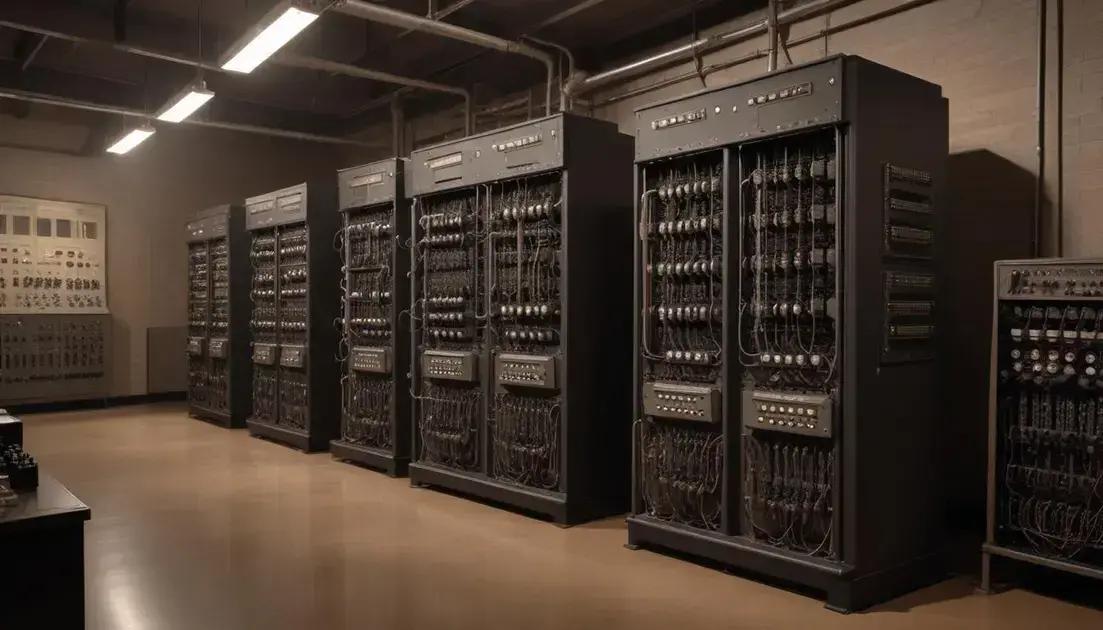
ENIAC: the computer that changed the future
ENIAC, the first general-purpose electronic computer, revolutionized computing by demonstrating fast calculations and programmable tasks. Built in the 1940s, it set the foundation for modern computer design, showcasing the power of electronic processing. Its legacy continues to influence today’s technology, making ENIAC a pivotal milestone in the evolution of computing.
ENIAC changed the landscape of computing forever. Imagine a machine that filled a room, yet opened the door to digital innovation! Curious about its journey?
The Birth of ENIAC
ENIAC, which stands for Electronic Numerical Integrator and Computer, was born in the early 1940s. This groundbreaking machine was the first general-purpose electronic computer. Built by John W. Mauchly and J. Presper Eckert, it took about two years to complete.
Imagine it: a room-sized marvel filled with wires, vacuum tubes, and switches. The machine was designed to help with complex calculations during World War II. It was initially created for the U.S. Army to calculate artillery firing tables.
Design and Specifications
ENIAC was a huge project. It weighed over 30 tons and occupied a space of around 1,800 square feet. This required a lot of resources and people to keep running. It used a total of around 17,500 vacuum tubes.
Programming the ENIAC was also a challenge. Technicians had to set up cables and switches manually to run different tasks. It was quite a process, but the machine could perform up to 5,000 calculations per second!
Significance of ENIAC
The birth of ENIAC marked a turning point in the history of computing. It opened the doors for future computers, making them smaller and faster. ENIAC showed the world what electronic computers could achieve.
Besides its size, ENIAC was impressive because it changed how we think about machines. It paved the way for future developments in the tech world, including modern computers today.
ENIAC’s Technical Specifications
ENIAC had some remarkable technical specifications for its time. It was built with over 17,000 vacuum tubes. These tubes were key components that allowed it to perform calculations.
With a size of around 30 tons, ENIAC occupied a lot of space. It filled a room about 1,800 square feet large. Its design included 6,000 switches, 10,000 resistors, and 1,500 relays.
ENIAC was capable of executing about 5,000 calculations per second. This speed was groundbreaking for the early 1940s. It could also store 20 decimal digits for each number.
Power Requirements
To operate, ENIAC needed a lot of power. It used around 150 kilowatts to run, which is much more than most computers today. This power requirement meant it was not just a machine; it was a big energy consumer.
Programming ENIAC was not straightforward. It was done by using plugboards and switches. Each new task required a technician to manually rewire the machine. This hands-on approach was labor-intensive but necessary for its operations.
Impact on Computing
ENIAC had a huge impact on computing as we know it today. It was not just the first general-purpose computer but also set the stage for future designs. ENIAC showed what electronic machines could do, inspiring engineers everywhere.
This machine made calculations much faster than earlier methods. Before ENIAC, people used manual calculations, which took a long time. Now, tasks that once took hours could be done in minutes.
Influencing Future Generations
Thanks to ENIAC, new computers became smaller, faster, and more efficient. Its design helped shape later models. The ideas behind ENIAC led to innovations like stored-program computers.
The concepts developed for ENIAC continue to influence modern computing. Today’s computers still rely on principles first introduced with this incredible machine. ENIAC opened the door to a digital world, changing how we work and live.
Inspiring Innovations
After ENIAC, the field of computing grew rapidly. Designers began creating machines with better programming methods. The explosion of personal computers in the 1980s can trace its roots back to ENIAC’s legacy.
Its impact goes beyond hardware. The programming techniques developed for ENIAC laid the groundwork for software that we still use today. ENIAC was truly a stepping stone in the history of computing.
Legacy of the ENIAC
The legacy of ENIAC is significant in the world of technology. This machine changed how we think about computers forever. It laid the groundwork for modern computing.
ENIAC was the first machine to demonstrate the power of electronic computing. Its design influenced countless machines that followed. Engineers were inspired to create faster and smaller computers.
Advancements in Computer Design
After ENIAC, the computing industry evolved quickly. Designers learned to make machines more efficient. The idea of using stored programs came from ENIAC’s blueprint. This revolutionized how computers were built.
With ENIAC’s influence, personal computers became a reality in the late 20th century. The world moved from room-sized machines to devices we can hold in our hands. ENIAC’s reach extends to the powerful laptops and smartphones we use today.
Impact on Software Development
ENIAC also had a major impact on software. The programming methods created during its operation are still used today. These methods shaped the way we interact with computers.
Its legacy is felt in computer science education, inspiring new generations. Many students study ENIAC’s story to learn about the evolution of computing.
Overall, ENIAC stands as a symbol of innovation. It reminds us how far we’ve come in technology. Its influence is still visible in every device we use.
Conclusion
In conclusion, ENIAC was a groundbreaking machine that changed technology forever. Its impact on the computing world is still felt today. From influencing the design of modern computers to shaping programming methods, ENIAC set the stage for future innovations.
As we continue to advance in technology, the lessons learned from ENIAC remind us of the importance of innovation. It opened doors to a digital future, inspiring engineers and scientists to push boundaries. Today, we owe much to this remarkable machine and its legacy.
Understanding ENIAC’s significance helps us appreciate how far we’ve come and what lies ahead. Its story is a testament to human creativity and determination in the field of computing.