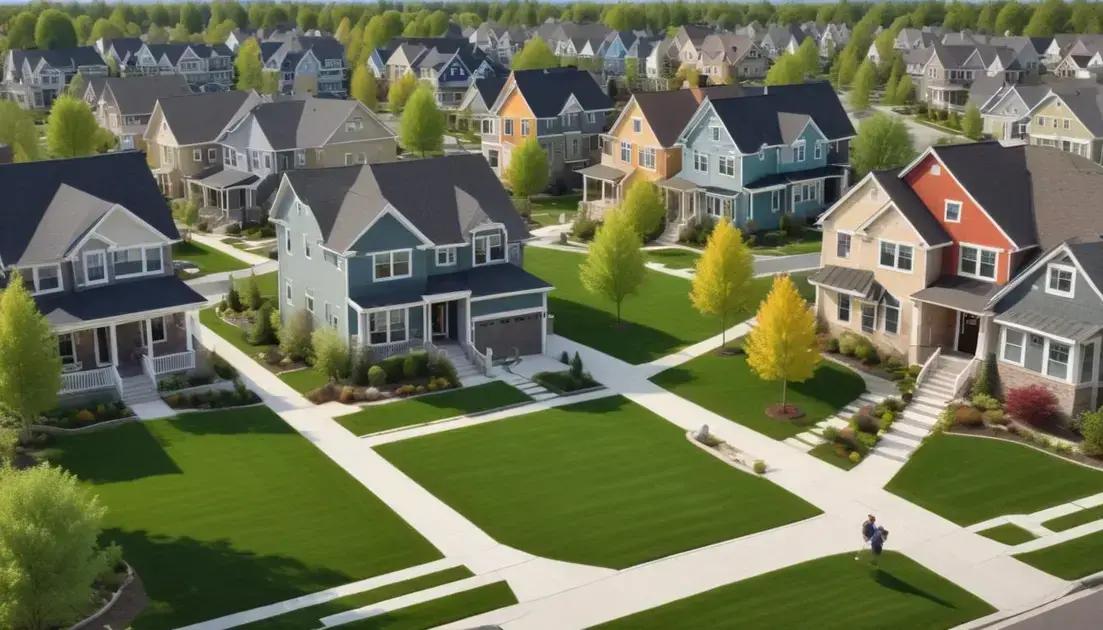
How suburbia became the American dream
Suburbia significantly shapes the American Dream by offering ideals of home ownership, safety, and community. After World War II, suburbs became symbols of success, providing families with larger homes and a sense of belonging. The rise of suburban neighborhoods has influenced family life, promoting a lifestyle centered on stability and accessibility to education and recreational opportunities. Although attitudes towards urban living are evolving, suburbia continues to represent a vital part of the American identity and aspiration for a fulfilling life.
Suburbia is more than just a collection of houses; it represents a lifestyleShift that has shaped modern America. Ever wonder how these neighborhoods became idealized? Let’s dig into this fascinating journey!
The historical context of suburbia
The story of suburbia starts after World War II. Many families were looking for new homes away from crowded cities. They wanted a place to raise kids and enjoy life. That’s when the suburbs began to really grow.
Post-War America
After the war, soldiers returned home. The economy was booming, and people wanted to settle down. The government supported this with programs that made buying homes easier. They offered low-interest loans and built highways to connect cities with suburbs.
Building Communities
In these new suburban areas, developers built many homes. Each neighborhood had parks, schools, and shops nearby. This made them attractive to families who wanted a safe and friendly place to live.
Life in Suburbia
Life in the suburbs was different. People enjoyed more space and their own yards. Kids could play outside safely. Families often had two cars, making it easy to travel to work or shopping.
Creating the American Dream
The suburbs became a symbol of the American Dream. Many believed that owning a home in suburbia was the ultimate achievement. It represented success, stability, and a bright future. This dream still inspires many today.
The rise of suburban neighborhoods
The rise of suburban neighborhoods changed how Americans live. After World War II, many people wanted homes with space. They sought new lifestyles away from busy cities.
Growing Desire for Space
As the population grew, so did the desire for larger homes. Families wanted backyards for kids to play in. This new space meant freedom and a sense of community.
Developers and Builders Step In
Developers quickly noticed the trend. They built many homes to meet the demand. These homes were often similar, with neat lawns and driveways. It made neighborhoods easy to recognize.
The Impact of the Automobile
The rise of cars helped suburbs grow. With highways connecting cities to suburbs, commuting became easier. Families could live in quiet areas and still work in the city.
Suburbia’s Appeal
Suburbs offered a mix of convenience and comfort. Shopping centers popped up nearby, making it easy to run errands. Parks and schools were part of the plan. This attracted families looking for a balanced lifestyle.
Cultural impact of suburban living
Suburban living has had a huge cultural impact on America. It changed how families interact and what they value. This lifestyle shaped many aspects of daily life.
Family Life in Suburbia
In the suburbs, home and family take center stage. Parents often spend more time with their kids. Backyard barbecues and neighborhood gatherings are common, building strong community ties.
Social Structures Shift
The suburbs promoted a new social order. People often know their neighbors and feel a sense of belonging. This social structure can lead to friendships and support networks.
Leisure Activities
With parks and recreational areas nearby, suburbia offers many fun activities. Families enjoy weekends filled with sports, picnics, and outdoor events. This promotes a family-friendly atmosphere.
Education and Schools
Suburban areas invest in schools. Families often move to suburbs for better educational opportunities. Good schools attract parents who want a bright future for their children.
The American Dream
Suburbia represents the American Dream for many. Owning a home and having a safe neighborhood is a goal. This dream influences how people view success and happiness.
Suburbia’s role in the American Dream
Suburbia plays a key role in the American Dream. For many, owning a home in a suburb symbolizes success. This dream is deeply rooted in American culture.
Home Ownership and Stability
Home ownership is central to the American Dream. Suburbs offer affordable homes for families. This stability allows families to grow and thrive together.
A Safe Environment
Many people believe suburbs provide a safer place to live. Quiet streets and friendly neighbors contribute to this feeling. Parents often feel good about their kids playing outside.
Access to Opportunities
Suburbia offers access to schools, jobs, and shopping. Families move to suburbs for better education and career prospects. Good schools attract families wanting the best for their children.
Community and Belonging
Suburban neighborhoods often have close-knit communities. Neighbors know each other and share experiences. This sense of belonging is important for many families.
Changing Perspective on the American Dream
While suburbia represents the American Dream, views are changing. Urban living is also appealing to many. People look for lifestyles that fit their personal values.
Conclusion
In conclusion, suburbia holds a special place in the American Dream. It represents the ideals of home ownership, community, and safety. For many families, having a home in the suburbs is a mark of success and stability.
While these neighborhoods offer great opportunities and a sense of belonging, views about the American Dream are changing. More people are exploring different lifestyles, including urban living. Yet, the charm of suburban life continues to attract those seeking a quiet and family-oriented environment.
Ultimately, suburbia remains a vital part of the American identity. It reflects the values and dreams that many continue to pursue. Whether in suburbs or cities, the quest for a fulfilling life is what truly drives us all.