Mongol Empire: the largest land empire ever built
The Mongol Empire, founded by Genghis Khan, significantly impacted history through its vast expansion, cultural exchanges, and innovative military strategies. This powerful empire connected diverse cultures along vital trade routes like the Silk Road, facilitating the flow of ideas and goods. The Mongols’ emphasis on merit-based leadership and their influence on warfare continue to resonate. Their legacy encourages unity and collaboration across different civilizations, leaving lessons that are still relevant today.
The Mongol Empire stands as a testament to the power of unity and ambition in history. Ever wondered how Genghis Khan transformed a group of tribes into the largest empire ever?
Introduction to the Mongol Empire
The Mongol Empire began in the early 13th century under the leadership of Genghis Khan. He was a brilliant strategist and fierce warrior. His goal? To unite the Mongol tribes and create a vast empire. This empire would eventually become the largest contiguous empire in history.
Genghis Khan rallied his people, inspiring them with ideas of unity and strength. He formed alliances with neighboring tribes and expanded his reach. The empire stretched across Asia, reaching parts of Europe and the Middle East.
As the empire grew, it brought together many cultures. This unique mix fueled trade and exchange of ideas. The Silk Road became a vital trade route during this time, connecting East and West.
The Mongol Empire left a lasting impact on history. Their innovations in military tactics and governance shaped future empires. Even today, their legacy is studied by historians and admired for its reach and influence.
Key Features of the Mongol Empire
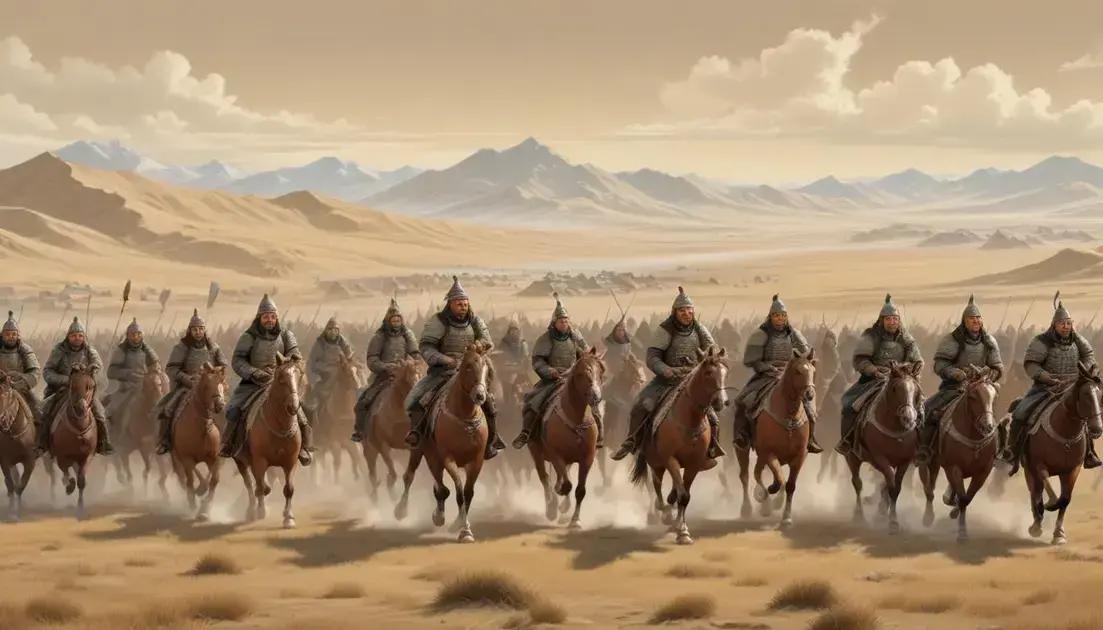
The Mongol Empire was known for its superior cavalry and mobility. Their soldiers could travel long distances quickly. This made them formidable opponents in battle. Genghis Khan’s innovative strategies revolutionized warfare at the time.
Trade flourished under the Mongols. They encouraged merchants and safe passage for travelers. This created connections that enhanced cultural exchange. Languages, ideas, and goods flowed freely, enriching societies.
Understanding the Mongol Empire helps us see the power of unity and vision. Genghis Khan’s ability to unify the tribes shows how leadership can change the course of history.
The Rise of Genghis Khan
The rise of Genghis Khan is a fascinating story. He was born as Temujin in 1162. His early life was tough. He faced many challenges, including the kidnapping of his wife, Börte. But he never gave up and fought to reclaim her.
Genghis Khan used his skills to unite the Mongol tribes. He believed in loyalty and strength. Soon, he became a respected leader. Many admired his vision for a united Mongolia. In 1206, he was proclaimed Genghis Khan, meaning “universal ruler.” This marked the beginning of a powerful empire.
His leadership style was important. He promoted people based on merit, not family ties. This attracted many skilled warriors and advisers. Genghis Khan was also a brilliant military strategist. He used new tactics to defeat larger armies.
His achievements laid the groundwork for the Mongol Empire. Genghis Khan expanded his territory quickly. He took control of key trade routes. This helped to boost the economy and connect different cultures.
Understanding Genghis Khan’s rise helps us see how vision and determination can change history. His legacy continues to influence modern culture and leadership.
Unification of Tribes
The unification of tribes was a key moment in the history of the Mongol Empire. Before Genghis Khan, the Mongolian tribes were often at war with each other. They fought for resources and territory. This division weakened them against outside threats.
Genghis Khan saw the need for unity. He believed that together, they could be stronger. To achieve this, he used a mix of diplomacy and force. He formed alliances and offered protection to smaller tribes.
He emphasized loyalty and shared goals. Genghis Khan attracted followers by promising wealth and safety. Many tribes began to see the benefits of joining him.
Through clever strategies and battles, he gradually brought the tribes together. He gave key positions to skilled leaders, regardless of their origin. This made many loyal to him and helped build trust.
The power of unity allowed the Mongols to expand rapidly. The unification created a massive army, enabling them to conquer vast territories. This laid the foundation for the Mongol Empire’s strength.
Understanding the unification process reveals Genghis Khan’s leadership and vision. It shows how working together can overcome significant challenges.
Expansion of the Empire
The expansion of the Mongol Empire was a remarkable achievement. After uniting the tribes, Genghis Khan aimed to conquer new lands. His vision was clear: create a vast empire that stretched across Asia and beyond.
Genghis Khan used innovative tactics to expand his territory. His army was skilled and highly mobile, which allowed them to march quickly. They took advantage of surprise and speed, catching enemies off guard.
Major battles helped fuel the expansion. The Mongols defeated powerful foes like the Jin dynasty of China. They also took on the Khwarezmian Empire in Central Asia. These victories helped solidify their control over vast regions.
Trade routes were key to the empire’s success. By controlling the Silk Road, the Mongols facilitated trade between East and West. This not only boosted the economy but also encouraged cultural exchanges.
As the empire grew, so did its diversity. Many different cultures came under Mongol rule. The leaders encouraged the exchange of ideas, technology, and customs. This blending of cultures enriched the empire.
Understanding this expansion helps us see the power of military strategy and administration. The Mongol Empire’s growth changed the world forever.
Cultural Impact
The cultural impact of the Mongol Empire was profound and far-reaching. As the empire expanded, it connected many different cultures. This blend created a rich tapestry of ideas, traditions, and innovations.
The Mongols played a key role in trade. By controlling the Silk Road, they helped merchants move goods across vast distances. This exchange not only included products but also cultures and knowledge.
One major influence was religion. The Mongols were tolerant of different faiths. They allowed various religions to flourish within their territories. This helped spread ideas and led to greater acceptance among cultures.
Art and technology also thrived during this time. The Mongols adopted artistic styles from the many cultures they encountered. They shared their own traditions, enhancing the arts throughout their empire.
Language and literature were key in bridging gaps between peoples. As literature spread, it introduced new ways of thinking. The Mongols’ emphasis on written communication helped unify their diverse empire.
Understanding the cultural impact of the Mongol Empire teaches us how empires can shape societies. This blending of cultures shows the power of collaboration and exchange.
Legacy of the Mongol Empire
The legacy of the Mongol Empire is immense and continues to shape our world. From the 13th to the 14th centuries, this vast empire influenced many cultures and regions. One of the biggest impacts was their role in trade.
The Mongols opened and secured trade routes across Asia and Europe. This made it easier for merchants to travel. Ideas and goods flowed freely, connecting distant lands. Their control of the Silk Road helped boost economies in many regions.
Another important aspect of their legacy was military strategy. Genghis Khan’s tactics changed warfare. His use of mobility and psychological strategies influenced future generals and armies. Many military leaders still study Mongolian tactics today.
In addition, the Mongol Empire promoted cultural exchanges. They brought together people from many backgrounds. This mix led to advancements in science, art, and philosophy. Ideas traveled far and wide, enriching many civilizations.
Finally, the Mongol influence on governance is noteworthy. They introduced systems that improved administration. Ideas like merit-based leadership helped unify diverse populations. These practices have shaped political systems in various countries over the centuries.
Understanding the legacy of the Mongol Empire reveals how powerful and enduring such a vast empire can be. Their achievements and innovations still resonate today.
Conclusion
In conclusion, the legacy of the Mongol Empire is a powerful reminder of how one group’s vision can shape history. Their influence on trade, military strategy, culture, and governance has left lasting marks on our world.
The connections they fostered through trade routes not only boosted economies but also allowed ideas to flow freely. This exchange of goods and thoughts enriched many civilizations. Additionally, their innovative military tactics continue to be studied today, showing their lasting impact on warfare.
Furthermore, the Mongol Empire’s ability to unify diverse groups under a common leadership model is a lesson in effective governance. By valuing merit over lineage, they created strong, cohesive societies.
Overall, understanding the Mongol Empire helps us appreciate the importance of unity, innovation, and cultural exchange in our shared history. Their story reminds us that great empires leave behind lessons that can guide us in the present and future.