Aztecs: the warriors who built a floating empire
The Aztecs were a remarkable civilization known for their engineering feats, rich spiritual practices, and effective warfare strategies. They constructed floating cities using innovative methods, developed complex agricultural systems, and practiced diverse rituals to honor their many gods. Their military tactics included surprise attacks and psychological warfare, enabling them to expand their empire significantly. Understanding the Aztec culture provides valuable insights into their achievements and the resilience that shaped their society.
Welcome to the fascinating world of the Aztecs, where engineering marvels combine with rich rituals and intense warfare. Curious about how they built their floating empire? Let’s dive in!
The rise of the Aztecs
The rise of the Aztecs is a fascinating story of ambition and resilience. They started as a small tribe in the 13th century, but their clever strategies helped them grow into a powerful empire. It’s amazing how they transformed from humble beginnings to the rulers of a vast empire!
Origins of the Aztec Civilization
The Mexica, who later became known as the Aztecs, settled in the Valley of Mexico. They were initially nomadic, searching for a permanent home. Legend says they saw an eagle on a cactus, eating a snake. This vision inspired their city, Tenochtitlan, built on a lake.
Building Tenochtitlan
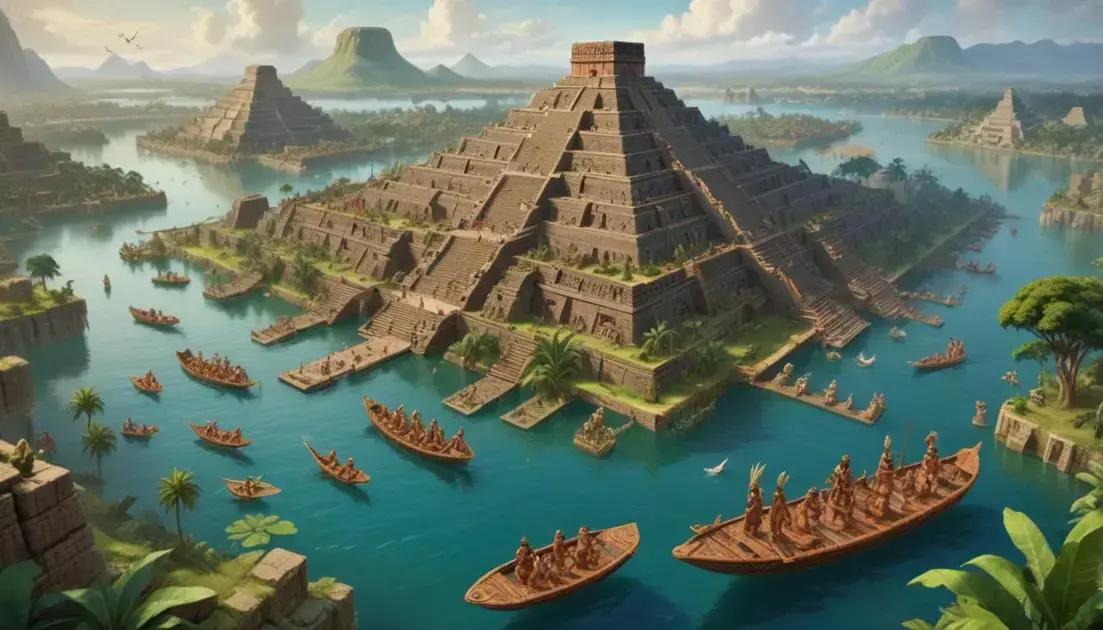
Tenochtitlan was a marvel. Constructed on floating islands, it had canals for transportation. People lived and worked on this unique land. The city was full of vibrant marketplaces, temples, and beautiful gardens.
Expansion and Power
As their civilization grew, the Aztecs expanded their territory through alliances and conquests. They took over many rival city-states. This helped them control trade routes, boosting their wealth and influence.
Culture and Society
Aztec society was rich in culture. They had unique rituals, art, and music. Religion was vital; the people believed in many gods who governed various aspects of life. Sacrifices were common, showing their devotion.
Engineering marvels and floating cities
The engineering marvels of the Aztecs are truly impressive. They built floating cities on Lake Texcoco, which showed their ingenuity and adaptability. These cities were a testament to their skills and creativity.
Construction of Floating Islands
The Aztecs created chinampas, or floating gardens, by piling mud and plants in the water. This method allowed them to farm in a challenging environment. These chinampas were highly productive, growing food for the entire city.
Water Management Systems
Water was vital for the Aztecs. They developed complex systems for managing it. Canals and aqueducts directed water to homes and fields. This helped them control flooding and ensure a steady supply of water.
Temple Complexes
The Aztecs constructed impressive temples to honor their gods. These temples were tall and decorated with colorful carvings. Temples were not just places of worship; they were also centers of community life.
Roads and Trade
The Aztecs built extensive networks of roads connecting their cities. These roads enabled trade and communication across their empire. The ability to transport goods quickly helped their economy thrive.
Rituals and spirituality
The rituals and spirituality of the Aztecs were central to their culture. They believed deeply in many gods who controlled daily life. Rituals were a way to honor these gods and seek their favor.
Daily Offerings
Every day, Aztecs made offerings to their gods. They presented food, flowers, and even precious items. These offerings showed respect for the divine and helped ensure prosperity.
Religious Festivals
The Aztecs celebrated many festivals throughout the year. Each festival had its purpose, often linked to the agricultural calendar. People came together to dance, sing, and feast during these joyous occasions.
Human Sacrifice
One of the most known aspects of Aztec spirituality was human sacrifice. They believed offering humans would please the gods and keep the world in balance. While shocking today, these acts were meant to ensure survival and prosperity.
Temples and Ceremonies
Aztec temples were crucial for rituals. These grand structures were places for ceremonies and gatherings. Priests led rituals and conducted sacrifices, connecting the people to the divine.
Warfare tactics and strategies
The warfare tactics and strategies of the Aztecs were crucial for their empire’s expansion. They had to defend their lands and conquer others to survive. Their methods were smart and effective.
Use of Allies
Aztecs often made alliances with other tribes. These partnerships strengthened their power. Allies helped them in battles and expanded their reach without heavy losses.
Surprise Attacks
The Aztecs used surprise attacks to catch opponents off guard. Their warriors were skilled in moving quickly and quietly. This tactic often led to victory, as enemies weren’t prepared.
Weapons and Armor
The Aztecs used a variety of weapons. They had wooden clubs, spears, and slings. Some warriors even used obsidian knives. Their armor was made of cotton and leather for flexibility and protection.
Psychological Warfare
Fear played a big role in Aztec warfare. They sometimes used loud noises, colorful costumes, and intimidating imagery to scare enemies. This psychological tactic could lead to surrender without a fight.
Conclusion
In conclusion, the story of the Aztecs reveals their remarkable achievements in engineering, spirituality, and warfare. Their floating cities showcase incredible engineering skills, while their rituals and religious beliefs highlight a rich cultural life. The Aztec approach to warfare combined strategy and alliances that helped them expand their empire.
Understanding the Aztecs teaches us valuable lessons about resilience, innovation, and community. Their legacy continues to inspire us today, reminding us of the importance of creativity and cooperation in achieving goals. Whether in ancient times or today, these principles are key to building strong societies.
Tags: