The end of the Tsars: Russia’s final dynasty
The Fall of the Romanovs marked the end of a dynasty that ruled Russia for over 300 years. Growing discontent among the people due to food shortages and the royal family’s lavish lifestyle led to Tsar Nicholas II’s abdication in 1917. Following his abdication, Nicholas and his family were placed under house arrest, but their fate turned tragic when they were executed by Bolshevik forces in July 1918. This brutal outcome signifies a pivotal moment in Russian history, highlighting the iconic transition from imperial rule to revolutionary change.
Russia history is a tale of grandeur intertwined with tragedy. The Romanov dynasty, a ruling family of over 300 years, faced an untimely end, ushered in by war and revolution. Curious about how it all unraveled? Let’s dive in!
The Rise of the Romanovs
The Romanov dynasty began in the early 1600s. It was a time when Russia was looking for stability and leadership. Mikhail Romanov became the first Tsar of this family in 1613. His reign started a new chapter in Russian history.
Who Were the Romanovs?
The Romanovs were not just rulers; they shaped an entire nation. They oversaw major changes, like modernization and expansion. Under their rule, Russia grew bigger and stronger. The family became known for their wealth and influence.
The Early Years
In the early years, the Romanovs faced many challenges. They dealt with invasions and internal strife. However, they managed to unite the country. Their leadership brought peace after years of chaos.
Major Achievements
One significant achievement was the establishment of a centralized government. This made it easier to manage the vast lands of Russia. The Tsars also promoted art and culture. They built beautiful palaces and supported writers and painters.
As time went on, the Romanovs continued to adapt. They sought alliances through marriage and diplomacy. This helped Russia grow its power and influence in Europe.
Why They Matter
The rise of the Romanovs changed Russia forever. They introduced a new era of growth and development. Their reign left a legacy that influences Russia even today. Understanding their story helps us see how history shapes our world.
The Reign of Tsar Nicholas II
Tsar Nicholas II ruled from 1894 to 1917. His reign was full of challenges and changes. Nicholas was the last Emperor of Russia. He faced a growing demand for reform and modernization in the country.
Challenges of His Rule
One of the biggest issues was World War I. Russia suffered heavy losses during the war. Many soldiers were unprepared, leading to discontent among the people. Strikes and protests grew throughout the country.
Family Life
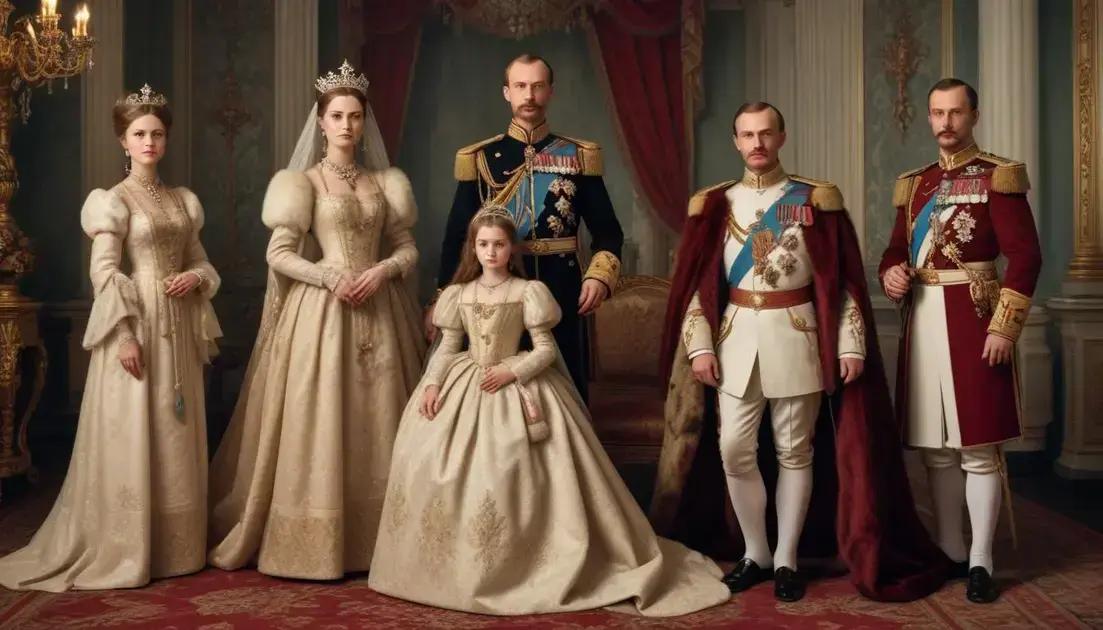
Tsar Nicholas II cared deeply for his family. He married Alexandra, and they had five children. They were known for their close bond. However, the pressure of ruling often affected their lives.
The Influence of Rasputin
Rasputin, a mystic, held considerable sway over the royal family. Many people disliked him. They believed he had too much influence on Nicholas and Alexandra. His presence caused scandal and tension within the court.
Fall from Power
By 1917, public opinion was turning against the Tsar. Various movements called for change. The February Revolution forced Nicholas to abdicate. He held onto hope but it faded quickly as chaos spread.
After his abdication, Nicholas and his family were placed under house arrest. Their fate took a tragic turn in July 1918, when they were executed by Bolshevik forces. This marked the end of the Romanov dynasty and a significant shift in Russian history.
World War I and Its Consequences
World War I began in 1914 and caused immense changes worldwide. It involved many countries, leading to widespread destruction. The war ended in 1918 but left scars that would last for years.
The Causes of the War
Several factors led to the outbreak. Nationalism, militarism, and alliances played crucial roles. Countries were eager to show their strength. Tensions built up for years before the fighting began.
Major Battles and Events
Key battles like the Battle of the Somme and Verdun showed the war’s brutality. Millions of soldiers fought in trenches under terrible conditions. The war also introduced new weapons, like tanks and airplanes, changing how battles were fought.
Impact on Society
The war drastically changed societies. Many men went to fight, leaving women to take over jobs. This shift led to greater rights for women and a push for equality. Many families lost loved ones, creating a generation marked by grief.
The Treaty of Versailles
The Treaty of Versailles ended the war in 1919. It placed heavy penalties on Germany. The terms created resentment and economic trouble in Germany. This would later set the stage for World War II.
World War I changed the map of Europe. Empires fell, and new countries emerged. The consequences of the war shaped global politics for many years.
The Russian Revolution
The Russian Revolution began in 1917 and changed Russia forever. People were tired of the Tsar’s rule. They wanted change and a say in their government.
Tensions Build
Before the revolution, many Russians faced hardships. Food shortages and poverty were common. The working class struggled, while the Tsar lived in luxury. This created anger and unrest.
February Revolution
The first major uprising was in February 1917. Workers and soldiers protested in the streets. They demanded bread and peace. Eventually, Tsar Nicholas II abdicated, ending his rule.
October Revolution
The second wave of the revolution happened in October 1917. The Bolsheviks, led by Vladimir Lenin, seized power. They promised to end the war and redistribute land. Many people supported the Bolsheviks for their ideas.
Aftermath of the Revolution
The revolution led to civil war between the Red Army and White Army. The Bolsheviks won, establishing the Soviet Union in 1922. Their victory changed the political landscape profoundly.
Over the years, the revolution had both positive and negative effects. It aimed to improve the lives of the poor but led to strict control and oppression. The legacy of the Russian Revolution still influences Russia today.
The Fall of the Romanovs
The fall of the Romanovs marked the end of Russia’s imperial rule. This tragic chapter unfolded during the 1917 revolutions. Tsar Nicholas II and his family were viewed as out of touch with the people’s struggles.
Growing Discontent
By 1917, many Russians were frustrated. Food shortages and economic problems worsened. The royal family’s lavish lifestyle felt wrong to the suffering commoners. This unrest fueled revolutionary ideas.
Abdication of the Tsar
In March 1917, Nicholas II was forced to abdicate. He hoped to save the monarchy but faced intense pressure. His decision ended over 300 years of Romanov rule. This moment shocked many, but it was necessary for change.
House Arrest
After abdicating, the Tsar and his family were placed under house arrest. They hoped to return to power but were never free again. The Bolsheviks rose to power, promising to bring equality and justice.
The Tragic End
In July 1918, the family faced a brutal fate. The Bolsheviks executed them in Ekaterinburg. This marked the painful end of the Romanov dynasty. Their deaths symbolized the fall of an era in Russian history.
Today, the legacy of the Romanovs still sparks interest. Their story reflects the struggles and changes that shaped modern Russia.
Conclusion
In conclusion, the fall of the Romanovs exemplifies the dramatic changes in Russia during the early 20th century. The royal family’s inability to connect with the people led to their tragic end. As the country faced wars and revolutions, many sought a new beginning.
Their story reminds us that history is full of lessons. It shows how important it is for leaders to listen to their citizens. The Romanovs’ legacy still sparks interest today, as it highlights the struggles and transformations that shaped modern Russia.
Ultimately, understanding the fall of the Romanovs helps us reflect on the complexities of power, society, and change throughout history.