Khmer Empire: the builders of Angkor Wat
The Khmer Empire is renowned for its architectural marvels like Angkor Wat, advanced hydraulic engineering, and a rich cultural legacy. This civilization left a significant mark through stunning temples, traditional dances, and festivals that celebrate their vibrant history. The Empire’s innovations in water management supported agriculture and urban growth, while their art and music still resonate in modern Cambodian culture, demonstrating the lasting influence of this remarkable society.
Welcome to the world of the Khmer Empire, a remarkable civilization renowned for its stunning architecture and innovative hydraulic systems. Ever wondered how they built Angkor Wat? Let’s explore!
Introduction to the Khmer Empire
The Khmer Empire was one of the most powerful empires in Southeast Asia. It thrived from the 9th to the 15th century. This empire is famous for its rich culture and stunning architecture, especially the magnificent Angkor Wat.
The Khmer people were not just builders; they were also skilled in agriculture and trade. They developed a complex system of irrigation that supported their farming. This innovation helped them grow rice and other crops, feeding a large population.
Cultural Aspects of the Khmer Empire
Religion played a vital role in the lives of the Khmer people. They practiced Hinduism initially and later embraced Buddhism. Temples were built to honor their gods, and many intricate carvings tell stories from ancient mythology.
Art and music flourished during this time as well. The Khmer Empire left behind beautiful sculptures and intricate artwork, showcasing their artistic talents. Festivals celebrating the gods and nature were also common, bringing communities together.
The Legacy of the Khmer Empire
Even after the empire fell, its influence remained strong. Today, Angkor Wat is a symbol of Cambodia and a UNESCO World Heritage Site. It draws tourists from all over the world, eager to see its beauty and learn about Khmer history.
The spirit of the Khmer people can still be felt today in their vibrant culture, traditional dance, and ongoing festivals. The achievements of the Khmer Empire continue to inspire pride in Cambodia’s rich history.
The architectural marvel of Angkor Wat
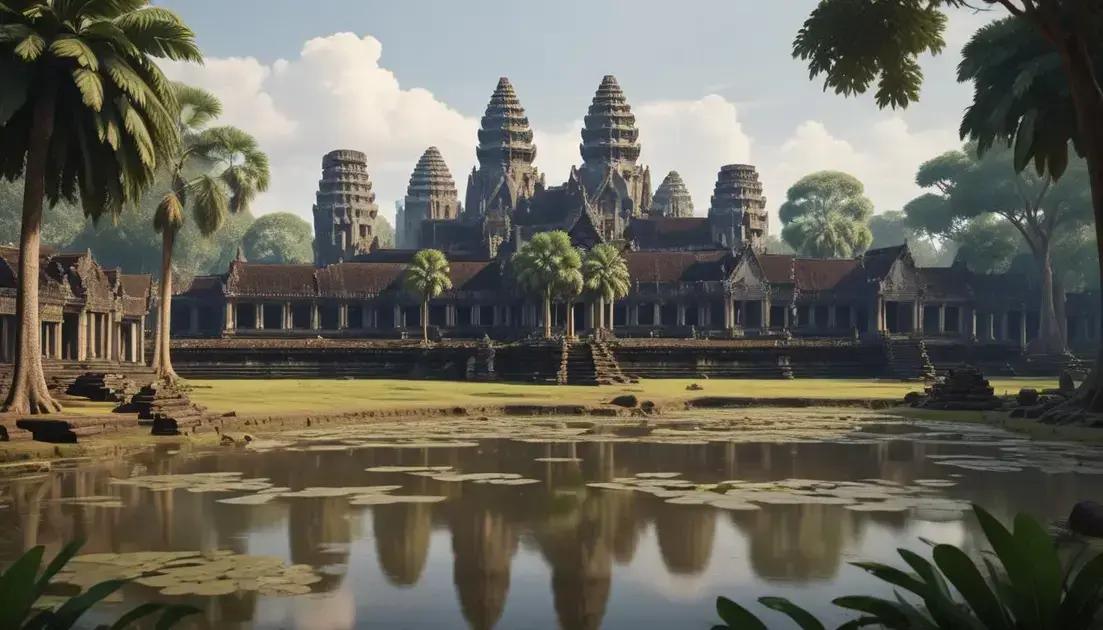
Angkor Wat is an amazing example of Khmer architecture. Built in the early 12th century, it is one of the largest religious monuments in the world. This stunning temple complex was originally dedicated to the Hindu god Vishnu.
What makes Angkor Wat so special? First, its design is unique and complex. The temple features a series of enclosures and towers. Each layer has detailed carvings that tell stories from Hindu mythology.
The layout of the temple is carefully planned. It symbolizes Mount Meru, which is the center of the universe in Hindu belief. The five towers of Angkor Wat represent the mountains surrounding Mount Meru.
Materials and Techniques
Khmer builders used sandstone blocks to construct the temple. They transported these heavy stones from a quarry over 50 kilometers away. The precision in stone cutting and placement is remarkable, showing their advanced skills.
Many of the carvings on the walls are still visible today. They depict scenes from ancient battles, everyday life, and gods in various poses. These artworks help us understand the culture and beliefs of the Khmer people.
The Significance of Angkor Wat
Angkor Wat is not just a temple; it is a symbol of Cambodia. It represents the strength and creativity of the Khmer Empire. Today, it attracts millions of visitors each year from all over the globe.
This architectural masterpiece is also a UNESCO World Heritage Site. It plays a crucial role in Cambodia’s identity and tourism. Visitors come to marvel at its beauty and learn about its rich history.
Religious significance of the Khmer Empire
The Khmer Empire had deep religious significance that shaped its culture and daily life. Initially, the Khmer people practiced Hinduism, which influenced their art and architecture. Many temples, including Angkor Wat, were built to honor Hindu gods.
As time passed, Buddhism became more prominent. This transition didn’t erase Hindu beliefs but blended them. Temples often featured both Hindu and Buddhist symbols, showing their coexistence.
Temples as Spiritual Centers
Temples played a central role in the Khmer Empire. They were not just places of worship but centers for the community. People gathered for festivals, ceremonies, and important events.
For example, festivals celebrated the harvest and honored gods. During these events, people would bring food and offerings to the temples. This strengthened their connection to the divine and to each other.
Influence on Daily Life
Religion influenced many aspects of life in the Khmer Empire. From art to governance, spirituality was woven into their society. Rulers were often viewed as divine figures, and their power was linked to their religious duties.
Moreover, religious beliefs guided decisions about agriculture and the seasons. People believed that pleasing the gods would ensure good harvests and prosperity. This connection between faith and daily life was vital for the Khmer people.
Hydraulic engineering feats and their impact
The Khmer Empire was known for its incredible hydraulic engineering. This skill allowed them to manage water resources effectively. They built an extensive system of canals and reservoirs, which helped support agriculture.
One major achievement was the construction of large reservoirs. These water bodies stored rainwater for dry seasons, ensuring a steady water supply. This innovation was crucial for rice farming, which was the backbone of their economy.
Irrigation Systems
Khmer engineers designed advanced irrigation systems that diverted water from rivers to fields. They created canals that spread water over large areas. This practice boosted crop yields and helped harvest more rice each season.
These irrigation methods were not only practical but also impressive. The scale and precision of their work show just how skilled these engineers were. They understood the land and water cycles well, allowing them to adapt to changing conditions.
Impact on Society
Thanks to hydraulic engineering, the Khmer Empire could support a growing population. More food meant more people could live and thrive. This increased trade and helped develop cities around water sources.
The successes in hydraulic engineering contributed to the empire’s strength. It allowed them to build and maintain a powerful society that lasted for centuries. Today, these feats remind us of the ingenuity of the Khmer Empire.
The cultural legacy of the Khmer Empire
The cultural legacy of the Khmer Empire is rich and diverse. It includes art, dance, music, and festivals that are still celebrated today. One of the most remarkable aspects is the temple architecture, especially Angkor Wat, which attracts millions of visitors.
Art flourished during the Khmer Empire. Sculptors created stunning stone carvings that tell stories from mythology and everyday life. These artworks showcase the skills and creativity of Khmer artisans.
Traditional Dance and Music
Traditional Khmer dance is another vital part of their culture. Dances often tell stories and express emotions. Performers wear colorful costumes and elaborate masks, making each performance a feast for the eyes.
Music also plays a key role in Khmer culture. Many musical styles involve traditional instruments, like the roneat (a type of xylophone) and the tro (a two-stringed instrument). These sounds create a beautiful backdrop for festivals and ceremonies.
Cultural Festivals
Festivals are important in Khmer culture. They celebrate harvests, religious events, and community spirit. One famous festival is Khmer New Year, which marks the start of the rice planting season. People clean their homes, visit temples, and enjoy traditional games.
The enduring influence of the Khmer Empire can still be seen today. Cambodian culture proudly carries these traditions forward. It reflects the creativity and resilience of a people who faced challenges yet preserved their identity.
Conclusion
In conclusion, the cultural legacy of the Khmer Empire continues to inspire people today. From stunning temple architecture to vibrant traditional dances, this rich heritage showcases the creativity and resilience of the Khmer people. Their artistic expressions, including music and festivals, reflect a deep connection to their history and community.
Understanding and celebrating this legacy helps us appreciate the impact of the Khmer Empire on modern Cambodian culture. As we recognize these traditions, we keep the spirit of an ancient civilization alive. The stories told through their art and performances remind us of the strength and beauty of their rich history.