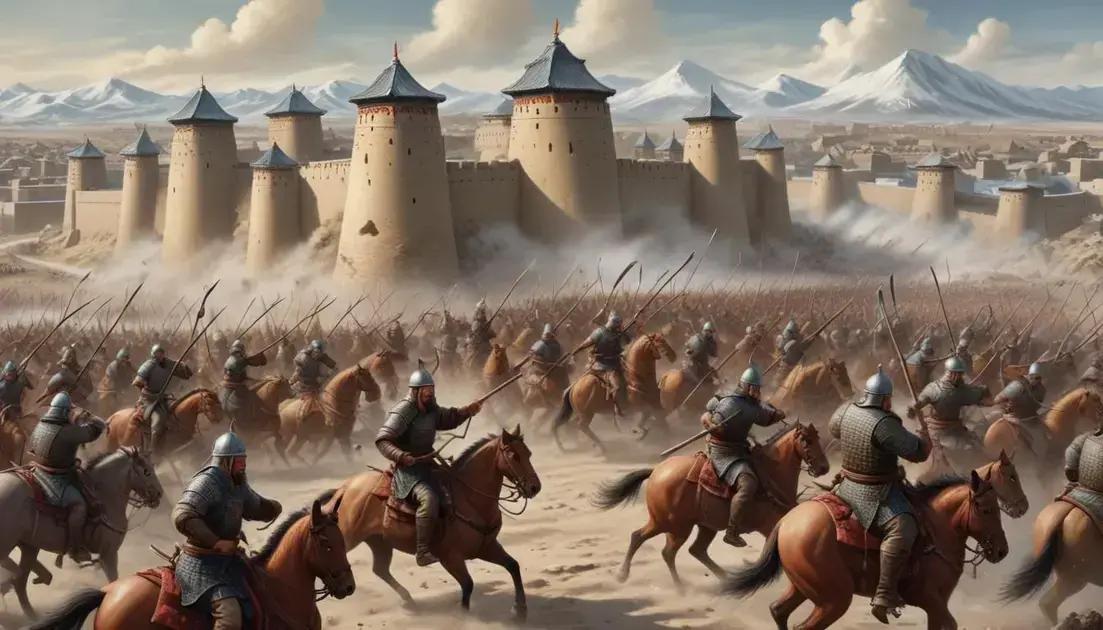
Mongol siege tactics: how they conquered walled cities
The Mongols used advanced strategies in warfare, including key siege tactics and psychological warfare, leading to famous victories like the sieges of Nishapur and Baghdad. Their innovations in siege equipment, such as catapults and battering rams, enhanced their capability to conquer fortified cities. By understanding these techniques and their effective use of fear and deception, the Mongols built a formidable reputation that greatly contributed to their successful conquests across Asia and Europe.
Discover how **Mongol Tactics** transformed warfare, enabling these legendary conquerors to breach the strongest fortifications with remarkable efficiency. Ready to dive in?
Understanding Mongol Warfare Strategies
Understanding Mongol Warfare Strategies is key to grasping how they conquered vast territories. The Mongols had a unique approach to attacks and defense. They combined speed, surprise, and strategy effectively.
Mobility and Speed
The Mongols were famous for their highly mobile cavalry. They could move quickly across landscapes, making it hard for enemies to predict their attacks. This speed allowed them to strike and retreat before an opponent could react.
Use of Psychological Warfare
They often employed psychological tactics to instill fear. Misinformation about their numbers and abilities made enemies hesitate. The Mongols were masters at creating confusion during battles.
Innovative Battlefield Tactics
Mongol units operated in small groups and could adapt their tactics on the fly. They used flanking, feigned retreats, and surprise assaults. These methods kept enemies on their toes and created openings for attacks.
Siege Techniques
When facing fortified cities, the Mongols adapted quickly. They used siege engines and developed tactics to breach walls. Their understanding of engineering enabled them to overtake strongholds that seemed impenetrable.
Intelligence and Planning
Mongol leaders placed great importance on intelligence gathering. Scouts helped them learn about enemy strengths and weaknesses. This information was vital for planning successful attacks.
Understanding these strategies reveals why the Mongols were so effective in warfare. Their unique blend of tactics and mobility reshaped battle practices across their conquered lands.
Key Tactics for Breaching Walls
When it comes to conquering cities, the Mongols had key tactics for breaching walls. They were skillful in using different methods to take down defenses.
Siege Engines
Mongols used various siege engines like catapults and trebuchets. These machines hurled stones and other heavy objects at fortress walls. This made it easier to cause damage.
Learning from Others
They didn’t invent everything. The Mongols learned from other cultures about siege warfare. They adapted these techniques to fit their style, making them more effective.
Blockades and Starvation
Sometimes, they would surround a city, cutting off supplies. This strategy led to starvation and forced surrender without much fighting. It was a smart way to weaken the enemy without losing troops.
Creating Distractions
Another tactic was creating diversions during the attack. While some soldiers engaged the front, others would strike from another direction. This confused defenders and made it easier to breach walls.
Psychological Tactics
To further scare enemies, they used fear tactics. Stories of Mongol brutality spread, making many cities surrender without resisting. This often saved lives on both sides.
Each of these tactics shows how the Mongols approached warfare. Their clever strategies allowed them to take strongholds that seemed unbeatable.
Psychological Warfare and Deception
Psychological Warfare and Deception were key parts of Mongol tactics. They used these methods to weaken their enemies’ resolve before battles even began.
Creating Fear
The Mongols were known for their brutal reputation. Stories of their harsh treatment spread quickly. This made many cities surrender without a fight.
Spreading Misinformation
They often spread false information. Mongols would exaggerate their numbers or strength. Rumors of invincibility kept enemies on edge and made them hesitate.
Feigned Retreats
One classic tactic was the feigned retreat. Mongol soldiers would pretend to flee. When enemies pursued, they would turn around and attack. This caught many off guard.
Using Decoys
Mongols sometimes used decoys to distract enemies. They’d set up fake camps or movements, drawing attention away from real attacks. This confusion worked to their advantage.
Building Alliances
They also formed temporary alliances and played enemies against each other. By creating divisions, they weakened potential threats and made conquests easier.
These psychological tactics show how smart the Mongols were in battle. Their ability to manipulate fear and deception was crucial for their success.
Siege Equipment and Innovations
The Mongols were known for their siege equipment and innovations. They created tools that helped them conquer strongholds effectively. Understanding these tools gives insight into their military success.
Catapults and Trebuchets
Mongolian armies used catapults to hurl stones at walls. These siege engines could launch heavy projectiles over long distances. Trebuchets were also popular. They offered more power and could break down walls faster.
Battering Rams
The Mongols used battering rams to smash through gates. These devices were often reinforced with metal. They were effective at creating openings in fortified structures.
Ladders and Towers
Ladders allowed soldiers to scale walls quickly. The Mongols also built siege towers. These towers could hold soldiers and shield them while they attacked from above.
Engineering Expertise
The Mongols learned from different cultures. They adapted techniques and improved their equipment. This engineering skill gave them an edge during sieges.
Logistics and Planning
They also had effective supply lines for their equipment. This planning was crucial. It allowed for quick repairs and the ability to transport heavy tools during campaigns.
Innovations in siege equipment played a major role in the successes of the Mongols. Their ability to adapt and improve made them formidable in battle.
Case Studies: Famous Siege Victories
The Mongols were known for their remarkable case studies of famous siege victories. These battles showcase their tactics and effective strategies. Each victory taught them important lessons.
Siege of Nishapur
One notable victory was at Nishapur. The city was well-fortified but fell quickly. The Mongols used a combination of fear and siege tactics. They surrounded the city, cutting off supplies. When it finally surrendered, many historians noted the brutality that followed.
Siege of Zhongdu
Another famous siege was Zhongdu, the capital of the Jin Dynasty. The Mongols employed innovative siege engines. After a long siege, they breached the walls, which led to the city’s fall. This victory showcased their planning and organization.
Baghdad Siege
The siege of Baghdad in 1258 marked a turning point. The Mongols faced significant resistance but used their tactics effectively. After intense fighting, they captured the city and ended the Abbasid Caliphate’s rule.
Siege of Harat
In the siege of Harat, the Mongols combined overwhelming force and clever strategies. They used siege engines to breach walls. After the city’s fall, it opened the way for further conquests in Persia.
Lessons Learned
These case studies highlight how the Mongols adapted their techniques. Each victory refined their approach and built their reputation as fearsome conquerors.
Conclusion
In conclusion, understanding Mongol tactics, siege techniques, and famous victories gives us valuable insights into their military success. Their ability to adapt and innovate in warfare set them apart from others. By using psychological strategies and advanced siege equipment, they conquered even the strongest fortresses. These lessons reveal how important planning and creativity are in battles.
As we study their history, we see that effective strategies and teamwork can lead to great achievements. The Mongols remind us that mastering tactics and learning from each experience can change the outcome. Their remarkable story shows that with the right approach, you can overcome even the toughest challenges.