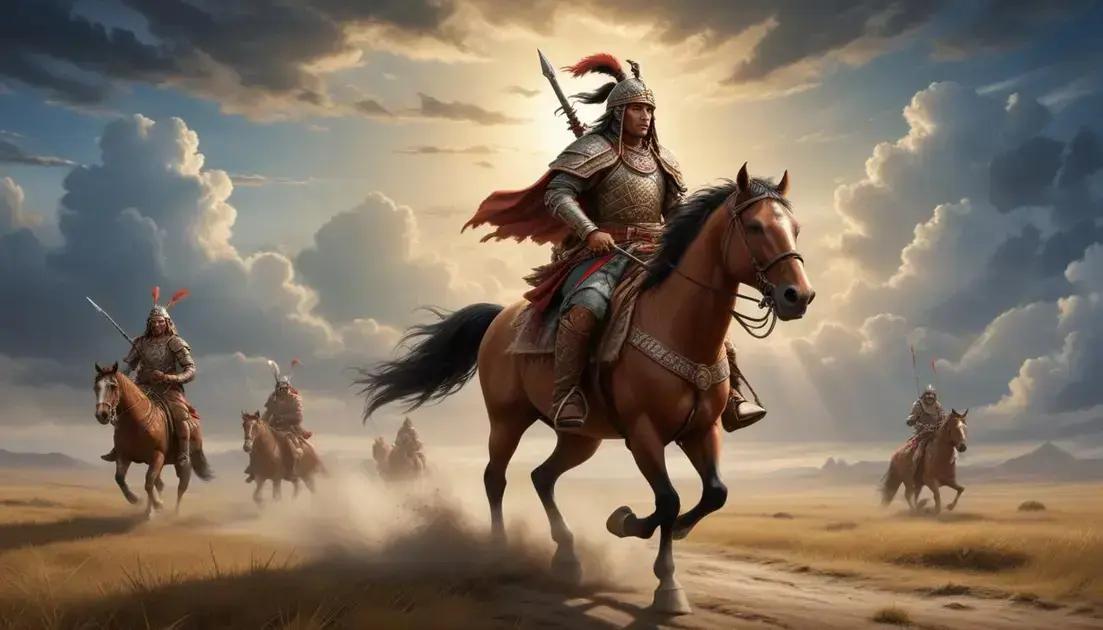
The Huns: the storm from the steppes
The Huns were a formidable group of nomadic warriors from Central Asia who significantly impacted ancient empires, particularly the Roman Empire. Their military tactics included speed, surprise attacks, and clever strategies like feigned retreats, which disrupted trade and caused migrations. The legacy of the Huns continues to influence perceptions of warrior cultures and highlights the complex interactions between nomadic tribes and settled societies.
Have you ever heard of the Huns? These nomadic warriors weren’t just raiders; they played a significant role in shaping history as we know it! Stick around to discover their incredible story.
Introduction to the Huns
The Huns were a group of nomadic warriors known for their fierce reputation and incredible skills in battle. They originated from Central Asia and moved into Europe, creating a wave of fear among the Roman Empire and other neighboring regions. These warriors rode on horseback and were skilled archers, which made them a formidable force.
Unlike settled societies, the Huns lived in portable homes and relied on herding animals for food. This lifestyle allowed them to move quickly and strike at unexpected times. Their ability to cover vast distances made it hard for enemy forces to predict their next move.
Not much written history is left about the Huns. Most of what we know comes from accounts by their enemies. Still, these stories paint a picture of a powerful and influential group. They played a key role in reshaping the power dynamics of their time.
One famous leader of the Huns was Attila. Under his command, they invaded many lands in Europe. Attila became a symbol of terror and strength, striking fear even in the hearts of the most powerful kings.
The legacy of the Huns continues today as they remind us of the impact nomadic tribes had on history. They weren’t just invaders; they influenced cultures and societies through their conquests.
Origins and Culture
The Huns originated from Central Asia, specifically around the region known today as Mongolia. They traveled great distances across the steppes, which are vast plains without many trees. This open land helped them develop their nomadic lifestyle.
As nomads, the Huns moved from place to place, following their herds for food. They raised animals like horses, sheep, and goats. Horses were especially important to them. They used horses for riding, hunting, and even in battles. Speed and mobility were essential to their survival.
In terms of culture, the Huns had a rich tradition filled with music and storytelling. They often gathered around fires to share tales of bravery and conflicts. These stories helped to strengthen their community bonds.
While the Huns were tough warriors, they also had a unique way of life. They made clothing from animal skins to keep warm. Their homes were portable tents called yurts, which could be quickly set up or taken down.
Language played a big role in their culture. They likely spoke a mix of languages from the different tribes they interacted with. Understanding each other was important for trade and forming alliances.
Though they are often remembered for their raiding, the Huns contributed to the cultural mix of their time. They influenced other societies through trade and military encounters.
Military Tactics
The Huns were known for their clever military tactics that made them a powerful force. They used speed and surprise to frighten their enemies. The Huns could move quickly across long distances, making it hard for others to keep up with them.
One of their key tactics was their use of cavalry. Most Huns fought on horseback. This allowed them to outrun foot soldiers and strike fast. They were exceptional archers and could shoot arrows with great accuracy while riding. This skill often caught their foes off guard.
The Huns also employed a tactic called hit-and-run. They would attack suddenly and retreat before their enemies could respond. This kept their opponents guessing and exhausted. By not sticking around for a fight, they preserved their strength.
Another key tactic was feigned retreat. They would pretend to flee in a panic, drawing enemies into a trap. Once the enemy followed, the Huns would turn back and fight fiercely. This strategy often led to surprising victories.
Their ability to adapt was also important. The Huns learned from their experiences and adjusted their methods. They incorporated techniques from other cultures they encountered, making them even more effective in battle.
These military tactics allowed the Huns to conquer vast territories and instill fear among many. They left a lasting impact on the areas they invaded, changing the course of history.
Impact on Empires
The Huns had a significant impact on empires during their time. Their raids spread fear across vast territories. This led to the weakening of some powerful empires, especially the Roman Empire.
The Huns pressured Rome in ways many hadn’t expected. They disrupted trade routes and caused instability. Because of the Huns, Roman leaders had to divert their resources. This shift weakened their armies and left their borders more vulnerable.
At the height of their power, the Huns invaded many regions, including parts of Eastern and Western Europe. Their conquests forced many tribes to either align with them or flee. This caused a massive shift in populations across the continent.
Some tribes even joined the Huns in battle against common enemies. This showed how influential the Huns were. They could unite various groups under their banner, at least temporarily.
The Huns were not just warriors; they were also agents of change. Their actions led to the fall of several established powers. The migration caused by their invasions is often linked to the end of the Roman era.
This impact created a domino effect in history. As one empire fell, new ones rose. The movement of people and cultures mixed, leading to a new phase in European history.
Legacy and Historical Significance
The Huns left a lasting legacy that shaped history in many ways. Their impact can still be seen today. One of their most significant contributions was the influence they had on the rise and fall of empires.
The Huns created a climate of fear that forced many groups to either unite or confront them. This led to the migration of various tribes, which played a part in the fall of the Roman Empire. The movement of these people helped to reshape the map of Europe.
Interestingly, the term “Hunnic” continues to be used to describe certain warrior cultures. Their reputation as fierce fighters influenced other groups, inspiring them in battle.
The Huns also played a role in cultural exchanges. Through interactions with different tribes and empires, they helped spread ideas, technologies, and trade practices. This blending of cultures enriched the societies they encountered.
In modern times, the Huns are often romanticized in popular culture. Books, films, and games portray them as symbols of strength and savagery. This fascination highlights how their legacy endures in storytelling.
Overall, the Huns were more than just conquerors. Their influence shaped political structures, cultural practices, and even modern perspectives. The lessons from their time continue to resonate in history.
Conclusion
In conclusion, the Huns played a crucial role in shaping history through their skillful military tactics and impact on empires. Their ability to create fear and force migrations changed the landscape of Europe. The legacy of the Huns continues to influence how we view warriors and conquerors today.
The Huns were not just known for their raids; they also contributed to cultural exchanges that enriched societies. Their story reminds us of the power and complexity of nomadic tribes in history. Understanding their impact offers valuable lessons about the past and how different cultures can affect each other. Recognizing their historical significance helps us appreciate the intricate web of human interactions that have shaped our world.