Reconquista: the centuries-long battle for Iberia
The Reconquista was a critical historical period in Spain that spanned nearly 800 years, culminating in 1492 with the fall of Granada. This era shaped Spain’s culture, politics, and religion, leading to a blend of Christian and Muslim influences evident in architecture, language, and cuisine. Key events such as the Battle of Covadonga, the capture of Toledo, and the marriage of Ferdinand and Isabella were crucial in uniting kingdoms and promoting Catholicism. The legacy of the Reconquista continues to be felt today, demonstrating a fascinating mix of history that defines modern Spain.
The Reconquista was not just a battle—it was a centuries-long saga full of rich culture, fierce struggles, and profound transformations. How did this pivotal conflict reshape the very landscape of Iberia?
Introduction to the Reconquista
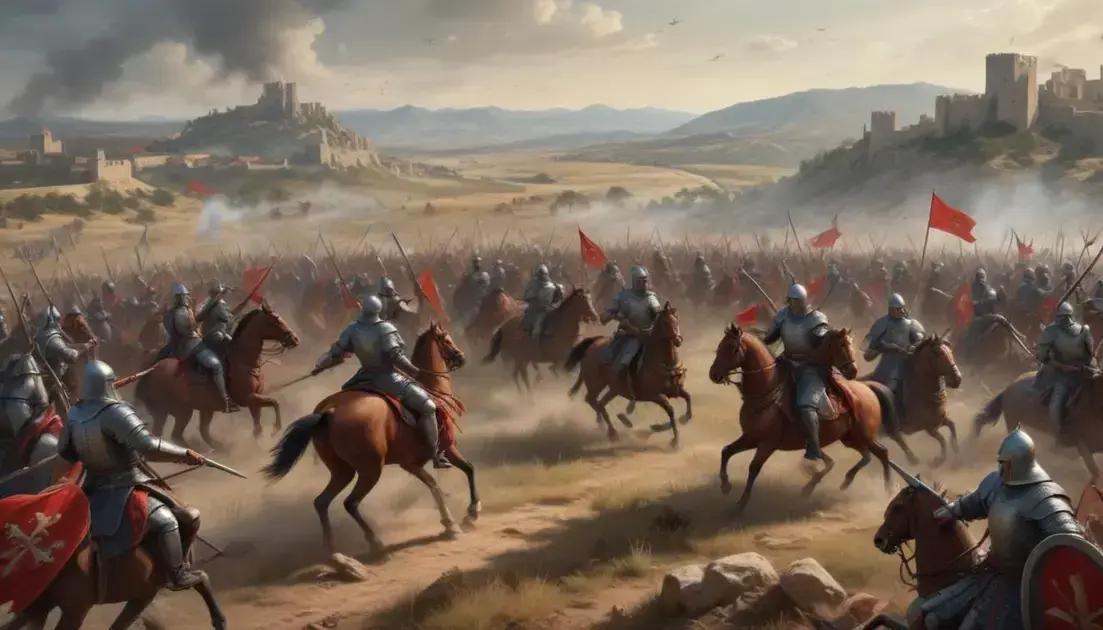
The Reconquista was a series of battles and events that took place over nearly 800 years in the Iberian Peninsula. It began in the early 8th century when Muslim forces invaded and took control of most of Spain. This marked the start of a long struggle. The goal? To reclaim land for Christians.
During the Reconquista, various Christian kingdoms fought against the Muslim rulers. These kingdoms included Castile, Aragon, and Leon. Each played a significant role in pushing back against Muslim influence. The struggle was not just about land but also about culture and religion.
As the years passed, victories and defeats shaped the course of history. Important events, like the capture of Toledo in 1085, were significant turning points. They boosted morale among Christians and led to more efforts in reclaiming land.
This battle was not only military. It involved diplomacy, alliances, and sometimes peace treaties. The interactions between Christians and Muslims were complex. Leaders sought to balance warfare with dialogue to ensure stability in their regions.
Finally, in 1492, the Reconquista reached its pinnacle with the fall of Granada. This marked the end of Muslim rule in Spain. This moment changed the cultural landscape of the region forever, blending different traditions that still influence Spanish culture today.
Key Events of the Reconquista
Throughout the Reconquista, several key events shaped the landscape of Spain. Each one marked a turning point in the battle between Christians and Muslims. Let’s look at some of these important moments.
One major event was the Battle of Covadonga in 722. This battle was among the first victories for the Christians. Led by Pelayo, it was a small yet significant fight. It sparked hope and resistance among Christian forces.
Next, in 1085, the capture of Toledo was a crucial victory. Toledo was a major city, rich in culture and knowledge. Its fall encouraged more Christians to join the fight against Muslim rule.
Fast forward to 1212, where the Battle of Las Navas de Tolosa took place. This battle was a significant defeat for Muslim forces. It united different Christian kingdoms and paved the way for further victories.
In 1469, the marriage of Ferdinand and Isabella marked another turning point. Their union united two powerful kingdoms—Aragon and Castile. This strengthened the Christian cause and led to more coordinated efforts against the Moors.
The final event of the Reconquista was the fall of Granada in 1492. This was the last Muslim stronghold in Spain. Its capture symbolized the end of the Muslim rule and the start of a new era in Spanish history.
Cultural Impact of the Reconquista
The Reconquista not only changed political power but also had a major cultural impact. It shaped Spain’s identity and left a lasting legacy. Let’s explore how.
One big change was in architecture. Many churches and cathedrals were built in areas that once fell under Muslim rule. These buildings often mixed styles from both cultures. The Alhambra in Granada is a great example. It shows beautiful Islamic art alongside Christian designs.
The language also evolved. With the Reconquista, Spanish absorbed many words from Arabic. Words related to science, agriculture, and daily life still exist today. Think of words like “azúcar” (sugar) and “algebra.” These terms came from Arabic, showcasing the rich exchanges between cultures.
Food was another area influenced by the Reconquista. Ingredients and cooking styles were shared between Christians and Muslims. For instance, spices and fruits introduced by the Moors enriched Spanish cuisine. Dishes like paella and tapas have these roots.
The arts flourished during and after this time. Poets and writers began to draw inspiration from the stories and legends of the Reconquista. Their works reflect the themes of honor, struggle, and cultural mixing.
Religion played a big role too. The Reconquista strengthened Catholicism in Spain. It led to the establishment of the Spanish Inquisition, aimed at enforcing Catholic orthodoxy. This affected many aspects of life and culture throughout the region.
The Legacy of the Reconquista
The Reconquista left a rich legacy that continues to shape Spain today. Its effects are visible in many areas, from culture to politics. Let’s dive into the legacy of this historic period.
One major aspect of the legacy is the rise of a unified Spain. The Reconquista united various kingdoms under a single crown. This strong central rule helped shape Spain into a powerful nation.
Another important legacy is the blend of cultures. The Reconquista led to a unique mix of Christian and Muslim traditions. This cultural fusion is seen in art, music, and food. Many traditional Spanish dishes have origins in both cultures.
Religious changes also marked this era. The Catholic Church became more powerful after the Reconquista. New laws were made to enforce Catholic beliefs. This shaped social norms and life in Spain for centuries.
The impact on arts and literature is equally significant. Writers, poets, and artists drew inspiration from the stories of the Reconquista. Their works reflect themes of bravery, honor, and struggle, keeping the history alive.
Additionally, the Reconquista influenced Spain’s interactions with the wider world. The drive to expand territories led to exploration and conquest in the Americas. This expansion changed global dynamics and connected different cultures.
Conclusion
In conclusion, the Reconquista was a pivotal period in history that shaped Spain’s identity. Its legacy goes beyond just battles and conquests. From the unification of kingdoms to the rich cultural blend that emerged, the effects are still seen today.
The impact on architecture, language, and food shows how diverse influences can come together. Religion also played a significant role in shaping society, as did the arts and literature inspired by the events of this time. The Reconquista reminded people of bravery and resilience, stories that still resonate.
Understanding this history helps us appreciate the connections we have today. So, the next time you see a beautiful Spanish building or enjoy a plate of paella, remember the long and rich legacy of the Reconquista that led us to where we are now.