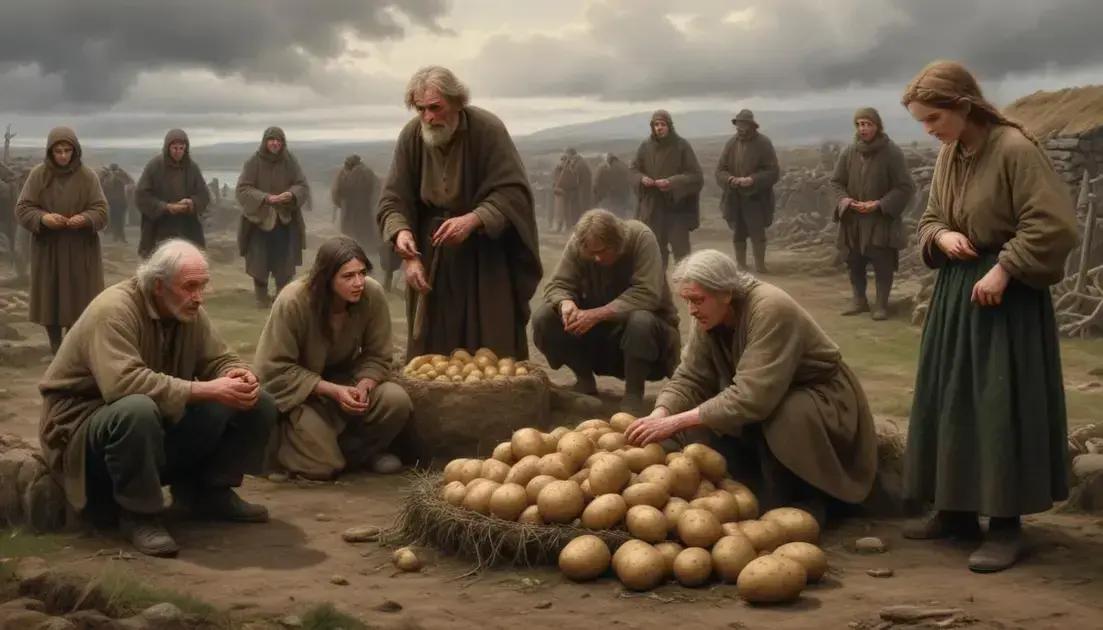
Irish Potato Famine: hunger, migration, and tragedy
The Irish Potato Famine caused immense suffering as crops failed, leading to a death toll of about a million people and mass emigration. The famine profoundly impacted Irish identity, culture, and society, inspiring movements for rights and recognition. It remains a pivotal part of history, showcasing resilience and the importance of community in overcoming adversity.
The Irish Potato Famine was not just a disaster; it was a pivotal moment that reshaped a nation. Imagine a world where millions were driven from their homes, forced to seek hope in distant lands…
Causes of the Irish Potato Famine
The Irish Potato Famine began in the mid-1840s. It was caused by a disease that affected potato crops. This disease, known as late blight, ruined fields and left people without food. Potatoes were a main food source for many in Ireland. When they rotted, hunger spread very quickly.
This situation was worsened by the British government’s policies. Many people believed these policies favored landlords and ignored the suffering farmers faced. Some landlords exported food while their tenants starved. This only added to the pain of the situation.
Another factor was the over-reliance on the potato. Many families depended solely on this crop for their meals. When the potato crop failed, they had few other options available.
The famine not only took away food but also hope. As hunger grew, great suffering followed. Entire families struggled to survive every day. The despair pushed millions to leave Ireland, searching for a better life elsewhere.
Understanding these causes helps us see how the Irish Potato Famine reshaped lives and communities. By learning about this painful past, we honor those who faced such hardship.
The Impact on Migration
The Irish Potato Famine had a huge impact on migration. As food became scarce, many people had no choice but to leave Ireland. They sought better lives in other countries. The United States was a popular destination for many.
In the years of the famine, millions packed their bags and set off. They traveled on crowded ships, often facing rough seas. The journey was long and dangerous. Many didn’t know if they’d make it to their new home.
Once they arrived in America, emigrants faced many challenges. They had to find jobs and adjust to a new culture. Many settled in cities like New York and Boston. In these places, they created communities, helping each other in tough times.
The stories of those who migrated are powerful. They left behind everything they knew. They took great risks to find food and work. Their struggles brought new energy and diversity to the U.S.
The famine changed not just Ireland, but also the places where migrants settled. Their experiences shaped the future of many communities. Today, their legacy lives on, reminding us of their courage and resilience.
Consequences of the Famine
The Irish Potato Famine had many serious consequences. First, it caused a massive loss of life. About a million people died from starvation and related diseases. This was a tragedy that changed the nation forever.
Additionally, the famine led to large-scale emigration. Many Irish people left their homes seeking safety and food. They moved to countries like America, starting a new chapter in their lives. However, they often faced hardships in their new homes.
The famine also affected Ireland’s economy. With so many people gone, there were fewer workers to farm the land. This weakened the agricultural industry and made recovery difficult. The loss of the potato crop disrupted food supplies for years.
Socially, the famine created deep divisions. It highlighted the struggles between the Irish people and British rulers. Many felt abandoned by the government, which fueled anger and resentment. These feelings influenced Irish politics for generations.
In the long run, the consequences of the famine were profound. They reshaped Irish society and culture, making people more resilient. The famine became a significant part of Irish history, reminding future generations of their strength in the face of adversity.
The Legacy of the Famine
The Irish Potato Famine left a lasting legacy that still affects Ireland today. One major impact was the change in population. Many people fled the country, and this loss shaped Irish communities for years. Emigrant stories became a vital part of Irish culture.
The famine also influenced Irish identity. It highlighted the struggle for rights and recognition. Many began to see the importance of standing up for their culture and heritage. This feeling sparked movements that sought justice and equality.
Culturally, the famine inspired art and literature. Writers and artists expressed the pain and resilience of those who suffered. Their works remind us of the strength of the human spirit. They help tell the story of survival and hope.
Memorials and museums have been created to honor the victims. These sites educate people about the famine’s impact. They serve as reminders of the struggles faced by those who lived through that dark time.
Today, the legacy of the famine is seen in the Irish diaspora. Many communities around the world continue to celebrate their Irish roots. The events of the famine shaped their identities and brought people together over generations.
Conclusion
In conclusion, the Irish Potato Famine had a profound impact on Ireland and its people. It led to great loss of life and forced many to emigrate. These events shaped Irish culture and identity in lasting ways.
The legacy of the famine is felt even today. It highlights the resilience of those who faced hardship. Their experiences remind us of the strength found in community and culture.
By remembering the stories of the famine, we honor those who suffered and survived. We also learn valuable lessons about compassion and justice. This history continues to inspire future generations to stand up for their rights and keep their culture alive.
Tags: