Boer Wars: the struggle for South Africa
The Boer Wars, consisting of the First and Second conflicts, significantly shaped South Africa’s history. They were marked by fierce battles between the British Empire and the Boer republics, leading to lasting social and political divisions. The impact on local populations was severe, with the establishment of concentration camps and widespread destruction altering lives forever. These wars influenced military strategies and ignited discussions about human rights, highlighting the complexities of colonial struggles and the ongoing legacy that affects South Africa today.
Boer Wars: a tale of conflict and survival, where farmers clashed with empires and indigenous peoples. Ever wonder how these struggles shaped South Africa?
The historical context of the Boer Wars
The Boer Wars took place mainly in South Africa during the late 19th and early 20th centuries. They were a series of conflicts between the British Empire and two Boer republics: the South African Republic and the Orange Free State. These wars were deeply rooted in complex historical issues.
Before the wars, gold was discovered in the Boer territories. This led to a rush of British settlers wanting to claim their share. The Boers, who were farmers, felt threatened by British expansion and new laws. Friction grew as both groups tried to assert their territory and rights.
The First Boer War lasted from 1880 to 1881. The Boers aimed to regain control and resist British rule. It ended in a surprising victory for the Boers. However, tensions quickly rose again, leading to the Second Boer War.
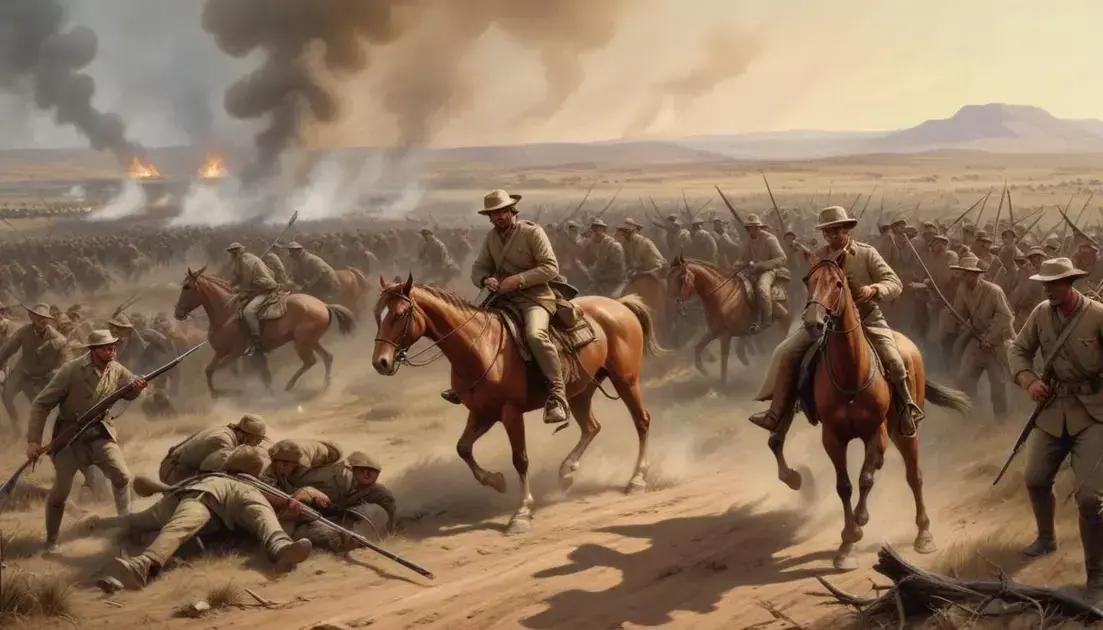
The Second Boer War, which lasted from 1899 to 1902, was much larger and more destructive. The British brought in more soldiers, resulting in fierce battles. The Boers used guerrilla tactics to fight back. Villages were destroyed, and civilians faced harsh conditions.South Africa became a battleground, and the struggles created a lasting impact on its people.
In the end, the British emerged victorious, but the scars of these wars remained. The Boer Wars highlighted the clash of cultures and the importance of resources, which shaped future relations in South Africa.
Key figures in the conflicts
Several key figures shaped the Boer Wars. Their actions and decisions impacted the course of the conflicts. Understanding these individuals helps us see the wars more clearly.
One major figure was Paul Kruger. He was the President of the South African Republic. Kruger was known for his strong leadership and resistance against British control. His determination to protect Boer rights made him a symbol of the struggle.
Another important figure was Cecil Rhodes, a British imperialist. He wanted to expand British territory in Southern Africa. Rhodes believed in British superiority. His ambitions led to conflicts with the Boers, especially during the Second Boer War.
General Ben Viljoen also played a vital role for the Boers. He was a skilled military leader during the Second Boer War. His tactics included hit-and-run attacks, which frustrated British forces. Viljoen’s leadership boosted morale among the Boer fighters.
On the British side, Lord Kitchener was a key commander. He was known for his ruthless tactics. Kitchener implemented a scorched earth policy, destroying Boer farms and using concentration camps. This left many Boer families in desperate situations. His strategies aimed to end the resistance quickly.
Each of these figures had different visions and beliefs. Their actions not only fueled the conflict but also left lasting marks on South Africa’s history. Recognizing their contributions helps us understand the complexity of the Boer Wars better.
The impact on local populations
The Boer Wars had a huge impact on local populations in South Africa. Both the Boers and the British fought fiercely for control. However, the civilians faced the worst consequences. Many families were uprooted from their homes.
During the wars, the British used a strategy called scorched earth. This meant they burned farms and destroyed food supplies. As a result, thousands of people lost their livelihood. The destruction left many struggling to survive.
Another major issue was the creation of concentration camps. The British set up these camps to hold Boer civilians. Thousands of men, women, and children ended up in these terrible conditions. Sadly, many people died from disease and hunger in the camps.
The indigenous populations also felt the effects of the wars. Local groups, like the Xhosa and Zulu, were caught in the conflict. They faced land grabs and violence. Their struggles were often ignored in the historical narrative, but they mattered greatly.
The social fabric of South Africa changed drastically during this time. The wars intensified racial divisions and created lasting inequalities. The scars from this period shaped future interactions among different groups in the country.
In summary, the impact on local populations during the Boer Wars was profound. Their experiences highlighted the human cost of conflict and the long-term effects of war.
Comparative analysis of the wars
The Boer Wars consist of two major conflicts: the First Boer War and the Second Boer War. Though they share similarities, there are key differences that define each war.
The First Boer War lasted from 1880 to 1881. During this time, the Boers wanted to regain control from the British. They used surprise attacks and guerrilla tactics. In this conflict, the Boers achieved an unexpected victory, showcasing their determination.
In contrast, the Second Boer War lasted from 1899 to 1902. This war was larger and more brutal. The British sent thousands of troops to regain control. Unlike the first war, it featured extensive fighting, including major battles like the Battle of Spion Kop and the Battle of Modder River. The Boers adopted guerrilla warfare again, but the British responded with scorched earth tactics.
Another key difference was the treatment of civilians. The Second Boer War saw the British establish concentration camps for Boer families. This caused immense suffering and casualties among the civilian population. The First Boer War did not involve such drastic measures.
Despite the differences in tactics and scale, both wars had a lasting impact on South Africa. They affected relationships between the British, the Boers, and indigenous populations. The legacies of these conflicts still influence South Africa today, showing the complexity of its history.
Legacy and repercussions of the Boer Wars
The Boer Wars left a complex legacy that transformed South Africa. These conflicts had lasting effects on national identity, politics, and society.
One key repercussion was the lasting division between the British and Afrikaner communities. After the wars, tensions remained high. Many Afrikaners felt bitter towards British rule. This sense of loss and resentment shaped their cultural and political views for generations.
The wars also influenced South Africa’s policy on governance. After the Second Boer War, the British created the Union of South Africa in 1910. This marked the start of a new political era. However, racial policies from this time still echoed throughout history.
Additionally, the Boer Wars highlighted the importance of military strategy and guerrilla warfare. These tactics later influenced other conflicts around the world. The resilience shown by the Boers inspired future movements against colonial rule.
Moreover, the establishment of concentration camps during the Second Boer War brought attention to the treatment of civilians in conflict. Today, this legacy raises discussions about human rights and the costs of war.
In summary, the legacy of the Boer Wars is evident in South Africa’s diverse society. It reminds us of the complexities of history and the long-lasting impacts of conflict.
Conclusion
In conclusion, the Boer Wars profoundly shaped South Africa’s history and identity. They highlighted the struggles between the British Empire and the Boer republics, leaving scars that are still felt today. The impact on local populations, the legacy of military strategies, and the residential suffering during the conflicts remind us of the high cost of war.
Furthermore, the wars influenced not just national policies but also personal relationships among communities. The divisions created still echo in modern South African society. Understanding this legacy is crucial for recognizing ongoing challenges and working towards a more united future.
Today, the Boer Wars serve as a lesson in resilience and the importance of acknowledging all sides of history. We must remember the lessons learned to help build a better tomorrow.