Continental Congress: the government before the government
The Continental Congress was a crucial institution during the American Revolution, uniting the colonies and leading to key actions like the formation of the Continental Army and the drafting of the Declaration of Independence. Key figures such as George Washington, Thomas Jefferson, and John Adams played significant roles in its success. The Congress’s legacy includes promoting self-governance and establishing democratic principles that continue to influence the United States today.
The Continental Congress played a pivotal role in America’s fight for independence and laid the foundation for a new nation. What led these delegates to unite? Let’s dive in!
Understanding the Purpose of the Continental Congress
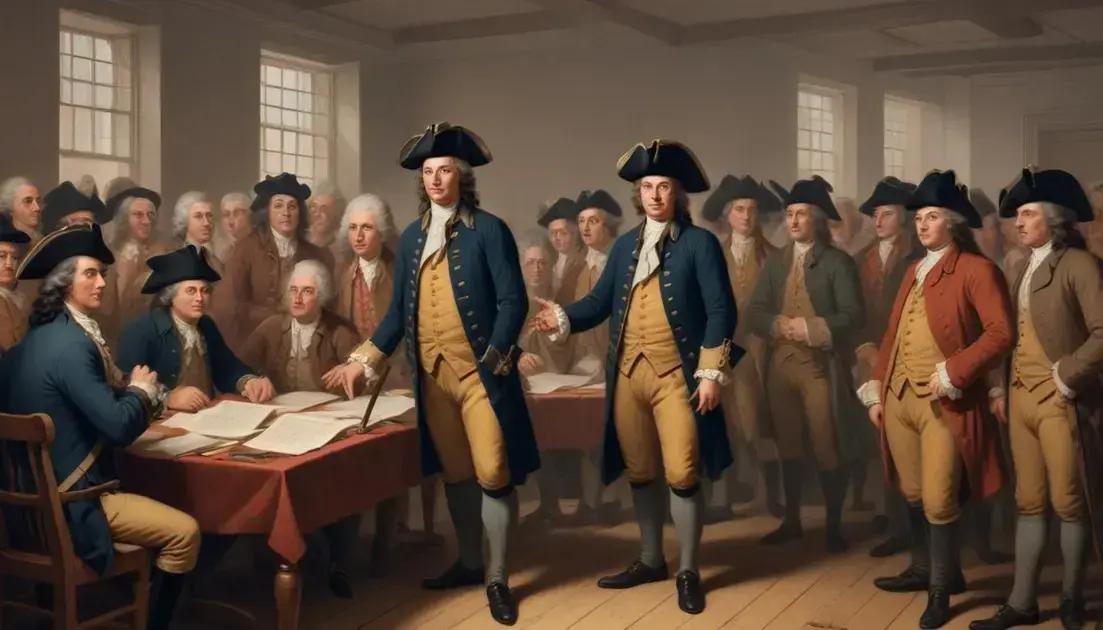
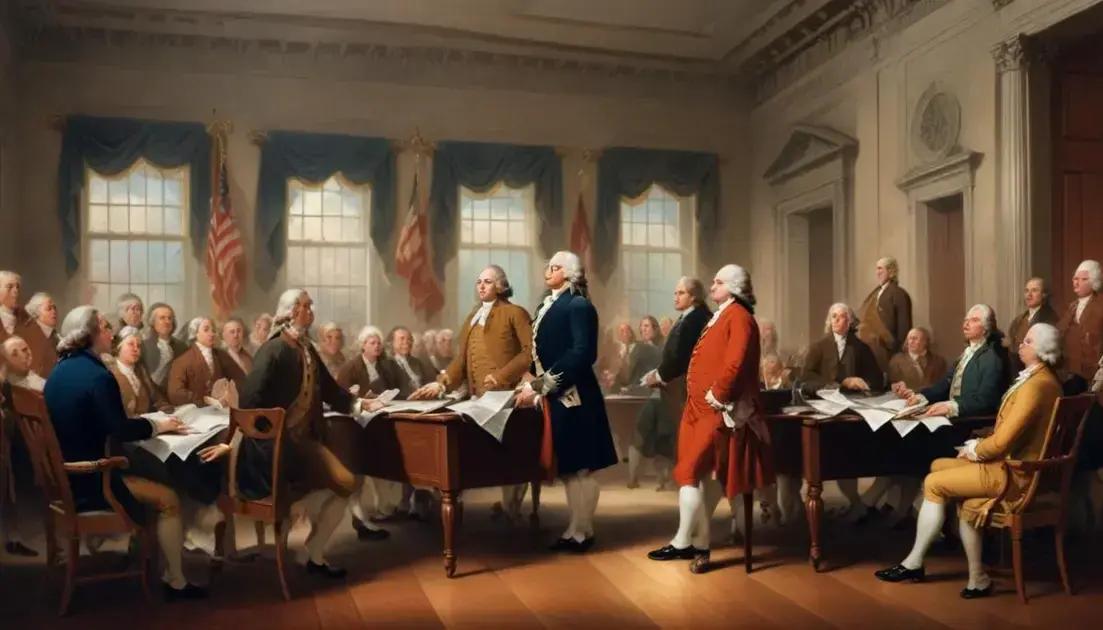
The Continental Congress was crucial during the American Revolution. It served as a platform for the colonies to unite against British rule. Delegates gathered to discuss important issues and make decisions that affected everyone.
Initially, the Continental Congress aimed to respond to the Intolerable Acts. These acts were laws passed by the British that many colonists found unfair. The Congress sought to address these grievances and find a common stance.
As tensions grew, the Congress took bolder steps. It coordinated colonial resistance and organized efforts for war. This included forming the Continental Army, which would fight against British forces.
Key Functions of the Continental Congress
The Congress had several key functions. It acted like a government for the colonies. It managed finances, built alliances, and even led diplomacy with foreign nations like France.
It also drafted important documents, including the Declaration of Independence. This document officially stated the colonies’ intent to separate from Britain. It expressed the colonies’ quest for freedom and self-governance.
The spirit of collaboration was vital. Delegates from different colonies shared ideas and strategies. This helped build a sense of unity among the colonies, setting the stage for a new nation.
Understanding the purpose of the Continental Congress helps us appreciate its role in shaping America. It wasn’t just a meeting but a movement toward independence and democracy.
Significant Actions Taken by the Congress
The Continental Congress took many significant actions during the American Revolution. These actions were crucial for the fight against British rule.
One of the first major steps was forming the Continental Army. In June 1775, Congress appointed George Washington as its commander. This decision united the colonies under a central military leadership.
Another key action was drafting the Declaration of Independence. This document, adopted on July 4, 1776, boldly declared the colonies free from Britain. It expressed their right to self-governance and freedom.
Organizing War Efforts
The Congress coordinated military strategies and established supply lines. This helped the army get the resources needed for a successful campaign. They helped raise funds and organize troops to support the war.
Moreover, the Congress managed foreign relations. They sought support from European nations such as France. This alliance was vital for gaining additional resources and troops.
Throughout the war, Congress issued various documents and appeals. These included letters to strengthen alliances and encourage support from colonists and allies alike. Each action furthers the colonies’ goal of independence.
These significant actions show how the Continental Congress laid the groundwork for a new nation. Their leadership and decisions were key to America’s fight for freedom.
Key Figures in the Continental Congress
The Continental Congress had many key figures who played vital roles. These leaders helped shape the direction of the American Revolution.
One of the most important figures was George Washington. As the commander of the Continental Army, Washington provided strong leadership and dedication. His military skills were crucial during the war.
Another central figure was John Adams. He was a fierce advocate for independence. Adams helped to persuade others about the need to separate from Britain.
Thomas Jefferson
Thomas Jefferson is best known for writing the Declaration of Independence. This document declared the colonies’ desire for freedom. Jefferson’s words inspired many and laid the foundation for America’s values.
Ben Franklin was another influential leader. He used his skills in diplomacy to garner support from France. Franklin’s charm and intelligence helped secure alliances crucial for the war effort.
Additionally, John Hancock served as the president of Congress. He was well-known for his bold signature on the Declaration of Independence. His leadership kept the Congress organized and focused on critical issues.
These figures, along with many others, contributed to the Congress’s success. They worked hard to unite the colonies. Their work and determination helped create a new nation based on freedom and democracy.
The Legacy of the Continental Congress
The Continental Congress left a lasting legacy that shaped America. Its actions set the stage for the nation we know today.
One key aspect of its legacy is the promotion of self-governance. The Congress paved the way for future democratic institutions. It showed that people could unite for a common cause.
Another important piece of the legacy is the Declaration of Independence. This document articulated the values of freedom and equality. It inspired countless movements for justice and rights, both in America and around the world.
Influence on Government Structure
The Congress established important precedents for government. It led to the creation of the Articles of Confederation. Although this initial governing document had its flaws, it was a step toward a stronger federal government.
Later, the lessons learned from the Congress influenced the U.S. Constitution. This Constitution created a more effective government. It introduced checks and balances that remain vital to democracy today.
Additionally, the spirit of collaboration fostered during the Congress inspired future leaders. It encouraged Americans to work together to solve problems and uphold their rights.
Overall, the legacy of the Continental Congress is one of unity, democracy, and resilience. Its impact is still felt today as we celebrate the values of freedom and self-determination.
Conclusion
In conclusion, the Continental Congress played a vital role in American history. Its actions helped unite the colonies during a critical time. The legacy of the Congress continues to influence democracy and governance today.
The principles of self-governance, freedom, and unity that emerged from the Congress are at the heart of American values. By learning from the challenges they faced, we can appreciate the importance of collaboration and standing up for our rights.
As we reflect on this period, let’s remember the bravery of those leaders and their commitment to creating a better future. The work they accomplished laid the foundation for the nation we cherish today. Understanding their legacy can inspire us to uphold their ideals in our own lives.