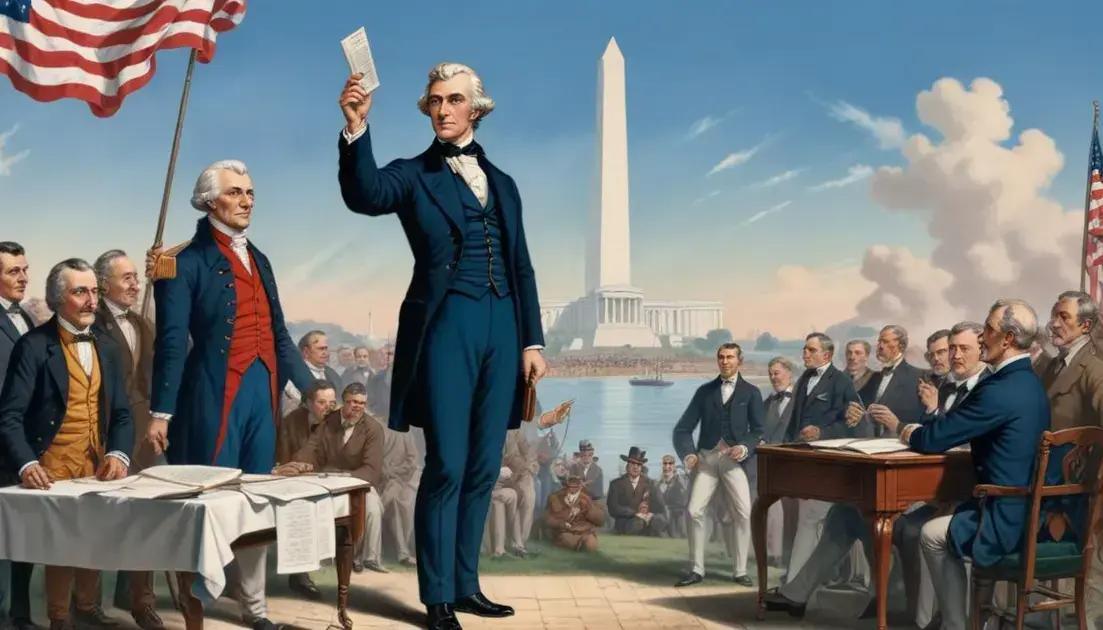
Monroe Doctrine: America’s stand against European control
The Monroe Doctrine, established in 1823, was a pivotal U.S. policy asserting that the Americas were off-limits to further European colonization. This doctrine emphasized non-interference from European nations and aimed to protect the sovereignty of neighboring countries. Its legacy influenced U.S. foreign policy for decades, leading to active involvement in Latin America and shaping modern interactions within the region. Understanding the Monroe Doctrine is crucial for grasping its ongoing implications in today’s geopolitical landscape.
Monroe Doctrine marked a pivotal moment in American history, declaring a bold stance against European control in the Americas. Curious about its lasting impact?
Introduction to the Monroe Doctrine
The Monroe Doctrine was announced by President James Monroe in 1823. It was a statement that warned European nations against colonizing or interfering in the Americas. This was a big deal for the United States as it showed we were ready to stand up for ourselves.
Before this, many European countries were expanding their empires into the Americas. This included places like Spain and England. Monroe’s warning was not just about protecting nations in the Americas. It was also about showing that the U.S. was becoming a strong player on the world stage.
The Doctrine declared that the Americas were no longer open to European colonization. This meant that the U.S. wanted to keep control of its own region. The message was clear: if Europe tried to take action, the U.S. would respond.
Many historians say this statement helped shape U.S. foreign policy for years to come. It set the tone for how America would interact with other countries, especially those in Europe.
Over time, the Monroe Doctrine evolved. It was used to justify the U.S. involvement in Latin America and even beyond. This shows how important the Doctrine was for U.S. history.
The historical context of 1823
The year 1823 was a turning point for many reasons. The world was changing, and so was America. The Napoleonic Wars had recently ended in Europe, leading to many countries looking to expand their influence. This was a time when European nations still held strong power in the Americas.
In this context, the United States was beginning to find its own identity. After gaining independence in 1776, the country was eager to assert itself. With this new confidence, leaders in the U.S. were concerned about European nations trying to regain control over former colonies.
The Latin American wars of independence were significant at this time. Countries like Mexico and Argentina were fighting for their freedom. As these nations won their independence, they sought support from the U.S. This created a mix of hope and fear within America’s borders.
The leaders at the time, including Monroe, realized that the stability of the Americas was at risk. If European powers intervened, it could threaten the newfound autonomy of these countries. This backdrop played a crucial role in shaping the Monroe Doctrine.
Monroe’s message in 1823 aimed to protect both U.S. interests and those of independent nations in the Americas. The Declaration was bold and expressed a desire for a more unified and independent region, free from European interference.
Key principles of the doctrine
The Monroe Doctrine is built on a few key principles that shaped U.S. policy. First, it clearly stated that the Americas were no longer open to European colonization. This meant new European claims would not be accepted.
Another important principle was the idea of non-interference. The U.S. would not allow European nations to meddle in affairs of the Americas. This meant that any attempt to control countries in the region would be seen as a threat.
Moreover, the doctrine expressed that any acts of aggression by European countries would provoke a U.S. response. This showed that America was serious about defending its interests and those of its neighbors.
Additionally, the Monroe Doctrine promoted the idea of regional security. It encouraged countries in Latin America to seek solidarity and cooperation with the U.S. This was to ensure their independence and security.
These principles set a new tone in foreign relations. They helped establish the U.S. as a power that cared about the stability of the Western Hemisphere. The Monroe Doctrine marked a shift from old colonial attitudes to a more modern vision of U.S. influence.
Impact on U.S. foreign policy
The Monroe Doctrine had a huge impact on U.S. foreign policy. It marked a shift in how America interacted with other nations. Before the doctrine, the U.S. often stayed quiet about European affairs. After its announcement, America took a much more active role.
One major effect was that it strengthened U.S. influence in the Western Hemisphere. The doctrine made it clear that America wouldn’t tolerate European intervention in the Americas. This principle guided many actions taken by the U.S. over the years.
For example, the U.S. used the doctrine to justify its interventions in Latin America. It often supported or opposed governments based on how they aligned with American interests. This included military actions and diplomatic efforts.
The Monroe Doctrine also helped to shape future policies. It laid the groundwork for the idea of the U.S. as a protector of smaller nations in the region. This idea continued into the 20th century, influencing policies during events like the Spanish-American War.
In summary, the Monroe Doctrine significantly changed U.S. foreign policy. It laid the foundation for a more assertive approach to international relations, especially within the Americas.
Legacy and modern implications
The Monroe Doctrine left a lasting legacy that’s still felt today. Its ideas shaped U.S. foreign policy for generations. The notion of protecting the Americas from European influence became a fundamental principle for U.S. leaders.
One major legacy is the idea of American exceptionalism. This belief holds that the U.S. has a unique role in promoting democracy and freedom. Many leaders argued that it was America’s duty to support this cause.
In modern times, the Monroe Doctrine’s implications can be seen in various actions. For instance, U.S. interventions in places like Panama and Cuba were often justified by referencing the doctrine. These actions aimed to prevent foreign powers from establishing control in the region.
Today, this principle still resonates with U.S. foreign policy decisions. It influences how America approaches relationships with Latin American countries. The U.S. often emphasizes partnerships while also protecting its interests.
However, the doctrine’s legacy isn’t without controversy. Some argue that it led to unwanted interventions in sovereign nations. Critics say it has sometimes resulted in negative outcomes for affected countries.
Understanding the Monroe Doctrine is essential to grasping current U.S. foreign policy. Its legacy continues to affect how America interacts with its neighbors in the Americas.
Conclusion
In conclusion, the Monroe Doctrine significantly impacted U.S. foreign policy and has a lasting legacy. It established America as a key player in the Western Hemisphere, promoting independence and regional security. While it aimed to protect nations from European control, it also led to complex relationships in Latin America.
Today, its principles still guide U.S. actions in the region. Understanding the Monroe Doctrine helps us see how historical decisions shape current policies. As we look to the future, the lessons from the past remind us of the importance of supporting freedom and stability in our neighboring countries.