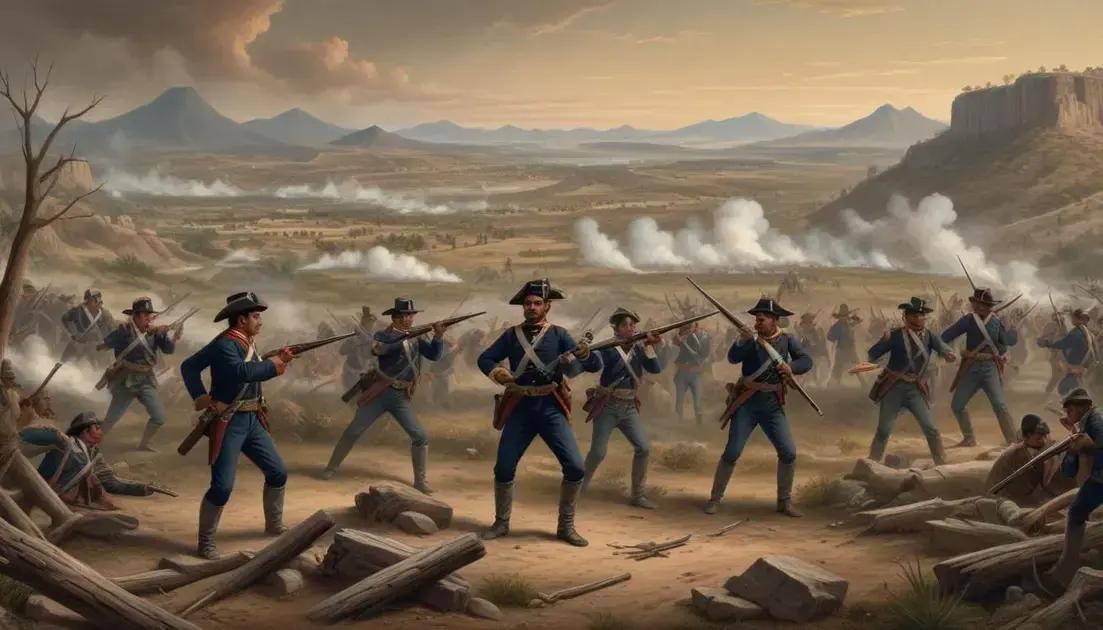
Mexican-American War: expansion, conflict, and controversy
The Mexican-American War significantly influenced the U.S. by expanding its territory and intensifying debates over issues like slavery, morality, and political power. Key battles such as Palo Alto and Chapultepec shaped its outcome, while the war’s legacy continues to impact American culture and relations with Mexico today.
The Mexican-American War transformed a continent, reshaping borders and igniting fierce debates about morality and expansion.
The roots of conflict
The Mexican-American War had deep roots, starting with the idea of Manifest Destiny. This was the belief that Americans were destined to expand across the continent.
Another big factor was the annexation of Texas. After gaining independence from Mexico, Texas joined the United States in 1845. This made Mexico very angry, as they saw Texas as part of their land.
Border disputes added to the tension. Both countries claimed different areas near the Rio Grande River. Each side believed they were right, which only raised the stakes.
Political tensions also played a role. Some Americans wanted to expand for new land, resources, and opportunities. Others felt it was wrong to take land from Mexico.
The conflict was not just about territory, but also about beliefs and identities. As the war approached, many worried about the impact on American values and the future of the nation.
These factors created a feeling of inevitability about war. The mix of pride, anger, and ambition drove both nations toward conflict.
Key battles and events
The Mexican-American War had many important battles and events that shaped its course. One of the first major battles was the Battle of Palo Alto. This happened in May 1846, near the Rio Grande. It marked the start of the war and showed American power.
Another significant event was the Siege of Vera Cruz. U.S. forces landed in March 1847 and laid siege to the city. This was a key point that allowed them to advance inland toward Mexico City.
The Battle of Buena Vista was another crucial moment. It took place in February 1847. General Zachary Taylor led American troops against a larger Mexican army. His forces won a tough fight, which boosted American morale.
One more key battle was the Battle of Chapultepec. In September 1847, American troops stormed this fortress in Mexico City. They faced fierce resistance but ultimately captured it, leading to the fall of the capital.
These battles were not just fights; they were turning points. Each one brought the two nations closer to peace, yet also intensified the conflict and its consequences.
The impact on territorial expansion
The Mexican-American War had a huge impact on the United States and its borders. After the war, America gained vast amounts of land. This included present-day California, Arizona, New Mexico, and parts of Colorado, Utah, and Nevada.
This expansion fulfilled the idea of Manifest Destiny, the belief that Americans were meant to stretch across the continent. Many saw it as a chance for growth and new opportunities.
The newly acquired land caused both excitement and tension. It raised questions about slavery in the new territories. Would they become free or slave states? This debate intensified the divide between the North and South.
As more people moved west, it changed the way Americans lived. Towns popped up, and new industries formed. The Gold Rush of 1849 brought thousands to California, making it a booming state.
However, this expansion also had consequences for Native Americans. Many were forced off their lands. Their way of life changed dramatically as settlers moved in and claimed territory.
The war and its resulting territorial gains reshaped America’s identity forever. It created a nation that spanned from coast to coast, but also set the stage for future conflicts.
Moral and political controversies
The Mexican-American War stirred up lots of moral and political controversies. Many people questioned whether it was right to go to war for land. Some felt it was an act of aggression against Mexico.
There were strong beliefs on both sides. Supporters of the war in the U.S. argued it was necessary for the nation’s growth. They believed in Manifest Destiny, the idea that America should expand from coast to coast.
On the other hand, many critics saw it differently. They viewed the war as an unjust attempt to take land from Mexico. Figures like Abraham Lincoln and former President John Quincy Adams spoke out against it. They questioned the motives of those in power.
Slavery was also a hot topic during this time. The new territories raised questions about whether they would allow slavery. This made the already tense situation even worse. It deepened the divide between the North and South.
The controversy over the war’s morality and politics didn’t end with the fighting. It sparked debates that would carry on for years. These discussions shaped the future of American politics and society.
Legacy of the war
The Mexican-American War left a lasting legacy on the United States. It changed borders and reshaped the nation in many ways. After the war, America grew significantly. The U.S. expanded westward, gaining territories that are now several states.
This expansion stirred up conflicts that continued for decades. The debate over slavery in the new territories grew more intense. This division helped lead to the Civil War.
Socially, the war influenced American culture. Many stories, songs, and artworks were created around the war and its heroes. It became a part of the national narrative, celebrating bravery and sacrifice.
Politically, the war also shaped future policies and actions. Understanding the reasons behind the war and its consequences became crucial for future leaders. It taught lessons about expansion, power, and national identity.
Moreover, the war affected relationships between the U.S. and Mexico. It created long-standing tensions that still exist today. These feelings surface in discussions about border issues and immigration.
The legacy of the Mexican-American War impacts modern views on American expansionism and its effects on other nations.
Conclusion
In conclusion, the Mexican-American War deeply shaped the United States. It expanded the nation’s territory while also raising important questions about morality and politics. The impact of the war can still be seen today in various ways, from cultural influences to ongoing discussions about immigration and borders.
This conflict also highlighted the struggles over slavery and statehood, setting the stage for future tensions. Understanding this legacy is crucial for recognizing how history influences our present and future.
As we reflect on the Mexican-American War, we can learn valuable lessons about conflict, growth, and the importance of thoughtful discussion. By honoring this history, we better prepare ourselves to address the challenges of today.