Al Capone: America’s most infamous gangster
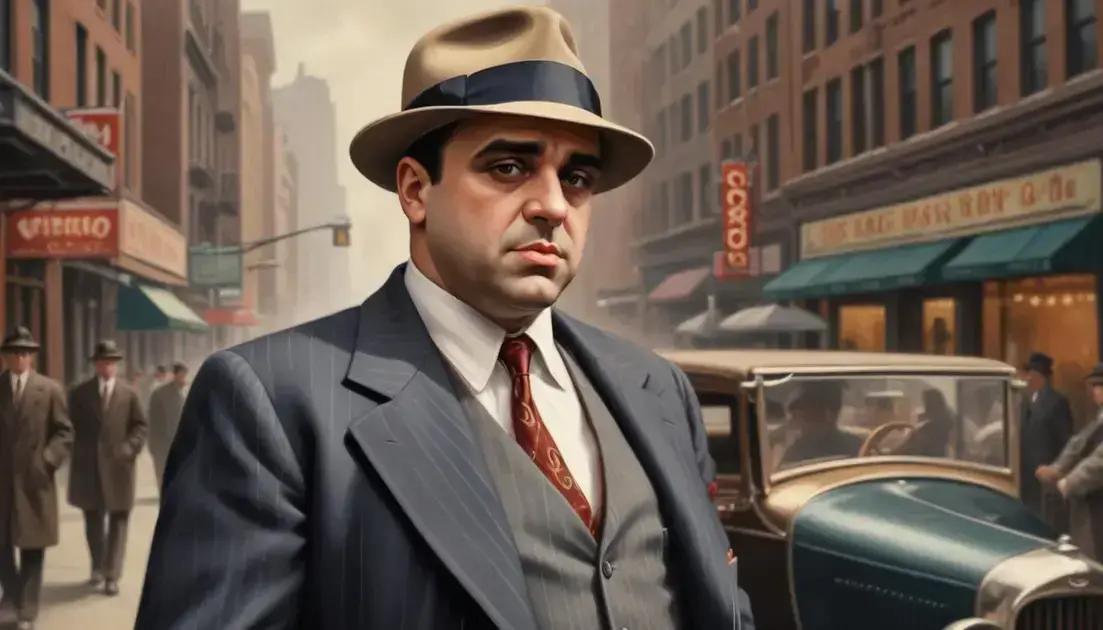
Al Capone, America’s most notorious gangster, rose to power during Prohibition in the 1920s through illegal bootlegging and violent crime. His legacy includes not only his lavish lifestyle but also his significant impact on law enforcement and organized crime. Capone’s eventual capture and conviction for tax evasion marked a turning point, leading to lasting changes in how the government tackled organized crime. Today, his story remains a captivating symbol of an era defined by both glamor and danger.
Gangster Al Capone stands as one of America’s most infamous criminal figures, ruling the underworld of Chicago during the Prohibition era. Have you ever wondered how one man could dominate in such a chaotic time? Let’s dive in!
Early Life and Background
Al Capone was born on January 17, 1899, in Brooklyn, New York. He was the son of Italian immigrants from Naples. His parents wanted a better life in America, and they worked hard to provide for their family. Al was the fourth of nine children, and like many kids of his time, he faced challenges growing up.
As a young boy, Al was tough and street-smart. He dropped out of school after the sixth grade and started hanging around gangs. These gangs often fought for control over territory in their neighborhoods. Al learned fast how to survive in this tough world. He got involved in petty crimes which eventually led him to more serious activities.
Capone’s early experiences shaped who he would become. He worked various low-paying jobs, sometimes even as a club bouncer. It wasn’t long before he caught the attention of important crime figures. This led to him moving to Chicago, where he joined organized crime.
The city was rife with corruption, especially during Prohibition. Al saw an opportunity to make a name for himself and rise within the ranks of crime. He became known as a skilled operator, using both violence and charm to solve problems. His early life prepared him for the dangerous journey ahead.
Rise to Power
Al Capone’s rise to power began when he moved to Chicago in the early 1920s. The city was bustling with opportunity, especially during Prohibition. This was when the sale of alcohol was illegal in the U.S. Capone saw a chance to make big money in the illegal liquor trade.
He started working for Johnny Torrio, a powerful mob boss. Under Torrio, Al learned how to run things and build connections. He quickly proved himself to be resourceful and clever. Capone helped expand their bootlegging operations, which made them very rich.
When Torrio retired in 1925, Al Capone took over his territory. He became the head of the Chicago Outfit. With this new position, Capone used both violence and charm to ensure loyalty from his gang members. He wasn’t afraid to eliminate anyone who threatened his power.
Al’s style was flashy and he loved the good life. He throw lavish parties, drove expensive cars, and even built a mansion. His public persona was that of a generous gangster. He often donated to charities, trying to win the hearts of the people.
As his power grew, so did his enemies. Other crime families wanted a piece of the action. Rivalries led to bloody gang wars, but Capone always managed to stay on top. His influence stretched far beyond Chicago, impacting politics and law enforcement as well.
Notorious Crimes
Al Capone was known for many notorious crimes that defined his reign. One of the most infamous was bootlegging. During Prohibition, he led a massive operation that smuggled illegal alcohol into Chicago. This made him very wealthy and powerful.
Capone wasn’t just a businessman; he was involved in violent crime as well. His organization committed numerous murders. Rival gangsters were often the targets. The St. Valentine’s Day Massacre in 1929 was one of his most shocking acts. In this event, seven men from a rival gang were killed in cold blood.
Beyond murder, Capone was linked to bribery and corruption. He paid off police and politicians to look the other way. This ensured his operations ran smoothly. His influence even reached into City Hall, where he had many allies.
Capone also dabbled in gambling and prostitution. His businesses allowed him to control various illegal activities across Chicago. People feared him, but many also admired his wealth and lifestyle. He was often seen as a kind of Robin Hood, despite his violent ways.
These notorious crimes drew the attention of law enforcement. Capone was arrested several times but often got away due to his connections. It wasn’t until the late 1920s that authorities finally charged him with tax evasion. This led to his downfall and imprisonment.
Capture and Conviction
Al Capone’s capture and conviction marked the end of his crime wave in Chicago. Despite his power, Capone was finally brought down by tax evasion charges. Law enforcement officials struggled to pin serious crimes like murder on him. But, they found a way to hold him accountable.
In 1931, the government decided to focus on Capone’s finances. They dug deep into his business dealings to find tax violations. The investigation led to a grand jury indictment. Capone was officially charged with failing to pay taxes on his earnings.
His trial began in October 1931. Although he had many connections and resources, evidence against him was strong. Prosecutors presented a mountain of proof showing how much money he made from illegal activities. Capone’s lawyers fought hard, but it was clear that the evidence was piling up.
Capone was convicted on October 24, 1931. He received an eleven-year prison sentence. This shocked many people who saw him as a powerful figure. Instead of the usual gangster life, he would now have to face time behind bars.
He was sent to Alcatraz, a high-security prison. Here, Capone’s life changed drastically. He went from being a city kingpin to an inmate. This marked a significant change in his legacy. The man who ruled Chicago had finally fallen.
Legacy and Impact
Al Capone’s legacy is complex and fascinating. He was more than just a gangster; he changed how people viewed organized crime. Capone’s influence spread far beyond Chicago. He became a symbol of the Roaring Twenties and Prohibition-era crime.
Many remember him for his lavish lifestyle. With his money, he bought expensive cars and homes. Capone threw grand parties that drew attention. This lifestyle made him famous, but it also put him in the spotlight. People were both drawn to him and scared of him.
Capone’s criminal activities had a profound impact on law enforcement. His case revealed how deeply crime was rooted in American society. Authorities learned that crime could not be ignored. This led to more serious efforts to combat organized crime in the years that followed.
His conviction for tax evasion was significant for the government. It showed that even powerful figures could be brought to justice. Law enforcement began to focus more on financial crimes, which changed how they approached criminal investigations.
Even today, Capone’s story is influential in popular culture. Movies, books, and TV shows often portray him as the ultimate gangster. This fascination keeps his memory alive, making him a lasting icon in American history.
Conclusion
In conclusion, Al Capone’s life and crimes left a lasting mark on American history. His rise to power illustrates how organized crime can thrive in times of societal change. While he became a notorious figure, Capone also sparked significant changes in law enforcement approaches.
His story is not just one of crime; it shows the complexity of human nature. Capone’s legacy continues to fascinate people today. From movies to books, his life remains a subject of interest and discussion.
Ultimately, understanding Capone helps us grasp the impact of crime and its influence on society. It reminds us of the lessons learned about justice and the fight against organized crime. Al Capone will always be remembered as a symbol of an era filled with both glamour and danger.