Battle of Talas: Arabs vs Chinese for the Silk Road
The Battle of Talas in 751 was a pivotal conflict between the Abassid Caliphate and the Tang dynasty, significantly impacting the control of the Silk Road trade routes. The Abassid victory not only solidified their economic power but also fostered cultural exchanges between Islamic and Central Asian societies, influencing religion and local customs. This battle marked a decline in Tang influence and opened up new opportunities for trade and cultural enrichment in the region.
In Silk Road history, the Battle of Talas stands out as a critical moment between East and West. Curious about how this clash shaped trade?
Introduction to the battle and its significance.
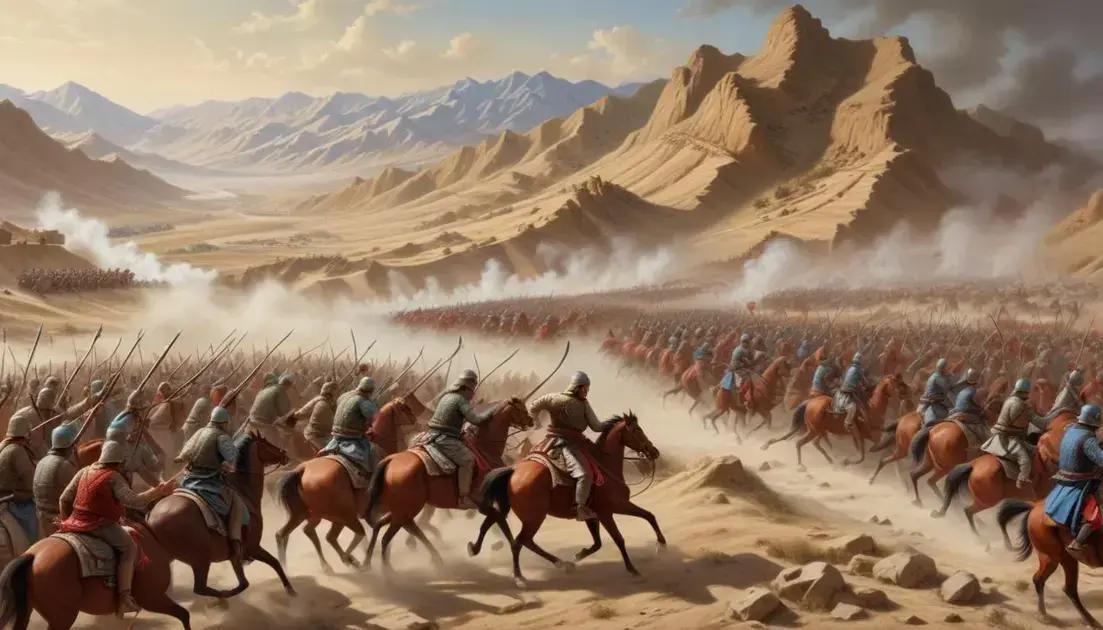
The Battle of Talas was a remarkable event that took place in 751. It was a fierce struggle between the Abassid forces and the Tang dynasty of China. This battle happened in what is now modern-day Kyrgyzstan. The conflict was not just about land; it was about control of the vital Silk Road trade routes. These routes connected the East and West, making them incredibly important for trade and cultural exchange.
During the battle, the Abassid forces faced a well-equipped Chinese army. However, the Abassids had local support, which played a crucial role in their success. This blend of local knowledge and military skill helped them achieve a surprising victory. By defeating the Tang army, the Abassids opened up new paths for trade and influence in the region.
The battle’s outcome had lasting effects. It marked the beginning of the end for Tang power in the region and paved the way for the expansion of Islamic culture into Central Asia. Over time, the victory allowed for greater access to trade goods. This included silk, spices, and other valuable items that would flow along the Silk Road.
Additionally, the Battle of Talas led to significant cultural exchanges between the Islamic world and China. Ideas, technologies, and even religions began to meld over time. This blend enriched both cultures and laid the groundwork for future interactions.
Historical context of the Silk Road.
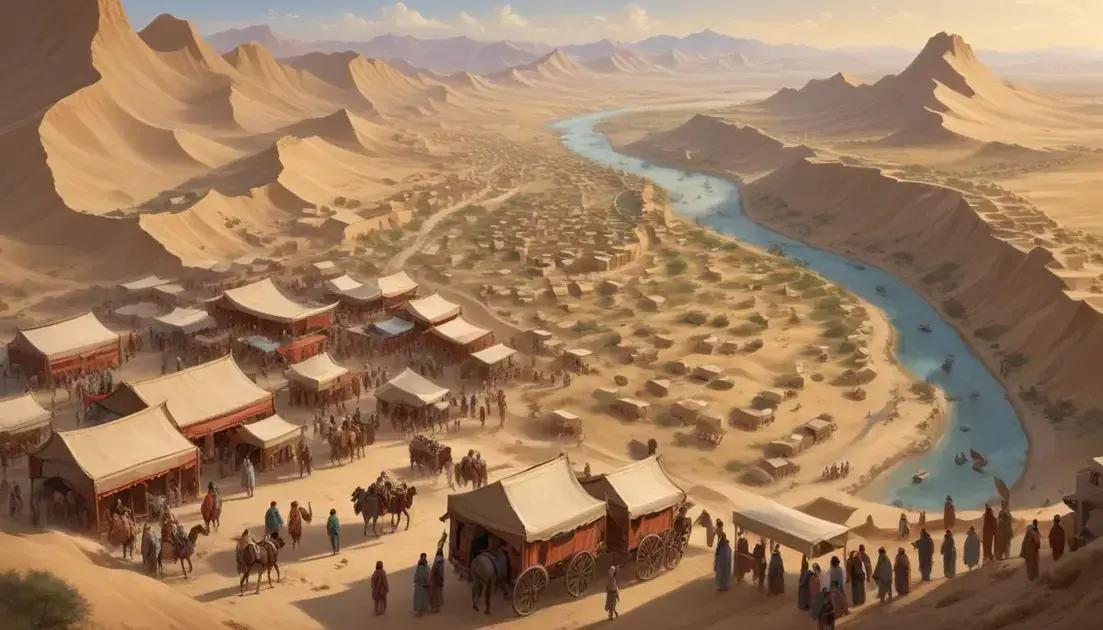
The Silk Road was a major trade route that connected Asia and Europe. It wasn’t just one road; it was a network of paths. Merchants traveled across deserts and mountains to trade goods. These routes played a vital role in the spread of cultures and ideas.
The name Silk Road comes from the luxurious silk that was traded. Chinese silk was highly valued in Europe. But the road was used for much more than just silk. Spices, gems, and precious metals were also exchanged. Traders carried not only goods but also knowledge and technology.
The history of the Silk Road dates back over 2,000 years to the Han Dynasty. It flourished for centuries, allowing different peoples to connect. Various empires, like the Mongol Empire, expanded the routes, making travel safer. This led to a boom in trade and cultural exchange.
Many civilizations depended on the Silk Road. It helped to spread religions like Buddhism, Islam, and Zoroastrianism. Ideas and inventions moved along these paths, including paper and gunpowder. These exchanges changed how people lived and thought.
However, the Silk Road was not only about positive exchanges. It also saw conflicts and struggles for control. Various regions fought for dominance over trade routes. In this way, the routes shaped not only economies but also political landscapes.
Overview of the key players involved.
The Battle of Talas involved several key players that shaped its outcome. On one side, you had the Abassid Caliphate. They were a powerful Islamic empire. The Abassids wanted to expand their influence and control over trade routes.
Leading the Abassids was General Ziyad ibn Salih. He was strategic and well-respected. His tactics focused on using local knowledge to gain an advantage. He understood the terrain well, which proved essential for the battle.
On the opposing side was the Tang dynasty. This Chinese empire was at its peak. They aimed to maintain their dominance in Central Asia and secure trade routes for themselves. The Tang forces were known for their strength and discipline.
The commander of the Chinese army was General Gao Xianzhi. He was an experienced leader, but faced challenges on the battlefield. The Tang troops were well-equipped and had superior numbers, which made them a formidable force.
Additionally, local allies played a significant role in the battle. Many Central Asian tribes had their own interests in the conflict. For example, some tribes supported the Abassids while others sided with the Tang. These local dynamics added complexity to the battle.
The interactions between these players created a rich tapestry of alliances and conflicts. Understanding their motivations helps explain the significance of the Battle of Talas.
The aftermath of the battle and its long-term effects.
The aftermath of the Battle of Talas had significant impacts on the region. After the battle, the Abassid victory changed trade routes forever. The Abassid Caliphate gained more control over the Silk Road. This was crucial for their economy and influence.
The defeat weakened the Tang dynasty. They lost their grip on Central Asia, which was vital for trade. This loss marked a decline in their power and prestige. The Tang struggled to maintain control over its territories after this conflict.
In the long term, the Battle of Talas opened the door for cultural exchanges. With the Abassids in control, Islamic culture spread more widely into Central Asia. Ideas, art, and technologies flowed between cultures.
Moreover, the battle influenced local tribes, too. Many Central Asian tribes allied with the Abassids. This altered political dynamics in the area. These alliances created a new landscape for future conflicts and trades.
Religions also spread because of the battle’s outcome. Islam began to take hold in regions that were previously more influenced by Buddhism and other local beliefs. This blending of faiths and cultures enriched the fabric of society.
In summary, the Battle of Talas was a turning point. Its effects rippled through trade, culture, and politics for generations. Understanding this battle helps us see how history shapes present-day interactions and relationships.
Cultural and economic impacts following the conflict.
The Battle of Talas had notable cultural and economic impacts that shaped the region. After the battle, the Abassid victory influenced trade in Central Asia. The Silk Road became more accessible for Islamic traders. This increase in trade led to economic growth and prosperity.
Economically, the victory allowed the Abassids to control important trade routes. They facilitated the flow of goods like silk, spices, and precious metals. As trade increased, cities along the routes became vibrant marketplaces.
Culturally, the aftermath sparked a blend of ideas and traditions. The Abassids brought Islamic culture into Central Asia. Art, science, and literature from the Islamic Golden Age began influencing local cultures. This exchange enriched both Islamic and Central Asian societies.
Furthermore, the battle created opportunities for cultural dialogue. Different peoples interacted more frequently. Ideas about governance, art, and religion were shared and adapted. These interactions laid the groundwork for future cultural developments.
The spread of Islam also took root in regions previously influenced by Buddhism and local beliefs. This blending of religions created a diverse spiritual landscape. Over time, this multiculturalism shaped community identities.
In short, the cultural and economic impacts post-battle were significant. The aftermath of the Battle of Talas fostered growth, exchange, and development that influenced the course of history in the region.
Conclusion
In conclusion, the Battle of Talas significantly shaped trade, culture, and relationships in Central Asia. Its impact on the Silk Road opened new paths for economic growth and cultural exchange. The victory of the Abassid Caliphate allowed for Islamic traditions to spread, influencing local customs and beliefs.
This blend of cultures enriched the region, fostering dialogue and cooperation among diverse peoples. The aftermath of the battle not only affected the politics of the time but also laid a foundation for a vibrant, interconnected society. Overall, understanding these historical events helps us see the importance of cultural interactions in shaping our world today.
Tags: