Confucius: the philosopher who shaped East Asia
Confucius was a pivotal philosopher whose teachings shaped the moral and social values of East Asia. His key principles, including respect, integrity, and the importance of community, have influenced education, governance, and interpersonal relationships for centuries. By promoting ideas like ethical leadership and family honor, Confucius’s legacy remains relevant in today’s discussions around social justice and ethical business practices, making his wisdom crucial for understanding modern Eastern philosophies.
Confucius stands as a monumental figure in philosophy, having woven the fabric of morals, governance, and interpersonal relationships in East Asia for generations to come. Ready to dive into his world?
The Life of Confucius
The Life of Confucius is a fascinating tale that spans many years. He was born in 551 BC in the state of Lu, what is now part of China. Growing up, he faced many challenges. His family was not wealthy, but they valued education. This early commitment to learning shaped his future.
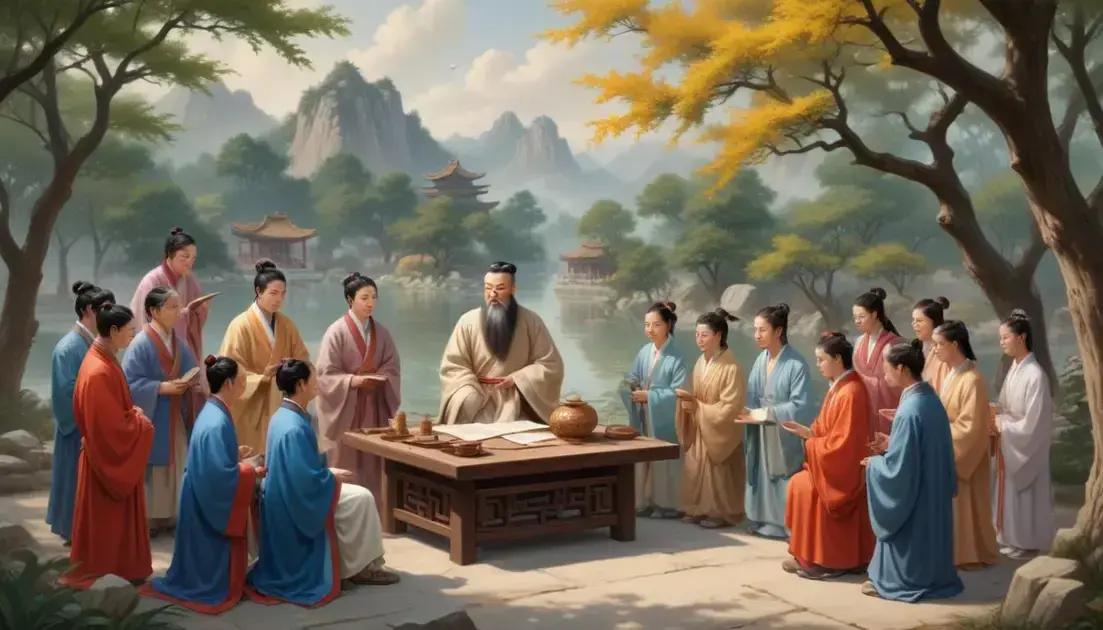
As a young man, Confucius worked in various jobs, including as a teacher and a government official. His passion for teaching was clear from the start. He believed in sharing knowledge to improve society. His goal was to create a more harmonious world through moral teachings.
Confucius traveled to different states to share his ideas. He met many leaders and tried to influence how they governed. He taught principles like respect, justice, and honesty. These ideas were rooted in the importance of family and community.
Despite his efforts, not everyone accepted his teachings. Confucius faced struggles, but he remained committed to his beliefs. He continued to teach until his final years, impacting many students. His legacy is still felt today, as his thoughts formed the foundation of Confucianism, a system that has shaped East Asian culture for centuries.
Core Teachings
Core Teachings of Confucius center around moral values and social harmony. He believed that everyone should strive for goodness. His teachings emphasize the importance of respect, particularly for elders and family members. Confucius taught that a harmonious society begins at home.
One key concept is ren. This means compassion and kindness toward others. Confucius encouraged treating others as you’d like to be treated. Another important idea is li, which refers to proper behavior and etiquette. Following li helps maintain order in society and relationships.
Confucius also believed in filial piety, which is a deep respect for one’s parents. He taught that honoring parents and ancestors is crucial for a strong family. His ideas about leadership focus on moral integrity and the duty of rulers to serve their people with fairness.
These teachings created a guide for personal conduct and leadership. They influenced not only China but much of East Asia. By practicing these core principles, individuals can nurture a more peaceful and organized society.
Impact on Eastern Philosophy
The Impact on Eastern Philosophy by Confucius is profound and far-reaching. His teachings shaped how many people in East Asia think about life, morality, and society. Confucianism is not just a set of ideas; it’s a way of life for millions.
One major impact is the emphasis on ethical behavior. Confucius taught that individuals should act with honor and integrity. This focus on ethics influenced many schools of thought in Eastern philosophy, including Buddhism and Taoism.
Confucius also stressed the importance of relationships. His concepts of ren and li promote harmony in personal and social connections. People began to see the value in community and cooperation. This focus on social harmony became central to Asian cultures.
Furthermore, his ideas about government and leadership encouraged rulers to be benevolent. Confucius believed that leaders should act for the good of the people, not just for power. This idea inspired many political systems in East Asia.
Overall, Confucius has left a lasting legacy. His thoughts continue to influence education, law, and social values across many countries today. Understanding his impact helps us appreciate the depth of Eastern philosophy and its relevance in modern times.
Legacy and Modern Relevance
Legacy and Modern Relevance of Confucius continue to resonate today. His teachings are not just historical; they’re active in our lives. Many people still follow his principles of respect, duty, and integrity.
In today’s world, issues like social justice and family values echo Confucian thoughts. His ideas about relationships remind us how important it is to connect with others. Building strong communities is key in our busy lives.
Education also reflects Confucius’ legacy. He promoted learning as a lifelong journey. Modern educational systems in Asia often embrace his teachings. Schools focus on moral development alongside academic success.
In politics, Confucian values influence leadership styles. Many leaders emphasize benevolence and responsibility. They believe in serving the people, aiming for harmony in society. This approach is especially relevant in Asian countries.
The philosophy of Confucius even touches on business ethics today. Companies incorporate his ideas on teamwork and moral conduct. Ethical and responsible practices are becoming more valued in the marketplace.
Overall, Confucius’ legacy is a rich part of our culture. His thoughts help shape our values and choices, keeping his wisdom alive.
Conclusion
In conclusion, the teachings of Confucius offer valuable lessons that are still relevant today. His focus on respect, integrity, and the importance of community shapes how we view relationships and leadership.
As we navigate today’s world, Confucian values remind us to connect with others and build strong communities. These principles influence our education, politics, and even business practices. By embracing his ideas, we can create a more harmonious and ethical society.
Ultimately, understanding Confucius’ legacy encourages us to act with kindness and responsibility. His wisdom continues to guide us in making positive choices that benefit not only ourselves but also the world around us.