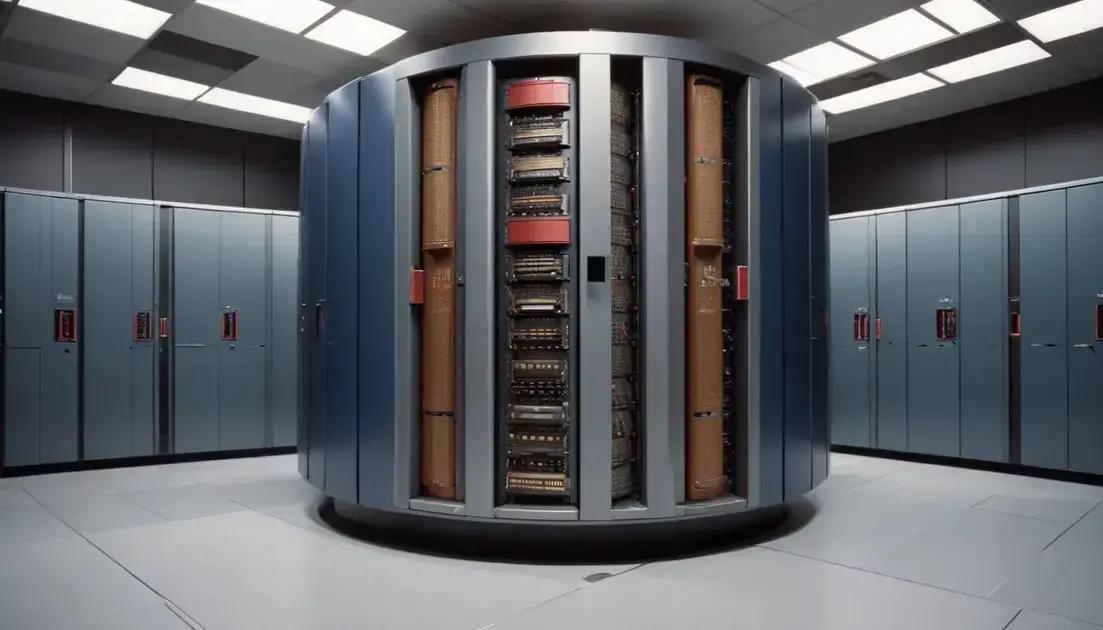
Cray-1: the supercomputer that reshaped science
The Cray-1 supercomputer revolutionized scientific research with its unmatched speed and innovative design, setting new standards in computational power. It enabled rapid advancements across various fields, from weather forecasting to genetics. As technology evolves, supercomputing continues to play a crucial role in tackling complex global challenges, paving the way for future innovations, including quantum computing and enhanced collaboration among researchers.
The supercomputer revolution took flight with the Cray-1, a machine that fundamentally changed the landscape of scientific research. Let’s dive into its incredible journey!
1. The Birth of Cray-1
The Cray-1 supercomputer was born in the 1970s. It was a game changer for science and technology. Designed by Seymour Cray, this computer was like nothing anyone had seen before.
Innovative Design
The Cray-1 featured a unique architecture. It had a vector processing capability, which meant it could handle complex calculations much faster than older computers. This is why it was so important for scientific research.
The First Prototype
When the first Cray-1 was built, it was huge. It weighed about 5 tons and stood out for its sleek design. People were amazed by its looks and its power.
Rapid Development
Cray quickly developed this supercomputer to meet demand. Researchers needed computers that could crunch numbers and solve problems fast. The Cray-1 was the answer.
Many universities and labs rushed to get their hands on it. They knew that having a Cray-1 meant they could do research that was not possible before.
Wide Impact
The impacts were huge. Areas like climate modeling, physics, and biology benefited greatly. The Cray-1 made high-performance computing a reality.
This machine paved the way for many supercomputers to follow. It set the standard for speed and capability in computing.
2. Revolutionizing Computational Power
The Cray-1 was a leader in revolutionizing computational power. It changed how researchers and scientists worked. With its speed, problems that took days could now be solved in hours.
Speed and Efficiency
The Cray-1 had a processing speed of over 80 megaflops. That’s faster than most computers of its time! This capability allowed scientists to run complex simulations quickly.
Vector Processors
One of the biggest features was its vector processor. This technology let the Cray-1 perform many calculations at once. It made working with large datasets easier and much faster.
Real-World Applications
Because of its power, the Cray-1 was used in various fields. Meteorologists used it to predict weather patterns. Researchers modeled everything from nuclear reactions to genetic mapping.
A New Era of Computing
The Cray-1’s impact went beyond its time. It set the stage for future supercomputers. Today’s technology owes much to the Cray-1. Innovation in computing began here.
Thanks to its revolutionary design, we now have machines that help us tackle even bigger challenges.
3. The Impact on Scientific Research
The Cray-1 had a huge impact on scientific research. It changed how scientists approached their work. With this supercomputer, they could analyze data faster than ever.
Faster Discoveries
The speed of the Cray-1 allowed researchers to make discoveries quickly. They could test theories and run simulations without wasting time. This led to breakthroughs in many fields.
Complex Data Analysis
Scientists often deal with large amounts of data. The Cray-1 made it easier to process this data. It could handle complex calculations that other computers simply couldn’t manage.
Advancements in Various Fields
From climate science to medicine, the Cray-1 contributed to many advancements. Meteorologists improved weather forecasts. Biologists studied genetics more effectively. Physicists ran simulations for nuclear reactions.
Collaboration and Sharing
The Cray-1 also encouraged collaboration between researchers. Teams could work together on projects, sharing data and findings. This teamwork led to more comprehensive research results.
The impact of the Cray-1 extends far beyond its time. It paved the way for future innovations in scientific research, fundamentally changing the way we explore the world.
4. Legacy of the Cray-1
The legacy of the Cray-1 is truly remarkable. Even today, its influence is felt in modern computing. It set the foundation for many advancements that followed.
A Benchmark for Performance
The Cray-1 established a new standard for computer speed. It showed what was possible in terms of performance. This inspired engineers to push boundaries further.
Inspiration for Future Technologies
Many current supercomputers are built on ideas from the Cray-1. Its innovative design has influenced countless technologies over the years. Engineers studied its architecture to develop better systems.
Impact on Industries
Industries from academia to business benefited from the Cray-1. Researchers improved their methods and achieved findings that changed fields. Whether in climate research or medicine, the impact was significant.
Cultural Significance
The Cray-1 also inspired pop culture. It appears in movies and literature, symbolizing technological progress. This shows how its influence extends beyond just computing.
Overall, the Cray-1 is remembered not only for its power but also for its role in shaping the future of technology. Its legacy continues to inspire innovation in the field.
5. The Future of Supercomputing
The future of supercomputing looks bright. As technology advances, so do the capabilities of supercomputers. They continue to grow faster and more powerful.
Emerging Technologies
New technologies, like quantum computing, are on the horizon. These systems could solve problems that traditional computers struggle with. They may change the landscape of processing power entirely.
Increased Collaboration
Collaboration among scientists and engineers is essential. Teams from different fields work together to push the limits of what supercomputers can do. Sharing knowledge leads to better solutions.
Real-World Applications
Supercomputers will play critical roles in various industries. They will help in climate change modeling, drug discovery, and complex simulations. The possibilities are vast and exciting.
Investing in Research
Governments and institutions are investing heavily in supercomputing research. This support aims to continue advancements and maintain leadership in global technology.
As we look ahead, we can expect supercomputers to revolutionize how we solve problems and understand our world. Their development holds immense potential for innovation.
Conclusion
In conclusion, the development of supercomputers like the Cray-1 has greatly shaped our understanding of technology and science. Its remarkable speed and innovative design paved the way for countless advancements in various fields. Today, supercomputers continue to drive discoveries and innovations in medicine, climate science, and beyond.
As we look to the future, emerging technologies such as quantum computing promise to enhance our capabilities even further. Collaboration among scientists and engineers will be key to unlocking new possibilities. Investing in supercomputing research will ensure we remain at the forefront of technological advancements.
Ultimately, the journey of supercomputing is just beginning. By harnessing these powerful tools, we can tackle some of the world’s biggest challenges and continue to push the boundaries of what is possible.