Edison’s movie camera and the birth of Hollywood
Thomas Edison’s innovations in filmmaking set the groundwork for modern cinema. His inventions, including the Kinetoscope and advancements in lighting, revolutionized how films are made and viewed. Edison’s influence inspires contemporary filmmakers, encouraging creativity and technological advancements. Today, his legacy remains evident in the storytelling techniques and production methods that continue to shape the film industry.
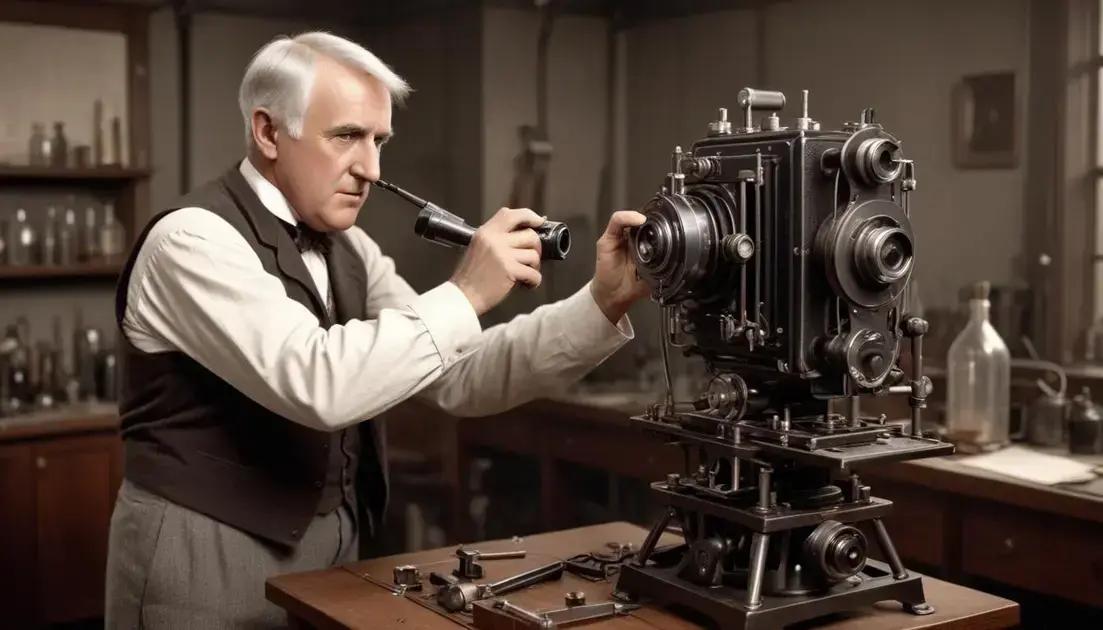
Edison revolutionized the film industry with his innovative movie camera, sparking the birth of Hollywood as we know it. Have you ever wondered how this all began?
The invention of the movie camera
The invention of the movie camera was a game changer for storytelling. It opened up new worlds for artists and audiences alike. Imagine seeing a story come to life right before your eyes!
How the First Movie Cameras Worked
Early movie cameras were simple yet clever. They captured images one at a time, creating a series of still pictures. When these images played in quick succession, they looked like a moving scene. This was the magic of motion pictures!
The Role of Thomas Edison
Thomas Edison played a crucial role in this invention. He didn’t just invent the camera; he inspired a whole industry. His work paved the way for future filmmakers. Many of his ideas shaped how movies are made today.
Impact on the Film Industry
The movie camera sparked creativity. Filmmakers could now tell stories in ways they never could before. This helped develop genres like comedy, drama, and horror. Everybody loved going to the theater to watch these new films.
The Evolution of Movie Cameras
Over time, movie cameras have changed a lot. They have become smaller and more advanced. Today’s cameras capture stunning images and sounds, making films more impressive than ever. The invention of the movie camera truly began a cinematic revolution.
Early films and their impact
Early films changed how people experienced stories. They brought life and action to the screen. Audiences were amazed to see moving images that told tales of adventure and emotion.
The First Film Showings
The first public showings of films drew huge crowds. People lined up to watch short films. The excitement in the air was electric as everyone gathered to see what was happening on screen.
Film Genres Explained
These early films were often short and simple. They included comedies, dramas, and even westerns. As filmmakers experimented, new genres began to blossom. This variety kept audiences coming back for more.
Influence on Society
Early films also reflected society. They showed everyday life, struggles, and dreams. Viewers connected with the stories and characters. This connection made films a part of culture.
The Rise of Movie Theaters
With the growing popularity of films, movie theaters became common. Families visited theaters for entertainment. Watching films became a favorite pastime. It was a way to escape reality for a little while.
Edison’s influence on Hollywood
Thomas Edison had a huge impact on Hollywood. His inventions made movies possible, changing the entertainment world forever. Without him, we might not have the films we love today.
Inventions that Shaped Film
Edison created the Kinetoscope, one of the first devices to show moving pictures. This small machine played short films for individual viewers. It sparked interest in filmmaking and paved the way for larger theaters.
Setting Industry Standards
Edison also helped set standards in film production. He showed how movies should be made, including lighting and editing techniques. These methods became the building blocks of filmmaking.
The Birth of Hollywood
Hollywood grew because of innovators like Edison. Filmmakers came to California to escape his patents. They wanted the freedom to experiment. This led to the birth of Hollywood as the center of film production.
Support for Filmmakers
Edison’s company funded several early films. He believed in the power of storytelling. His support encouraged filmmakers to take risks and create new genres.
The evolution of cinema technology
The evolution of cinema technology has been amazing over the years. From simple images to dazzling visuals, the changes have transformed how we watch films.
From Silent Films to Talkies
In the early days, films were silent. People watched actors express feelings without words. Then came the “talkies,” movies that had sound. This made films more exciting.
Color Film Revolution
The move from black and white to color was another big change. Color added life to films. Audiences enjoyed stories in a variety of shades, making them feel more real.
Advancements in Special Effects
Special effects also grew immensely. Filmmakers started using technology to create fantasy worlds. With tools like CGI, they made amazing scenes that stunned audiences. Now, anything is possible on screen.
The Rise of Digital Cinema
Digital technology changed everything. Projectors became digital, offering clearer images and sound. This made cinema experiences better for everyone. People love going to theaters for this quality.
The Future of Cinema
Looking ahead, cinema technology will keep evolving. Virtual reality and 3D films change how stories are told. Each advancement offers new thrills. Audiences can expect even more exciting experiences in the years to come.
Legacy of Edison in modern filmmaking
The legacy of Thomas Edison still influences modern filmmaking today. His innovations set the stage for everything that followed. Without him, the film industry might look very different.
Innovative Techniques
Edison introduced many techniques that are still in use. His ideas about lighting and camera angles changed how movies were made. These basics are crucial for filmmakers even now.
Inspiration for Filmmakers
Many modern directors look up to Edison. His passion for storytelling inspires them to create unique films. They strive to capture the same magic that Edison brought to his work.
Technological Advancements
Edison’s influence encouraged others to push technology further. Filmmakers use advanced tools now that he helped inspire. Innovations like digital effects owe a lot to his early experiments.
Education in Filmmaking
His contributions also shape film education. Many film schools teach Edison’s work as part of the curriculum. Students learn the foundations he laid down and how to build upon them.
Conclusion of His Influence
Edison’s impact is everywhere in filmmaking. His vision changed entertainment for everyone. Thanks to him, movies have become an essential part of culture and life worldwide.
Conclusion
In conclusion, Thomas Edison’s legacy continues to shine brightly in the world of filmmaking. His groundbreaking inventions and techniques set the foundation for how movies are made today. From lighting to storytelling, his influence is everywhere.
Modern filmmakers draw inspiration from Edison’s work, pushing the boundaries of creativity and technology. As they explore new ways to tell stories, they stand on the shoulders of a giant who changed entertainment forever.
As we celebrate the art of film, it’s essential to recognize how far we’ve come thanks to pioneers like Edison. His legacy is not just a part of history; it’s a living influence that shapes the future of cinema. The magic of movies will always be connected to his vision and innovation.