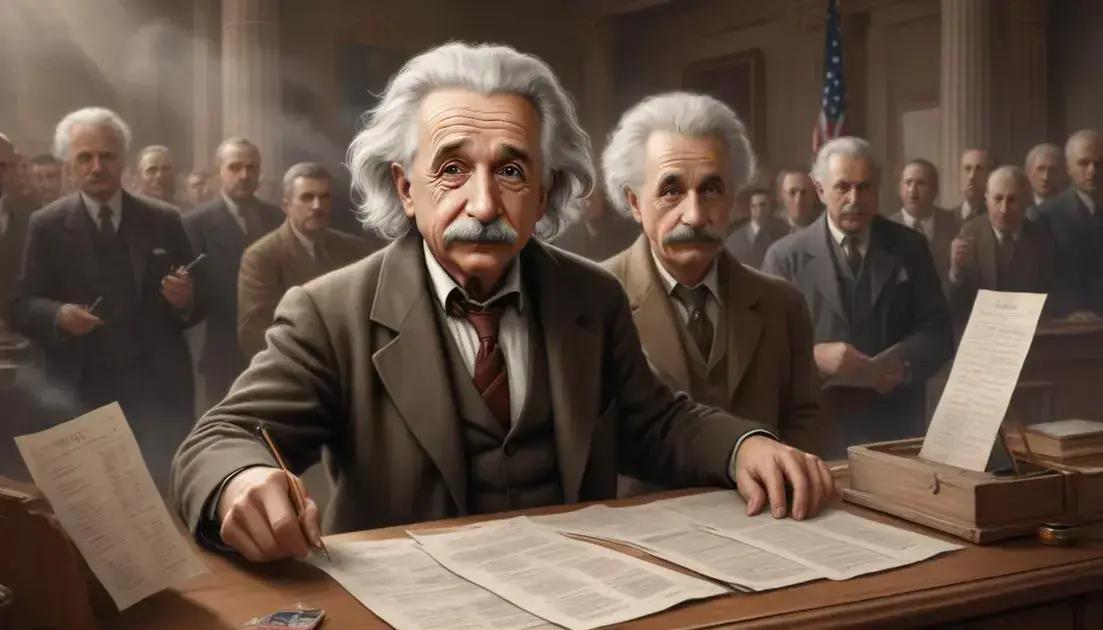
Einstein in America: science meets democracy
Albert Einstein’s journey as a scientist intertwined with his advocacy for human rights, demonstrating how his experiences as a refugee influenced his views on democracy and social justice. He believed in the power of science to bring about positive change and stressed the importance of tolerance and equality in society. Einstein’s legacy continues to inspire individuals to stand up against injustice and promote a fairer world for all.In this article, we explore how Einstein transformed the way we view science and democracy, especially through his own experiences as a refugee. Join us as we unravel his journey!
The Impact of Einstein’s Refugee Experience on His Work
Albert Einstein was not just a brilliant scientist; he was also a refugee. His refugee experience deeply influenced his thinking and work. When he had to leave Germany due to the rise of the Nazis, Einstein faced uncertainty and fear. This time in his life shaped his views on freedom and human rights.
Being a refugee made Einstein more aware of social issues. He understood that science and democracy must work together. For him, these were not separate ideas. He believed that science could help improve society. It could uplift people and create a better world.
Einstein often spoke about the importance of tolerance and understanding. His own struggles helped him recognize the value of kindness and acceptance in science and politics. He used his platform to advocate for these ideas, believing that everyone should have a voice.
Through his work and writings, Einstein urged people to stand up against oppression. He used his knowledge to inspire change. Einstein was a role model, showing us how to blend science with a commitment to justice.
In his eyes, being a scientist meant more than just making discoveries. It also meant taking a stand. His refugee experience made these beliefs even stronger. It taught him that we all belong to one human family, and we must support one another.
The Intersection of Science and Democracy
Science and democracy are closely linked. When we think about the intersection of science and democracy, we see how each affects the other. Science helps us understand the world. It provides facts we can rely on. Good decision-making requires this understanding, especially in a democracy.
In a democratic society, everyone should have access to science. People rely on scientific knowledge to make informed choices. This means that scientists must communicate their findings clearly. They need to speak in a way everyone can understand.
On the other hand, democracy benefits from scientific progress. Innovations in science can lead to better lives for people. For instance, advancements in medicine can improve public health. These changes are often the result of research conducted by scientists.
Einstein believed that science should be a force for good in society. He argued that scientists have a responsibility to share their knowledge with the public. This helps create a healthier democracy where everyone can benefit from science.
Moreover, democratic values like freedom and equality are essential for science to thrive. In free societies, researchers can explore ideas without fear. This openness leads to new discoveries and a better future for all.
Einstein’s Advocacy for Human Rights
Albert Einstein was not just a genius in physics; he was also a strong advocate for human rights. Throughout his life, he worked hard to fight for justice and equality. Einstein believed that everyone deserves basic rights, no matter where they come from.
In the face of oppression, Einstein used his voice to speak out. After fleeing Germany, he saw the impact of discrimination firsthand. He knew that prejudice could destroy lives and communities. This experience pushed him to support movements for civil rights.
Einstein often spoke about the importance of freedom and tolerance. He felt that these values are essential for a healthy society. He believed that science should serve humanity and address social issues.
Through his writings and public speeches, he encouraged people to stand up against injustice. Einstein believed that we all have a role in creating a fair and equal world. He understood that progress often needs the courage to challenge the status quo.
His activism also extended to supporting refugees and oppressed groups. Einstein himself was a refugee. He took a personal interest in helping those who were in need. His actions inspired many to join the fight for a better world.
Conclusion
In conclusion, Albert Einstein’s contributions to science and his strong advocacy for human rights show his deep commitment to social justice. His experiences as a refugee shaped his views on democracy and freedom. Einstein believed that science must work hand in hand with these values to build a better world.
His life teaches us the importance of standing up for what is right. By using our voices and actions, we can make a difference in society. Einstein’s legacy continues to inspire people to fight against injustice and support equality for all. Remember, every effort counts when it comes to creating a more just and inclusive world.