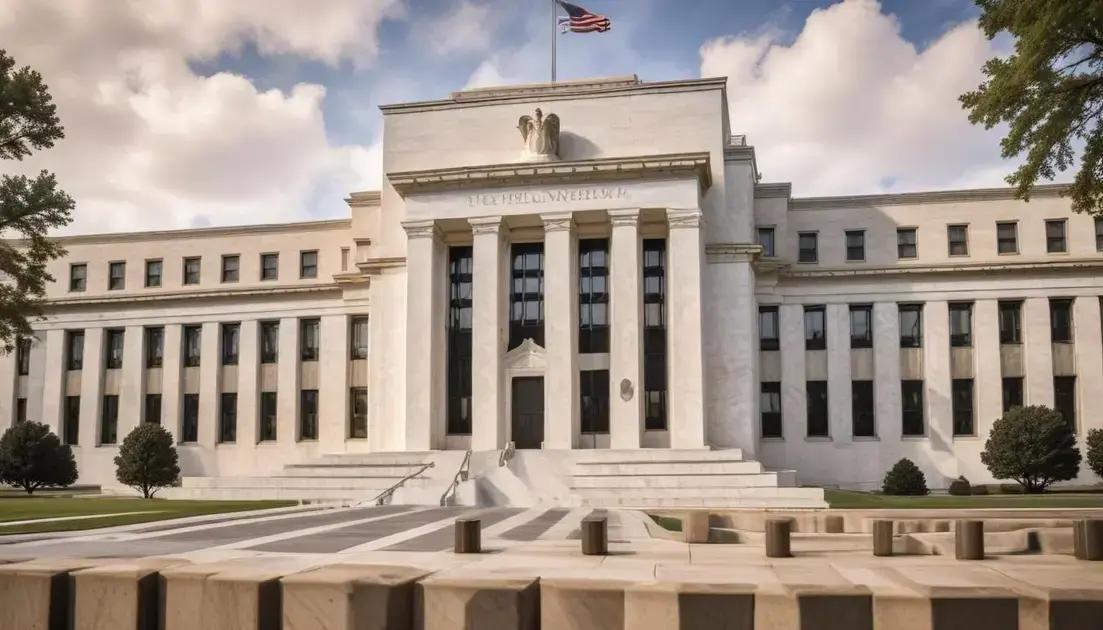
Federal Reserve: the creation of America’s central bank
The Federal Reserve, as the central bank of the United States, plays a crucial role in managing the economy by controlling the money supply, setting interest rates, and supervising financial institutions. Its actions directly impact inflation, lending practices, and overall economic stability. Future challenges include adapting to technological changes, responding to global economic shifts, and maintaining public trust, all of which are essential for sustaining economic growth and stability.
Federal Reserve is crucial to understanding America’s economic landscape. This central bank plays a vital role in maintaining economic stability in the U.S. Curious about how it works? Let’s dive in!
The Origins of the Federal Reserve
The Federal Reserve was created in response to financial panics that hit the United States in the late 19th and early 20th centuries. Many banks would fail, and people lost their savings. This led to a major need for a stable banking system.
In 1907, a serious panic occurred. This crisis caused a lot of trouble for businesses and individuals. People realized that a fix was necessary. Soon after, Congress began to look at how to improve the banking system.
Finally, in 1913, the Federal Reserve Act was signed into law. This act created the Federal Reserve System, making it the central bank of the United States. It aimed to provide a safer and more flexible financial system.
Today, the Federal Reserve plays a key role in controlling inflation and managing the nation’s money supply. It’s important to understand its origins to see how it has shaped our economy.
Over time, the Federal Reserve has grown and adapted, facing new challenges as the economy changes. These developments highlight its essential role in American finance.
How the Federal Reserve Operates
The Federal Reserve operates as the central bank of the United States. Its main goal is to ensure a healthy economy. It does this in several key ways.
First, the Federal Reserve controls the money supply. This means it can increase or decrease the amount of money available in the economy. By adjusting interest rates, the Fed can influence how much banks lend.
Second, the Federal Reserve supervises and regulates banks. This helps keep our banking system safe and sound. The Fed checks if banks are following the laws set to protect consumers and maintain stability.
Third, it conducts monetary policy. This involves setting targets for inflation and employment. For instance, when the economy is struggling, the Fed can lower interest rates to encourage spending.
The Federal Reserve also acts as a lender of last resort. In times of financial crisis, it provides loans to banks in distress. This helps prevent larger problems in the economy.
Overall, the operations of the Federal Reserve are vital for maintaining economic stability and growth in the United States.
The Impact of the Federal Reserve on the Economy
The Federal Reserve has a significant impact on the U.S. economy. Its decisions can change how much money costs to borrow. That affects how families and businesses spend.
When the Fed lowers interest rates, it becomes cheaper to borrow money. This encourages consumers to buy homes, cars, and other goods. For businesses, lower rates mean easier access to loans. This can lead to more hiring and growth.
On the other hand, when the Fed raises interest rates, it slows things down. Higher rates mean higher borrowing costs. People may hold off on big purchases, and businesses might delay expansions. This helps keep inflation in check.
Inflation is when prices rise over time. The Fed aims to keep inflation at a stable level. Too much inflation can hurt savings and reduce purchasing power.
The Federal Reserve also plays a role during economic crises. It acts quickly to stabilize markets and restore confidence. By doing this, it helps prevent deeper recessions.
In summary, the actions of the Federal Reserve have a ripple effect throughout the economy. Understanding this impact is key to grasping the overall economic landscape.
Future Challenges for the Federal Reserve
The Federal Reserve faces several future challenges that could impact its effectiveness. One major challenge is managing inflation. As the economy grows, prices can rise too quickly. The Fed must find a balance to keep inflation under control.
Another challenge is adapting to new technologies. Digital currencies are becoming more popular. The rise of cryptocurrencies could affect how the Fed conducts monetary policy. Additionally, the Fed needs to understand how digital payments change consumer behavior.
Global economic changes also pose a challenge. Events in other countries can impact the U.S. economy. The Fed has to consider international trade and foreign markets when making decisions.
Financial crises can happen unexpectedly. Preparing for sudden economic downturns remains critical. The Fed must ensure that it can respond quickly to any signs of trouble.
Lastly, public trust is vital. The Federal Reserve needs to communicate clearly with the public. Transparency about its policies and actions can help build that trust.
Addressing these challenges will be key to the Federal Reserve’s success in the future.
Conclusion
In conclusion, understanding the role of the Federal Reserve is crucial for anyone interested in the economy. The Fed plays a big part in managing inflation, controlling interest rates, and supervising banks. Its decisions can impact every American, from families buying homes to businesses expanding.
As we look to the future, challenges like new technologies, global changes, and maintaining public trust will be important. By addressing these issues, the Federal Reserve can continue to promote economic stability and growth.
Ultimately, staying informed about the Federal Reserve helps us better understand how our economy works and how we can prepare for changes ahead.