French and Indian War: the conflict before America’s birth
The French and Indian War significantly altered the course of American history by reshaping colonial relations and laying the groundwork for revolutionary movements. This conflict, fought between British and French forces in North America, ended in 1763, leading to British dominance in Canada and territories east of the Mississippi River. Rising tensions arose as Britain imposed new taxes on colonists to cover war debts, which fueled resentment and united the colonies against perceived injustices. The aftermath saw shifting alliances with Native American tribes and set the stage for the American Revolution, making the war a pivotal moment in the struggle for independence.
The French and Indian War was a pivotal struggle for control in North America, leading up to the American Revolution. Curious how it shaped our history?
Background of the conflict
The French and Indian War started in 1754 and lasted until 1763. This conflict was mainly between the British and the French in North America. Both sides wanted control over the land and trade routes in the Ohio River Valley.
The British colonists wanted to expand westward. They hoped to find new lands for farming and settlement. The French, on the other hand, aimed to connect their colonies from Canada down to Louisiana. This clash over territory led to many battles and skirmishes.
Native American tribes played a big role in this war. They sided with the French or British based on their own interests. For example, the Iroquois allied with the British, while the Algonquin and Huron sided with the French. This made the conflict even more complex.
The war saw significant events, like the Battle of Fort Necessity and the Battle of Quebec. These battles changed the power balance in North America. By the end of the war, the Treaty of Paris in 1763 gave much of France’s territory to Britain.
This conflict set the stage for future tensions. The British needed money to pay for the war. They started taxing the colonies, which led to anger and resistance among colonists. Many felt this was unfair and a violation of their rights.
In summary, the French and Indian War wasn’t just about land. It was about power, trade, and who would control North America. The effects of this war were felt for many years and played a key role in the rise of the American Revolution.
Key battles and figures
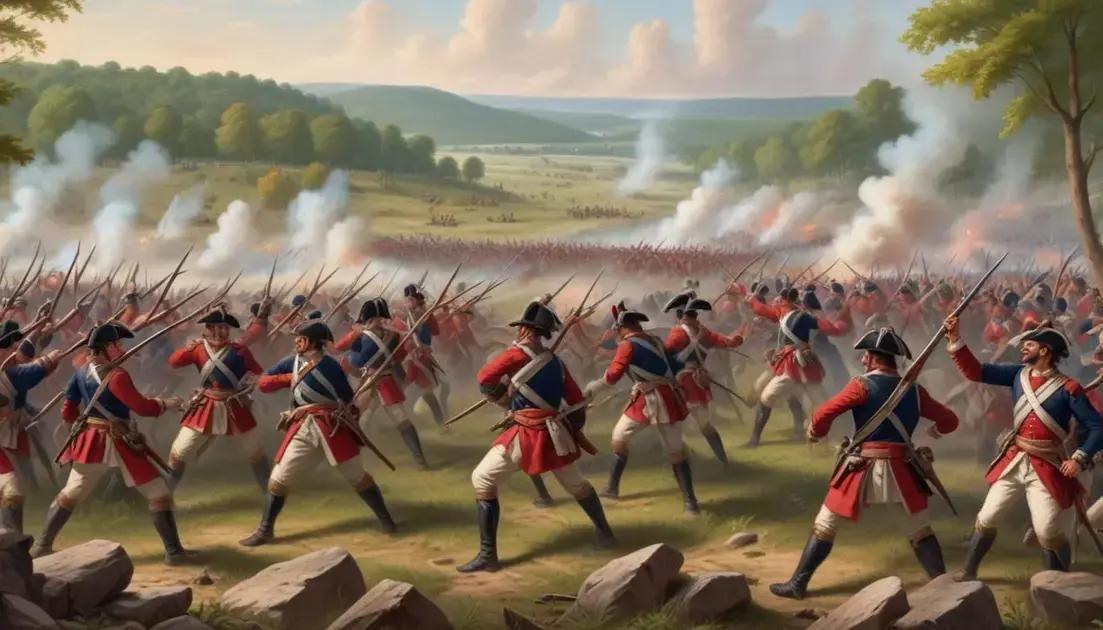
During the French and Indian War, several key battles shaped the outcome of the conflict. Understanding these battles helps us see how the war influenced America’s future.
One important battle was the Battle of Fort Necessity. This took place in 1754. Young George Washington led the British forces. Unfortunately, it ended in defeat. This battle marked the war’s early tensions.
Another significant clash was the Battle of the Monongahela in 1755. British General Edward Braddock led troops to seize Fort Duquesne but faced a surprise attack from French and Native forces. Many soldiers died, and Braddock was wounded. This loss showed how unprepared the British were for this kind of fighting.
The Battle of Quebec in 1759 was a turning point. British forces, led by General James Wolfe, launched a daring attack. The French, under General Montcalm, defended the city fiercely. In a dramatic battle, both leaders were killed. This victory gave the British control over Quebec.
These battles featured brave figures like George Washington and James Wolfe. Their actions shaped the war’s direction. Washington, later a founding father, gained valuable military experience. Wolfe’s leadership in Quebec opened the door for British dominance in North America.
Throughout the conflict, these battles displayed bravery, strategy, and the chaotic nature of war. Each engagement taught lessons that would echo in America’s fight for independence years later.
Impact on colonial relations
The French and Indian War had a huge impact on colonial relations in North America. After the war ended in 1763, everything changed. The British government tightened its control over the colonies.
Before the war, many colonists felt loyal to Britain. They relied on British support for trade and protection. However, the war changed that. The British government needed money to pay for the war expenses. This led them to tax the colonies more.
New taxes like the Stamp Act and the Townshend Acts angered colonists. They felt these taxes were unfair since they had no voice in Parliament. The famous phrase “no taxation without representation” became popular. This pushback sparked a desire for independence.
Relations between Britain and the colonies soured. Many colonists began to see themselves as separate from British rule. Movements for independence gained momentum. Secret groups like the Sons of Liberty formed to resist British actions. They organized protests and boycotts against British goods.
Native Americans also reacted to the war’s outcomes. Many tribes found themselves squeezed between British expansion and colonization. They lost land and resources after the French, their allies, were defeated. This heightened tensions and led to further conflicts, such as Pontiac’s Rebellion.
Ultimately, the war created a rift that led to the American Revolution. Colonists felt emboldened to fight for their rights. They wanted to claim their freedom and independence from British rule. The impact of the French and Indian War set the stage for a new nation.
Aftermath and significance
The aftermath of the French and Indian War left lasting changes in North America. When the war ended in 1763, Britain gained control of vast territories. They acquired Canada and land east of the Mississippi River.
However, the war brought challenges. Britain faced huge debts from the conflict. To cover these debts, they imposed new taxes on the colonies. This decision angered many colonists and created tension.
The Proclamation of 1763 restricted colonists from settling west of the Appalachian Mountains. This frustrated those eager to explore new lands. Many colonists felt betrayed and saw it as a violation of their rights.
As resentment grew, the seeds of revolution began to sprout. The war changed how colonists viewed their relationship with Britain. They felt more like individuals seeking rights than subjects of a distant crown.
Furthermore, the war united many colonies. They learned to work together against a common enemy. This unity would later be crucial in fighting for independence.
The French and Indian War also impacted Native American tribes. With the French gone, many tribes lost their strongest allies. They now faced more pressure from British settlers expanding into their territories. This struggle for land and resources continued for years.
In summary, the war set off a chain reaction. The new policies and taxes led to growing unrest. This unrest fueled the desire for independence, laying the groundwork for the American Revolution.
Conclusion
In conclusion, the French and Indian War had a profound impact on American history. It changed the balance of power in North America and sparked tensions between Britain and its colonies. As Britain tried to control the colonies with new taxes, many colonists felt their rights were being ignored.
This growing frustration led to unity among the colonies and laid the groundwork for the American Revolution. The desire for independence grew stronger as colonists sought to break free from British rule. The war also affected Native American tribes, who faced new challenges after the French were defeated.
The aftermath of the war showed how conflicts can reshape relationships and influence future events. Understanding this conflict helps us see the roots of a nation fighting for its freedom. The lessons learned from the French and Indian War continue to influence America today.