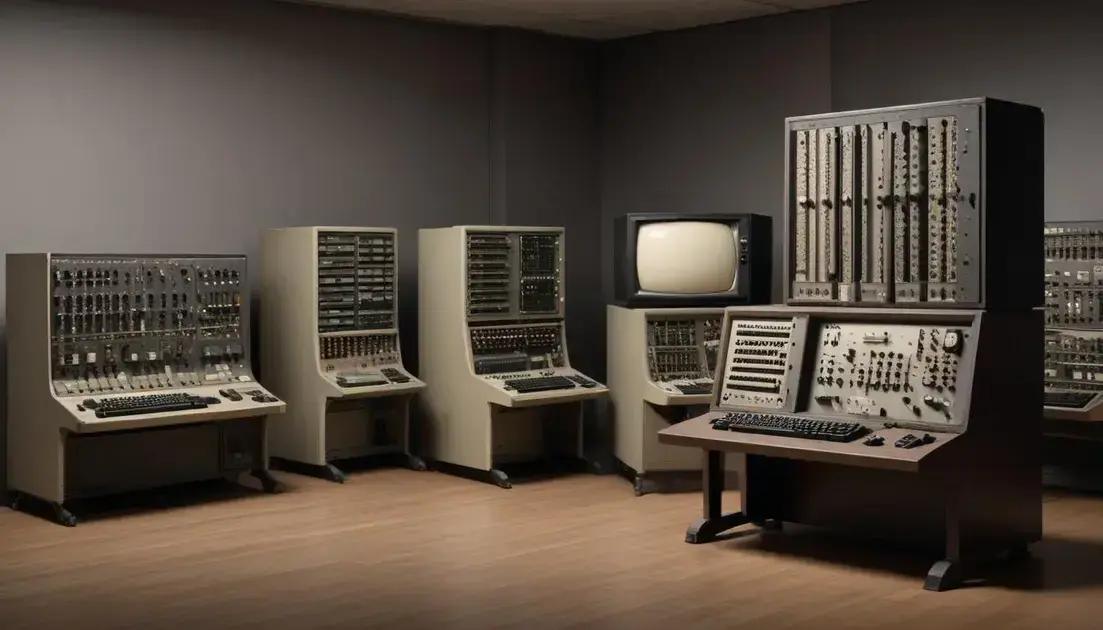
From ENIAC to Apple: America’s computer age
The future of computing is set to transform our daily lives with advancements in artificial intelligence, quantum computing, and the Internet of Things. These innovations promise smarter devices that learn from user behavior, enhancing personal and professional efficiency. Virtual and augmented reality will also revolutionize how we interact with technology, creating immersive experiences. Keeping pace with these developments is essential for leveraging the full potential of tomorrow’s technology.
Welcome to the fascinating world of computer history, where machines not only learned to think but transformed our daily lives. Ready to dive in?
The Beginning of Computing
The beginning of computing dates back to the early 20th century. At that time, machines began to process information in ways people could not imagine. Early computers, like the ENIAC, were large and complex. They took up entire rooms and consumed a lot of power.
ENIAC: The First General-Purpose Computer
Developed during World War II, ENIAC stands for Electronic Numerical Integrator and Computer. It was designed to calculate artillery trajectories. This groundbreaking machine used vacuum tubes to perform calculations quickly.
How ENIAC Worked
ENIAC was unique because it could be programmed to do various tasks. However, it wasn’t user-friendly. Operators had to connect wires and set switches to perform calculations. Despite this, it was a major step forward for technology.
Impact on Future Computers
ENIAC paved the way for future computers. Its design inspired smaller and more efficient machines. By the 1950s, transistors replaced vacuum tubes, making computers faster and less power-hungry.
This evolution led to the development of personal computers later on. As technology advanced, computers became available for homes and schools. Today, they are essential tools in our daily lives.
The Impact of ENIAC
The impact of ENIAC was huge for computing and technology. This machine changed how people viewed computers and their potential. It was the first general-purpose electronic computer and opened doors for future innovations.
Transforming Calculations
Before ENIAC, calculations were done by hand or with simple machines. ENIAC made this process much faster. It could perform complex calculations that took humans hours in just minutes.
Setting New Standards
ENIAC set new standards for computer design. It demonstrated the power of electronic computing. Other scientists and engineers saw the potential and began to build on this foundation.
Influencing Future Designs
This early computer influenced many future designs. Its programming techniques paved the way for modern programming languages. People learned how to make computers more user-friendly and efficient.
Encouraging Further Research
ENIAC sparked interest in computing across various fields. Researchers began exploring ways to improve technology. This kick-started a wave of innovation in computing hardware and software.
Ultimately, ENIAC’s impact is felt today. It helped create the technology we often take for granted. Without it, we may not have the advanced computers we use now.
The Evolution of Personal Computers
The evolution of personal computers has been exciting and rapid. It all began in the 1970s with the first models. These machines were basic but they sparked a revolution in how we use technology.
The First Personal Computers
Early personal computers like the Altair 8800 were simple boxes. They didn’t have fancy screens or keyboards. Users had to program them using switches and lights. It was not easy, but tech enthusiasts loved the challenge.
Apple and IBM Enter the Scene
In the late 1970s and early 1980s, Apple and IBM changed everything. Apple released the Apple II, which had color graphics. Then came the IBM PC, which set standards for future computers. Suddenly, computers became more accessible to everyday people.
User-Friendly Interfaces
The introduction of user-friendly interfaces was a game changer. Instead of typing commands, users could click on icons and use a mouse. This made computers easier and more fun to use. More people began to buy them for home and work.
The Rise of Laptops and Mobile Devices
By the 1990s, laptops started to appear. They allowed people to work on the go. Soon after, mobile devices like smartphones emerged. These devices brought computing right into our pockets.
Today, personal computers come in many shapes and sizes. They are powerful, portable, and essential in our daily lives. As technology keeps advancing, we can expect even more exciting developments in the future of personal computing.
The Role of Apple in Technology
Apple has played a huge role in shaping modern technology. The company started in a garage in 1976. Steve Jobs and Steve Wozniak wanted to create user-friendly computers. Their first product, the Apple I, laid the groundwork for future innovations.
Innovating Personal Computing
In 1984, Apple released the Macintosh. This was one of the first computers to use a graphical user interface. Users could click icons and use a mouse easily. This made computers more accessible to everyone.
Leading the Smartphone Revolution
The launch of the iPhone in 2007 changed everything. It introduced a touchscreen interface and eliminated the need for a physical keyboard. Suddenly, smartphones became a must-have device. Apple set the standard for mobile technology.
Creating an Ecosystem
Apple created an entire ecosystem with its devices. The iPad, Apple Watch, and AirPods all work seamlessly together. This integration helps users stay connected and productive. It makes technology feel more personal and responsive.
Impact on Design and User Experience
Apple also focuses on design and user experience. Their products are known for being sleek and attractive. This emphasis on style attracts customers and makes their devices desirable.
With each new product, Apple challenges competitors to innovate as well. Their vision has not only changed personal computing but has also influenced how we connect and interact with technology today.
Future of Computing
The future of computing looks bright and exciting. As technology advances, we can expect many new developments. One major trend is the growth of artificial intelligence (AI). AI is changing how we interact with computers and perform tasks.
Smarter Devices
In the coming years, we will see smarter devices. Computers will become more intuitive and learn from us. This means they can predict our needs and help us more effectively.
Quantum Computing
Another exciting area is quantum computing. Unlike regular computers, quantum computers use quantum bits, or qubits. This allows them to solve complex problems much faster. They could revolutionize fields like medicine and finance.
More Connectivity
With the rise of the Internet of Things (IoT), everyday objects will become smarter. From home appliances to vehicles, everything will connect to the internet. This connectivity will make our lives easier and more efficient.
Virtual and Augmented Reality
Virtual and augmented reality are also set to grow. These technologies will change how we work and play. Imagine attending meetings in virtual spaces or shopping in augmented reality. The possibilities are endless.
As computing continues to evolve, it will shape how we live, work, and connect. The next decade promises to bring innovations that we can’t even imagine yet.
Conclusion
In conclusion, the evolution of computing has shaped our world in many ways. From the first computers to today’s smart devices, technology continues to advance rapidly. The growth of AI, quantum computing, and the Internet of Things opens up exciting possibilities.
As devices become smarter, they will help us in more personal, effective ways. Virtual and augmented reality will change how we interact with our environment and each other. Embracing these changes will prepare us for a future full of innovative solutions and new opportunities.
Ultimately, understanding how technology impacts our lives is crucial. Staying informed and adaptable will help us make the most of the incredible advancements that lie ahead.