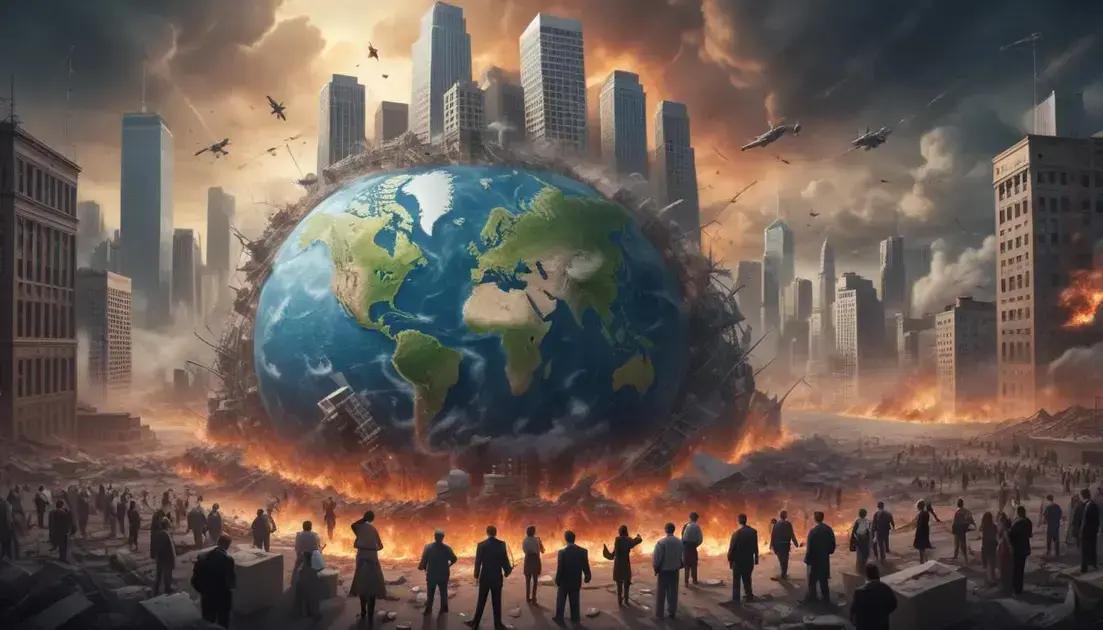
Global crises and corporate power
This article explores the impact of global crises on corporate power and resilience. It examines how geopolitical actions influence crises responses, highlights case studies, and emphasizes the importance of cooperation during challenging times. Companies that adapt and innovate tend to thrive, while their decisions can significantly affect communities and relationships between nations. Understanding these dynamics is crucial for building a more resilient future.
Global Crises are transforming our world in profound ways, challenging everything we know about resilience and corporate influence. How do companies navigate this ever-changing landscape? Let’s explore!
Introduction to global crises
Global crises can have huge impacts on people and businesses alike. When these crises hit, they test how strong we can be as a society. Events like natural disasters, financial downturns, or health pandemics reshape our lives in many ways. Understanding these crises is key to helping us prepare and respond effectively.
For businesses, crises can mean losing customers or facing tough market conditions. However, they can also lead to new opportunities. Companies that adapt well can find ways to thrive even in bad times. It’s about adjusting strategies and being flexible with changes that come our way.
Another important factor is how corporate power plays a role in responding to crises. Large companies often have resources to bounce back faster, but they also face scrutiny about their actions. Are they helping communities? Are they prioritizing profits over people? These questions are vital during challenging times.
By recognizing the signs of a crisis and understanding their effects, we can build a stronger future. Everyone should be aware of how global crises impact their lives and businesses.
Impact of corporate power on resilience
Corporate power plays a big role in how we respond to crises. Big companies often have lots of resources. They can act quickly when tough situations arise. This can help them bounce back faster than smaller companies. But it’s not just about having money; it’s about how they use it.
During a crisis, companies can lead by supporting communities. This might mean donating money, providing supplies, or offering jobs. When firms step up, they show strong values. This can build trust with customers and create loyalty.
However, there’s also a downside to big companies holding so much power. Sometimes, they may focus on profits over people. They might cut jobs or reduce salaries during tough times to save money. This can lead to public backlash and damage their reputation.
Resilience also depends on how corporate leaders make decisions. Good leaders consider the bigger picture and the impact of their choices on society. They need to think about long-term effects, not just short-term gains.
By balancing profit with social responsibility, businesses can help create stronger communities. Their actions during crises set examples for others and show the true meaning of resilience.
Geopolitical implications
Geopolitical implications can shape how nations react during global crises. When a crisis strikes one country, it often affects others. For example, a natural disaster in one area can disrupt supplies worldwide. This shows how interconnected our world is.
Nations may respond by forming alliances or providing aid. These actions can help stabilize regions and build trust. For instance, countries often send help to those in need after disasters. This support can lead to stronger relationships among nations.
However, political tensions can also rise during crises. Countries may blame each other for problems or compete for resources. This can create conflict and deepen divisions. It’s vital for leaders to communicate openly and work together.
Trade relationships are another important part of geopolitics. During a crisis, trade can be impacted significantly. Countries may close borders or limit exports, which can hinder recovery efforts worldwide.
Understanding these geopolitical implications is crucial. They influence decisions on aid, trade, and cooperation. By working together, nations can create better solutions during challenging times.
Case studies of recent crises
Looking at case studies of recent crises helps us understand their impact. These real-life examples show how different organizations responded. They highlight both successes and challenges faced along the way.
One example is the COVID-19 pandemic. Many businesses struggled but found creative solutions to stay afloat. Online shopping surged, and companies had to adapt quickly. Those that embraced technology often thrived during tough times.
Another case is the response to natural disasters, like hurricanes. Communities and businesses usually come together to help each other. Local companies supply needed goods and services. This solidarity can speed up recovery, showing the power of teamwork.
Government responses also play a huge role in crises. They often implement emergency measures that can help stabilize affected areas. Aid programs and financial support help people and companies get back on their feet.
These case studies remind us of the important lessons learned. They teach us how to prepare for future challenges and improve our resilience as a society. Keeping these stories in mind can guide us in facing the next crisis.
Conclusion and future outlook
The future of responding to global crises is bright. We can learn much from past experiences. Each crisis offers lessons that can prepare us better for what’s next.
As we face challenges together, it’s clear that resilience comes from cooperation. Countries, businesses, and communities must work hand in hand. This teamwork helps us overcome obstacles more effectively.
Innovation will be key moving forward. New technologies and approaches can improve our response times. For example, better communication tools can keep everyone informed during emergencies.
Also, understanding the impact of our decisions is important. Leaders must consider how their actions affect people and the environment. By being responsible, they can create a positive change.
Finally, we should stay hopeful. History shows us that after every challenge, there’s an opportunity for growth and change. Together, we can build a stronger, more resilient world.
Conclusion
In conclusion, understanding how global crises affect us is crucial for everyone. We’ve seen how corporate power and geopolitical actions play roles in shaping responses. By looking at case studies, we can learn valuable lessons that help us improve our resilience.
Working together, communities, businesses, and governments can find better ways to support one another. Innovation and responsible decision-making will guide us as we face new challenges in the future. Ultimately, staying hopeful and proactive helps us build a stronger, healthier world for everyone.