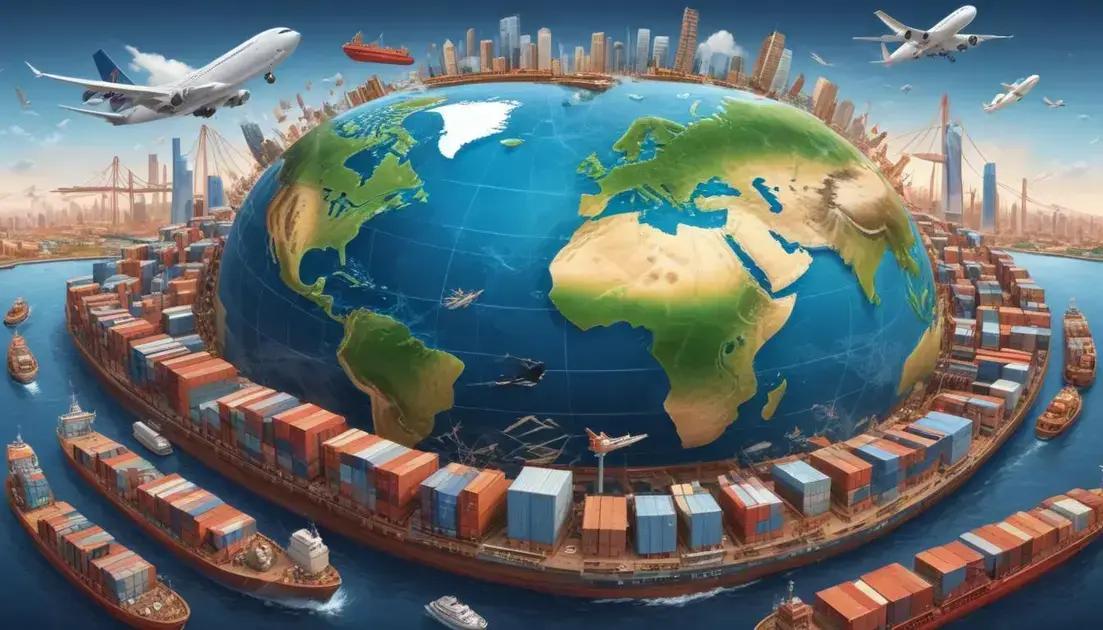
Globalization: interconnected world, shared destiny
Globalization significantly impacts trade, migration, technology, and cultural exchange. It leads to increased economic interdependence, allowing countries to enjoy diverse products and cultures. While it offers opportunities for growth and cooperation, challenges like inequality and environmental concerns must also be addressed. Understanding these dynamics can help navigate the interconnected world effectively, ensuring a more inclusive and prosperous future for all.
Globalization connects us in ways we’ve never imagined. Have you ever thought about how trade, migration, and technology influence our daily lives? Let’s explore this shared journey together!
Trade and globalization
Trade plays a vital role in globalization. It connects countries and cultures by allowing goods and services to flow across borders. This exchange helps nations grow economically and socially.
How Trade Impacts Globalization
When countries trade, they share their resources and products. This not only boosts the economy but also fosters cooperation and understanding among nations. People enjoy access to a wider variety of products, from food to technology.
The Rise of Free Trade Agreements
Free trade agreements (FTAs) have become common in the global landscape. They reduce tariffs and barriers, making it easier for countries to trade. This encourages competition, innovation, and lower prices for consumers.
Challenges in Global Trade
While trade brings benefits, it also has challenges. Issues like unfair labor practices and environmental concerns can arise. It’s important for countries to work together to address these problems.
Understanding the dynamics of trade can help us appreciate its importance in our connected world. As trade continues to evolve, it shapes our lives in many ways.
Migration in the global context
Migration is a big part of globalization. It helps people move from one country to another in search of better opportunities. This movement enriches societies with diverse cultures, ideas, and skills.
The Importance of Migration
When people migrate, they bring their customs and experiences. This cultural exchange can lead to a more vibrant community. For example, food from different countries mixes to create exciting new dishes.
Economic Effects of Migration
Migration can boost a country’s economy. Immigrants often fill jobs that locals might not want to do. They contribute to innovation and growth by starting businesses and creating jobs.
Challenges Migrants Face
While migration offers many benefits, it also comes with challenges. Migrants might face language barriers, discrimination, or difficulty finding work. It’s crucial for societies to support newcomers to help them integrate smoothly.
Understanding migration helps us see how interconnected our world is. By embracing diversity, we can build stronger communities worldwide.
Technology’s role in interconnectedness
Technology plays a vital role in making our world interconnected. It helps people communicate and work together, no matter where they are. From smartphones to the internet, technology is everywhere.
Connecting People Globally
With technology, staying in touch is easy. People can chat, video call, or share photos instantly. This makes it simpler to maintain relationships across distances.
Impact on Business
In business, technology enhances productivity. Companies can connect with clients and partners worldwide. Online meetings and collaborative tools make teamwork more effective than ever.
Access to Information
Technology gives us easy access to a wealth of information. The internet allows people to learn about different cultures and ideas. This open exchange boosts understanding and tolerance among diverse groups.
Innovations continue to shape our daily lives and drive global collaboration. As technology evolves, it will keep bringing us closer together in this interconnected world.
Cultural exchange and its significance
Cultural exchange is an important part of globalization. It happens when people from different backgrounds share their traditions, ideas, and values. This exchange leads to greater understanding among cultures.
Benefits of Cultural Exchange
Cultural exchange enriches our lives. It introduces us to new foods, music, art, and customs. This variety makes our communities more vibrant and engaging.
Fostering Tolerance and Respect
When we learn about others’ cultures, we become more tolerant. Understanding different perspectives helps break down barriers. It encourages respect for diversity and promotes peaceful coexistence.
Global Collaboration through Culture
Cultural exchange also fosters collaboration on global issues. Projects like international festivals or art exhibits bring people together. They create a sense of shared purpose and strengthen relationships across borders.
Through cultural exchange, we can celebrate similarities and differences. This helps unite us in our shared human experience, making the world a better place for everyone.
Economic implications of globalization
Globalization has significant economic implications around the world. It changes how we trade, invest, and work. As countries become more connected, economies grow together.
Increased Trade Opportunities
Globalization opens the door to new markets. Companies can sell their products and services worldwide. This not only boosts sales but also allows for a broader range of goods for consumers.
Foreign Investment Growth
When businesses expand internationally, they often invest in other countries. This foreign investment brings capital, creates jobs, and supports local economies. It can lead to new technologies and improved skills.
Economic Interdependence
As economies become more integrated, they rely on each other. A problem in one country can affect others. This interdependence can create challenges, but it can also lead to cooperation on economic policy.
Understanding the economic implications of globalization helps us navigate a complex world. By adapting to changes, countries can enhance their economic growth and stability together.
Conclusion
In conclusion, globalization brings both opportunities and challenges. As we have seen, it affects trade, migration, technology, cultural exchange, and the economy. By understanding these factors, we can navigate our interconnected world better.
Embracing globalization allows us to enjoy diverse cultures and products. It also encourages cooperation among countries. However, it’s important to address the challenges that come with it, like inequality and environmental issues.
Ultimately, to thrive in a globalized world, we must remain open to learning and adapting. This way, we can ensure a more inclusive and prosperous future for all.