Golden Horde: the Mongol empire of Russia
The Golden Horde was a significant Mongol empire that influenced Slavic and Eurasian history through its military strategies, cultural fusion, and extensive trade. Despite internal conflicts and pressure from neighboring states leading to its decline, the legacy of the Golden Horde remains evident in the cultural development and political landscapes of Eastern Europe and Central Asia.
Golden Horde refers to the vast Mongolian empire that significantly influenced Slavic and Eurasian history. Its legacy is evident in various cultural and political landscapes, intriguing, isn’t it?
The Rise of the Golden Horde
The rise of the Golden Horde is a fascinating story in world history. This empire began around the 13th century. It started with the Mongol conquests led by Genghis Khan. After his death, his empire split into several khanates. One of them was the Golden Horde.
How It Gained Power
The Golden Horde grew strong by conquering vast territories. It included parts of present-day Russia, Ukraine, and Kazakhstan. The Mongols were great warriors, skilled in tactics and strategy. This made them dominant in battles.
Cultural Influence
Culturally, the Golden Horde mixed different traditions. They connected Eastern and Western cultures through trade and interactions. This made cities like Sarai important trade hubs.
Economics and Trade
Trade flourished under the Golden Horde. The Silk Road played a vital role in economic development. Traders from different cultures exchanged goods, ideas, and information. This enriched the empire and helped it thrive.
The Golden Horde’s rise had a lasting impact on history. Their influence shaped the future of Russia and its neighboring regions. It also influenced politics, culture, and trade along the way.
The Cultural Fusion
The cultural fusion within the Golden Horde is a key part of its history. As this empire expanded, it absorbed various cultures. The mix of Mongol traditions with those of the Slavic and Turkic peoples created something unique.
Blending of Traditions
People in the Golden Horde lived together, sharing their customs and beliefs. This exchange enriched daily life. For example, artistic styles saw influences from different cultures. Craftsmen blended techniques to create beautiful artifacts.
Language and Religion
Language also played a role in this fusion. People spoke many languages, including Mongolian, Russian, and Turkic. This helped communities communicate and trade.
Religion was another important aspect. Islam became a major faith, shaping laws and culture. The Golden Horde saw a mix of Islamic beliefs with local customs.
Impact on Art and Lifestyle
This cultural blend influenced art, music, and even cuisine. Traditional dishes combined flavors from various regions. Music also reflected this mix, leading to new genres and styles.
The cultural fusion in the Golden Horde wasn’t just about coexistence. It led to innovations that impacted future generations. This legacy helped shape the cultural landscape of Eastern Europe and Central Asia.
Military Strategies
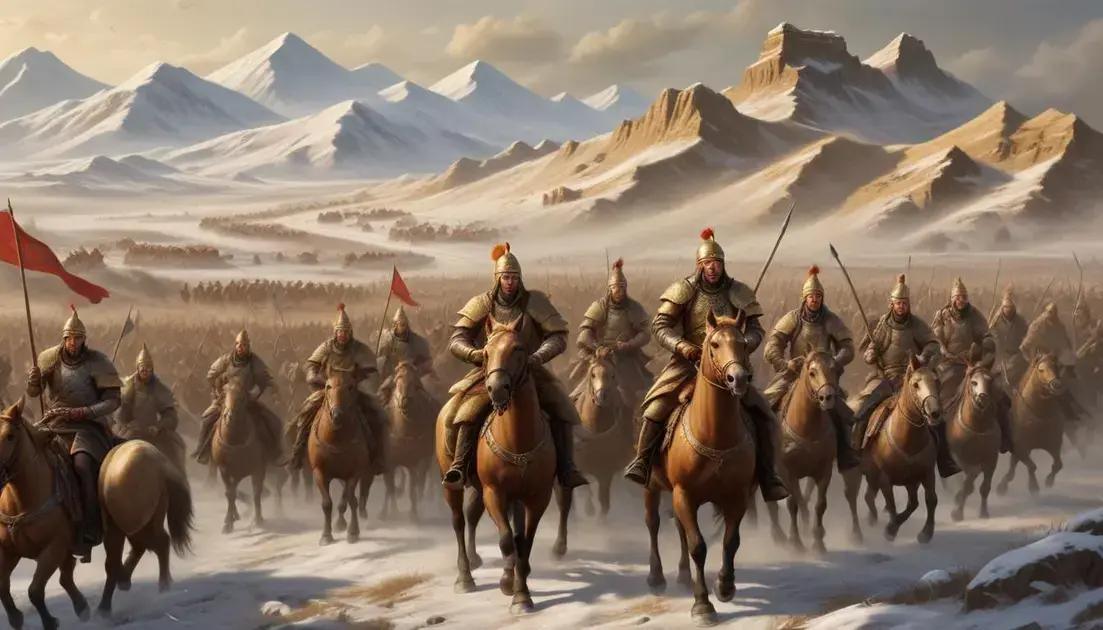
The military strategies of the Golden Horde were key to their success. They used several tactics that helped them defeat larger armies. One of their main strategies was speed. Mongol cavalry units could move quickly, surprising their enemies.
Understanding Terrain
The Golden Horde was skilled at using the land to their advantage. They knew how to navigate rivers, forests, and plains. This knowledge allowed them to plan attacks effectively. They chose battlefields that suited their style of fighting.
Hit and Run Tactics
Another important strategy was the hit-and-run approach. This meant they would attack suddenly and then retreat before the enemy could respond. This kept their opponents off balance and confused.
Psychological Warfare
The Golden Horde also used psychological tactics. They spread fear through rumors and swift movements. This made enemies think twice before engaging them in battle.
Furthermore, the Mongols were known for their ability to adapt. They learned from each battle, improving their techniques as needed. This flexibility gave them an edge in various conflicts.
Overall, the military strategies of the Golden Horde played a major role in establishing their power. Their effective tactics influenced warfare across many regions.
Decline and Legacy
The decline of the Golden Horde marked a significant shift in history. Several factors led to its fall, but one main issue was internal strife. Fights for power weakened their unity and strength.
Political Fragmentation
As leaders competed for control, the Horde divided into smaller groups. This division made it hard to defend against outside threats. The infighting also drained resources and focus.
External Pressures
Additionally, outside forces played a big role in the decline. Neighboring states, like the Grand Duchy of Moscow, gained strength. They pushed back against the Mongols, reclaiming territories over time.
The rise of other powers in the region added to the pressure. The weakening Golden Horde struggled to maintain its former glory.
Lasting Legacy
Even though it declined, the Golden Horde left a lasting legacy. Its influence shaped the cultures and politics in Eastern Europe and Central Asia. Many modern nations can trace aspects of their identity back to this empire.
The trade routes established during its reign also continued to thrive. They fostered connections between East and West long after the Horde’s decline.
In this way, the Golden Horde’s impact still nudges history today, reminding us of its powerful role.
Conclusion
In conclusion, the Golden Horde played a vital role in shaping history through its military strategies, cultural fusion, and extensive trade networks. Despite its decline caused by internal conflict and external pressures, its legacy continues to influence many regions today.
The unique mixture of traditions and ideas during its reign created a lasting impact on the cultures of Eastern Europe and Central Asia. As we reflect on the Golden Horde, we see how its history tells a story of power, adaptability, and enduring influence.
Recognizing the lessons from the Golden Horde can inspire us to appreciate the importance of cultural exchange and cooperation in our own times. The past reminds us that empires may rise and fall, but their legacies can endure long after.
Tags: