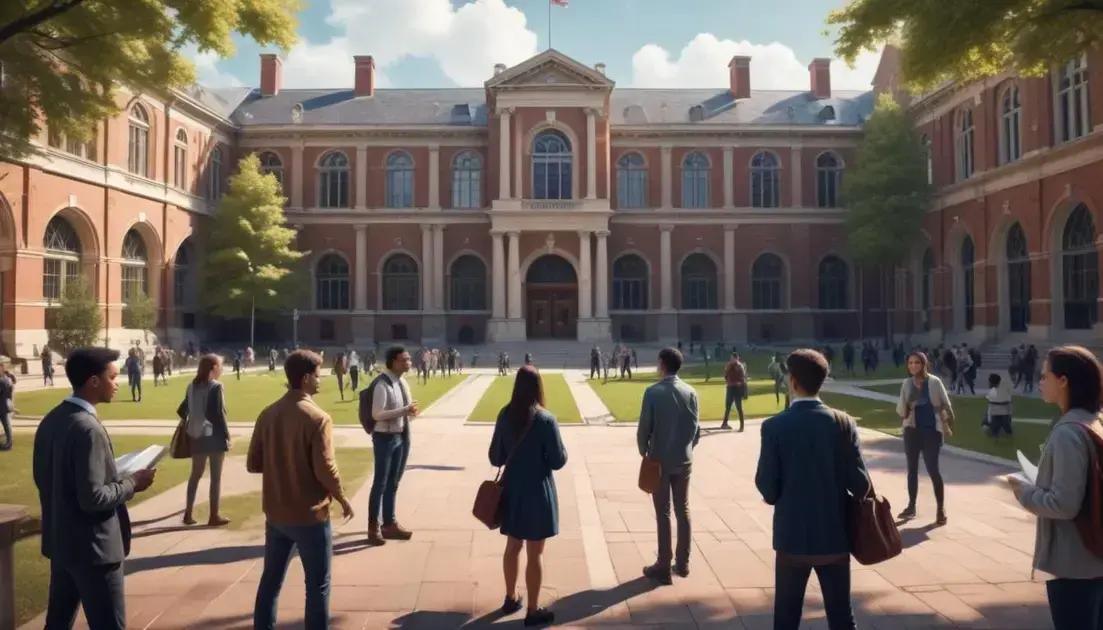
How American universities became weapons of knowledge
The future of academia in America is transforming with a strong emphasis on technology and interdisciplinary studies. Online learning increases accessibility, while alternative credentials provide practical skills for job readiness. Universities are also addressing global challenges through enhanced education and community engagement. These trends prepare students better for diverse career paths and real-world issues, ultimately benefiting both individual learners and society as a whole.
Welcome to a deep dive into how knowledge warfare has transformed American universities into hotbeds of ideological conflict. Have you ever wondered what your alma mater is really teaching? Let’s find out!
The battleground of ideas
The battleground of ideas is where thoughts clash and creativity thrives. In universities, students from diverse backgrounds come together. They share viewpoints and challenge each other’s beliefs. This environment fosters critical thinking.
The Importance of Open Dialogue
Open discussions are vital in learning. They encourage students to express their opinions freely. When ideas are debated, it sparks deeper understanding. It’s not just about winning an argument, but exploring new perspectives.
Real-Life Examples of Idea Clashes
Consider debates on climate change or social justice. These topics draw passionate responses. Students engage in discussions that can change minds. Being exposed to various viewpoints shapes their understanding of the world.
Building Critical Skills
Participating in these “battles” helps students build critical skills. They learn to analyze information, construct arguments, and think independently. These skills are essential for success in any field.
Challenges in the Current Environment
However, the battleground can also be tough. Some students may feel unwelcome when expressing unpopular opinions. Universities must strive to be safe spaces for all voices. This ensures that every idea can be discussed respectfully.
Overall, the battleground of ideas in American universities is crucial. It shapes future leaders and thinkers. By engaging in dialogue, students grow and prepare for the complexities of the real world.
Universities and the shaping of ideology
Universities play a huge role in shaping ideology. Here, students learn about different beliefs and viewpoints. Classes cover everything from history to philosophy. These subjects challenge students to think deeply.
Exposure to Diverse Perspectives
In college, students meet peers from various backgrounds. Each person brings unique ideas. This diversity encourages discussions that broaden understanding. Students often reconsider their own beliefs as a result.
The Role of Faculty
Professors also influence ideology. They guide students through complex topics. Their expertise helps spark debates. Faculty members often encourage independent thinking.
Changing Trends in Education
Today, there is a focus on critical thinking. Universities want students to question norms. This trend helps create thinkers who are ready for real-world challenges.
Impact on Society
The ideology formed in universities extends beyond campus. Graduates become leaders in their communities. The beliefs they develop can shape policies and social movements.
Ultimately, the process of learning and discussing ideas is ongoing. It helps students grow and prepares them for active participation in society.
The role of science in academic institutions
Science plays a vital role in academic institutions. It helps us understand the world around us. Students learn to ask questions and seek answers through experiments. This process encourages curiosity and innovation.
Hands-On Learning
In the laboratory, students conduct experiments. They explore concepts in a practical way. This hands-on learning is essential for grasping scientific ideas. It bridges theory and real-life application.
Encouraging Critical Thinking
Science teaches critical thinking. Students analyze data and draw conclusions. They learn to evaluate evidence and question results. This skill is valuable beyond science; it applies to many areas.
Interdisciplinary Connections
Furthermore, science connects to other fields. It overlaps with technology, engineering, and even the arts. These connections foster a broad understanding. Students can see how different subjects relate to each other.
The Impact on Society
Scientific research impacts our daily lives. From medical advancements to environmental protection, the benefits are vast. Academic institutions prepare students to lead in these areas. They encourage future scientists to solve pressing global issues.
In summary, the role of science in universities is crucial. It equips students with the skills needed for future challenges.
Impact of knowledge warfare on society
The impact of knowledge warfare on society is profound and far-reaching. It shapes opinions and influences decisions. When ideas clash, they can create movements or trigger conflicts. Understanding this dynamic is key.
Influence on Public Opinion
Knowledge warfare affects how people think. Information can spread quickly through social media. As people absorb different viewpoints, their beliefs may change. This can lead to increased polarization in society.
Shaping Political Landscapes
Political debates are often grounded in knowledge warfare. Candidates use data and information to sway voters. Educated citizens can better understand these tactics and make informed decisions. This insight is vital in a democratic society.
Impact on Education
In educational settings, knowledge warfare raises awareness. Students learn to question sources and analyze information critically. They become active participants in conversations about societal issues. This prepares them for leadership roles in the future.
Social Movements and Activism
Moreover, knowledge warfare fuels social movements. Activists use facts and data to support their causes. By sharing information, they rally support and drive change. This shows the power of knowledge in shaping society.
Overall, knowledge warfare significantly impacts how society operates. It encourages critical thinking and helps shape the future.
Future of academia in America
The future of academia in America is evolving rapidly. Technology plays a huge role in this change. Online learning is becoming more common, allowing flexibility for students. They can access courses from anywhere, making education more accessible.
Emphasis on Interdisciplinary Studies
Colleges are now focusing on interdisciplinary studies. This means combining subjects for a broader education. Students learn how different fields connect. This prepares them for diverse careers in a changing job market.
The Rise of Alternative Credentials
Another trend is the rise of alternative credentials. Short courses and certifications are gaining popularity. They offer practical skills that employers value. Students want to be job-ready as soon as they graduate.
Adaptability to Global Challenges
Academia must adapt to global challenges. Issues like climate change and social justice are becoming important topics. Universities are responding by encouraging research in these areas. They’re preparing students to tackle real-world problems.
The Role of Community Engagement
Furthermore, there’s an increasing focus on community engagement. Universities are partnering with local organizations. This helps students gain real-world experience and make an impact.
Overall, the future of academia looks bright. With innovative approaches and a student-centered focus, it aims to meet the needs of a changing society.
Conclusion
In conclusion, the future of academia in America is bright and full of possibilities. By embracing technology, schools are making learning more accessible and flexible. The focus on interdisciplinary studies prepares students for diverse careers and enriches their education.
Moreover, the rise of alternative credentials gives students practical skills that employers need. This makes education more relevant to today’s job market. Universities also need to adapt to global challenges and encourage community engagement.
With these changes, academia can better equip students to tackle real-world issues. As we look ahead, it’s clear that the evolution of education will benefit both students and society as a whole.