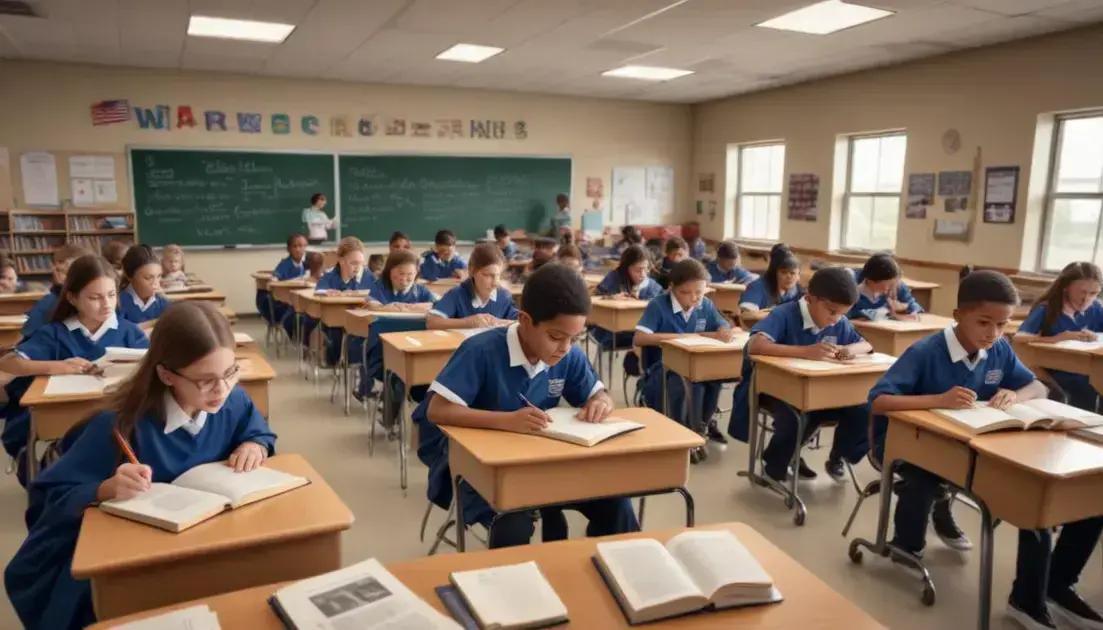
How education built the American superpower
The future of American education is promising, with advancements in technology set to enhance learning experiences. Innovations such as virtual classrooms and a focus on social-emotional learning aim to foster a more inclusive environment. Addressing funding issues and promoting diversity will help bridge existing gaps in educational quality. Ongoing partnerships between schools and communities are crucial for providing resources and support. By prioritizing these areas, we can prepare future generations of students for success in a rapidly changing world.
In understanding how American education transformed into a foundation for global leadership, we unveil the critical role of knowledge in shaping nations. How have these educational systems defined the very fabric of power?
The historical context of American education
The story of American education begins long before the formal schools we know today. It has roots in early colonial times when settlers sought knowledge to improve their lives. Education was often tied to religious beliefs, and churches played a central role in teaching the community.
In the 19th century, the push for public education grew stronger. Reformers like Horace Mann believed that education was a right for every child. They campaigned for free schools funded by taxes. This movement laid the groundwork for the modern education system we have now.
Different groups have influenced education over the years. Immigrant communities brought their languages and cultures, enriching schools across the nation. The Civil Rights Movement also shaped education, pushing for equal access. Landmark cases, like Brown v. Board of Education, aimed to end segregation in schools and promote fairness for all.
Today, American education continues to evolve. It reflects the diverse society we live in. Various programs and policies strive to enhance learning and ensure every child has a chance to succeed. Understanding this history helps us grasp how far we’ve come and the challenges we still face.
Key figures and policies that shaped the system
Many key figures have played a vital role in shaping American education. One of the most notable is Horace Mann. He believed in free public education for all children. His efforts helped establish the idea of schools funded by taxes, making education accessible.
Another important figure is John Dewey. He promoted the idea that learning should be an active and engaging process. Dewey argued that schools should prepare students for real-life challenges, not just teach facts.
Policies also had a significant impact on the education system. The Elementary and Secondary Education Act of 1965 aimed to close the funding gap for schools in poor areas. This act helped provide resources to help all children succeed.
The No Child Left Behind Act, passed in 2001, focused on accountability in schools. It aimed to improve education standards across the nation. While it had good intentions, it faced criticism and revisions for its strict testing requirements.
These figures and policies have left a lasting impact on how we view education today. They have shaped the principles of equity and active learning that guide schools and educators.
The impact of education on global leadership
Education has a strong influence on global leadership. It shapes how leaders think, make decisions, and connect with people. Leaders who are well-educated tend to understand complex issues better. They can analyze situations and develop effective solutions.
In today’s world, education helps leaders build important skills. These include critical thinking, communication, and collaboration. Good leaders can engage with diverse groups and inspire others. They learn to value different perspectives, which is essential in our global society.
Countries that invest in education often become influential on the world stage. Strong education systems can foster innovation and economic growth. Think of nations like Finland, which is known for its excellent schools. They have made a mark internationally by focusing on quality education.
Moreover, education promotes social justice and equality. It empowers individuals to rise and contribute to society. This is vital for creating stable leadership. When people are educated, they are more likely to advocate for their communities and become leaders themselves.
In summary, education is crucial for developing the leaders of tomorrow. It equips them with the tools they need to navigate a complex world and make a positive impact.
Challenges faced by the education system today
The education system today faces many challenges. One major issue is funding. Many schools struggle to get enough money. This leads to larger class sizes and fewer resources for students.
Another challenge is the gap in education quality. Students in different areas experience very different levels of education. Some schools have advanced technology, while others lack basic supplies. This inequality affects students’ learning opportunities and futures.
Teacher shortages also impact the education system. Many teachers leave the profession due to low pay and high stress. Without enough qualified teachers, students may not receive the attention they need.
Standardized testing is another big challenge. While it aims to assess student learning, it can put a lot of pressure on students and educators. Some argue that it doesn’t reflect a student’s true abilities or learning.
Finally, technology’s role in education raises questions. While online learning has its benefits, it can also create challenges. Not every student has access to the internet or devices, putting them at a disadvantage.
Future prospects for American education
The future of American education looks promising yet challenging. Advances in technology are transforming how students learn. Classrooms might soon feature virtual reality and interactive tools. These innovations can make learning more engaging and personalized.
Another trend is a focus on social-emotional learning. Schools are recognizing the importance of mental health. Programs that support students’ emotional well-being can lead to better academic outcomes.
Additionally, there’s a push for more inclusivity. Educators are working toward creating environments that embrace diversity. This means all students, regardless of their background, feel valued and can succeed.
Moreover, education will likely become more flexible. Online learning options provide students with opportunities to learn at their own pace. This flexibility can cater to different learning styles and needs.
Lastly, partnerships between schools and communities are expected to grow. Collaborations can enhance resources and programs in schools. When communities support their local schools, everyone benefits.
Conclusion
In conclusion, the future of American education holds great potential to be both innovative and inclusive. Embracing technology, like virtual classrooms and interactive tools, can make learning more engaging for students. At the same time, focusing on social-emotional learning shows that schools truly care about their students’ well-being.
As we look ahead, creating diverse and flexible learning environments will help all students succeed. Building strong partnerships between schools and communities will also play a vital role in enhancing education. By working together, we can ensure that every student has the resources they need to thrive.
Ultimately, by investing in these areas, we can shape an education system that prepares future generations for success in a rapidly changing world. Let’s continue to support and evolve our education to meet the needs of every learner!