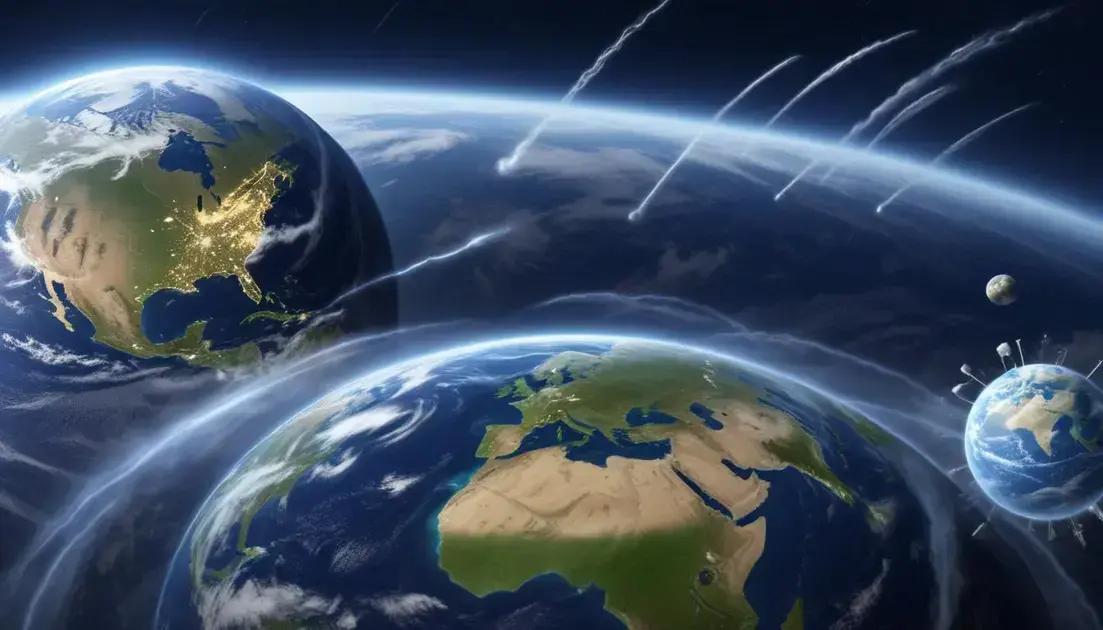
How the U.S. changed weather forecasting forever
The future of weather forecasting is bright, with advancements in satellite technology and artificial intelligence that aim to improve accuracy and personalization. AI helps analyze large data sets, leading to better predictions, while enhanced satellites provide real-time monitoring of weather conditions. As this technology evolves, access to detailed forecasts is becoming easier for the public, allowing for smarter decisions about daily plans and safety during extreme weather events.
Have you ever thought about how weather forecasting has transformed over the years? From simple predictions to sophisticated satellite systems, let’s dive into this exciting evolution.
Impact of satellites on weather predictions
Satellites have changed the way we predict the weather. They float high above our heads, giving us a bird’s-eye view of what’s happening on Earth. With the help of satellites, we can see storms brewing before they hit.
How Satellites Work
Satellites capture images of clouds, rain, and storms. They use special sensors to collect data about temperature and humidity. This information is sent back to Earth, where meteorologists analyze it.
Improved Forecasts
Thanks to satellite technology, our weather forecasts are more accurate than ever. We can predict storms days in advance, which helps keep people safe. It also allows farmers and businesses to plan better.
Real-Time Monitoring
One of the biggest advantages of satellites is real-time monitoring. If a storm is approaching, we can track its movement. This means people can get timely warnings and prepare accordingly.
The Future of Weather Predictions
As technology improves, we can expect even better forecasts. New satellites will have advanced sensors that can provide more detailed information. This means we can better understand climate changes and weather patterns.
In short, satellites are key players in weather predictions. They help us stay safe and inform us about what to expect in the sky above.
Advancements in climate tracking technology
Climate tracking technology has come a long way. It helps us understand changes in our environment. With these advancements, we can see trends over time and make informed decisions.
New Tools for Tracking
Today, scientists use advanced satellite systems and ground sensors. These tools collect data about temperature, precipitation, and humidity. They give us a clearer picture of the climate.
Data Analysis
With powerful computers, we can analyze this data quickly. We can spot patterns and predict future climate changes more accurately. This helps us prepare for extreme weather events.
Collaboration and Sharing
Climate tracking isn’t just for scientists anymore. Many organizations share their data with the public. This means everyone can see what’s happening and understand the changes.
Impact on Policy Making
Accurate climate tracking influences decisions at all levels. Policymakers use this information to create laws and initiatives. This is vital for combating climate change and protecting our planet.
As technology improves, we expect even more precise data. This can lead to better strategies for sustainability and environmental protection.
Future of weather forecasting
The future of weather forecasting looks promising and exciting. New technologies are emerging every day. These advancements help improve our ability to predict weather events with more accuracy.
Emerging Technologies
One major trend is the use of artificial intelligence. AI can analyze vast amounts of data quickly. It helps meteorologists make better forecasts and identify patterns more easily.
Better Satellite Capabilities
New satellites are being developed with better sensors. These sensors can measure weather conditions in real-time. This allows for faster updates and more reliable forecasts.
Public Access to Data
The future also includes more accessible weather data for everyone. Apps and websites provide real-time updates. This means you can plan your day better with up-to-the-minute information.
Personalized Forecasts
As technology advances, weather forecasts will become more personalized. You could receive alerts tailored to your specific location and needs. This makes it easier to stay prepared for sudden changes in weather.
In summary, the future holds many exciting possibilities for weather forecasting. These improvements will help keep us informed and safe from unpredictable weather events.
Conclusion
In conclusion, the advancements in weather forecasting technology, such as AI-driven predictions and real-time satellite data, are changing how we understand weather patterns. These innovations help us prepare for storms and other weather events with greater accuracy.
As more people gain access to detailed and personalized weather information, we can make smarter decisions about our daily lives. Being informed means we can stay safe and adapt to our surroundings better. Overall, the future of weather forecasting brings exciting possibilities that will benefit us all.