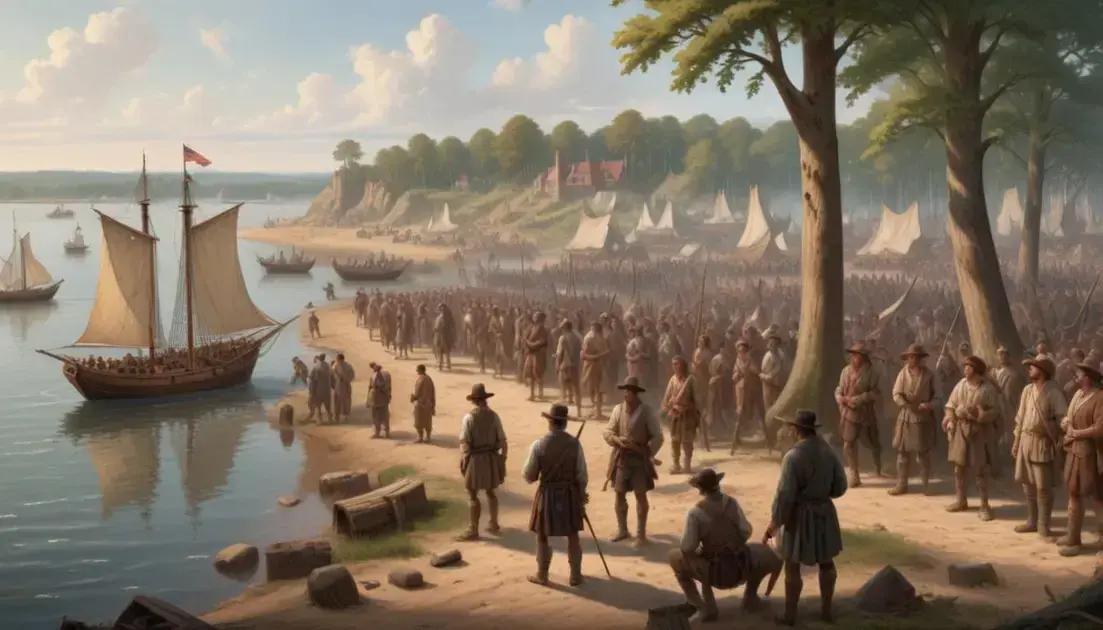
Jamestown: the first permanent English settlement
The Jamestown settlement, founded in 1607, was the first permanent English colony in North America. It marked the start of English colonization and introduced concepts of self-governance through the establishment of the House of Burgesses. Despite facing severe hardships, such as food shortages and conflicts with Native Americans, the settlers cultivated tobacco, which became a vital cash crop. Jamestown’s legacy includes lessons in resilience, cultural interaction, and the foundations of democracy that continue to impact American society today.
Have you ever wondered about the significance of Jamestown? This fragile colony represents the first permanent English settlement in America, marking a crucial chapter in history. Let’s unravel the stories behind its establishment and the enduring impact it has on us today!
The founding of Jamestown
The founding of Jamestown in 1607 marked a key moment in American history. This settlement became the first permanent English colony in North America. It was named after King James I of England. The Virginia Company sponsored the expedition, hoping to find gold and other resources.
When the settlers arrived, they faced many challenges right away. The location was not ideal. Swampy land made it hard to grow food, and the group struggled with illnesses, like fever and dysentery. Many settlers did not survive the first winter.
Despite these hardships, the colonists managed to establish trade with local Native American tribes, like the Powhatan Confederacy. Relations were complex, at times friendly and at other times fraught with tension. This trade was vital for their survival.
One of the key figures in Jamestown’s early years was Captain John Smith. He encouraged the settlers to work together and learn from the local people. His leadership helped stabilize the colony during its toughest times.
In 1608, the arrival of more settlers gave Jamestown a boost. New supplies and support helped the colonists grow tobacco, a cash crop that would become very important in the years to come. This marked the beginning of an economic foundation for the settlement.
Overall, the founding of Jamestown set the stage for future colonies and shaped English settlement in America. It laid the groundwork for a new society that would continue to evolve and grow.
Life in the colony
Life in the Jamestown colony was tough but full of adventures. The settlers had to learn quickly how to survive in a new land. They faced many challenges, like starvation and illness. The colony was initially focused on finding gold, but soon they realized they needed to grow food.
Food was scarce at times. The settlers faced hunger, especially during the first two years. They planted crops like corn, beans, and squash to survive. These crops were important to their daily meals and helped keep them alive.
Relationships with Native Americans were vital for survival. The Powhatan Confederacy, which included many tribes, played a key role. They taught the settlers how to farm and hunt. They also traded goods like food and furs with the colonists.
The settlers’ homes were simple. They built small wooden houses and often shared their space with others. Life was communal, and everyone had to pitch in. Each person had duties, from farming to cooking, to keep the colony running.
As time went on, some settlers tried their hand at new skills. They became artisans, making tools, clothes, and furniture. This helped the colony develop a more stable economy.
The hard life in the colony shaped its history. Despite the struggles, the settlers learned resilience and independence. These qualities became part of their identity, helping them grow into a society that would influence future generations.
Struggles and triumphs
The Jamestown colony faced many struggles from the start. The early settlers battled food shortages and diseases. Many colonists fell ill and died in the harsh conditions. The winter of 1609-1610 was especially brutal. It is now known as the “Starving Time.” During this period, some settlers even resorted to extreme measures to survive.
Despite these hardships, there were also moments of triumph. The leadership of Captain John Smith played a key role in their survival. He urged everyone to work hard and learn from the native peoples. His approach helped keep the colony afloat during dangerous times.
Over time, relationships with local Native Americans changed. Initially, they provided much-needed help. Eventually, tensions rose due to land disputes and broken promises. These conflicts led to violence, but they also showed the settlers’ determination to adapt and persevere.
In 1612, a new triumph occurred when settlers began to grow tobacco. This crop thrived in Virginia’s soil and became a valuable cash crop. Tobacco farming changed the colony’s economy and brought in more settlers.
Throughout the years, the struggles and triumphs of the Jamestown colony shaped its future. Each challenge they faced taught them important lessons. Their resilience paved the way for future colonies and the growth of a new nation.
Legacy of Jamestown
The legacy of Jamestown is significant in American history. It was the first permanent English settlement in North America. This marked the beginning of English colonization and expansion in the New World.
One of the most important aspects of Jamestown’s legacy is its role in establishing self-governance. The House of Burgesses, formed in 1619, was the first elected legislative assembly in America. This development laid the groundwork for democratic governance in future colonies.
Jamestown also played a key role in shaping trade and economy. The success of tobacco farming turned it into a major cash crop. This attracted more settlers and increased trade with England. Tobacco farming would later play a huge role in the economy of the Southern colonies.
The interactions between the settlers and Native Americans significantly impacted both cultures. The relationships, both friendly and hostile, shaped the landscape of early colonial life. These interactions led to both collaboration and conflict, influencing future relations between Europeans and Native Americans.
Lastly, the struggles and triumphs of the Jamestown settlers are a testament to human resilience. Their stories of survival against the odds still inspire people today. The challenges faced by these early colonists reflect a spirit of determination that is part of America’s identity.
Modern significance
The modern significance of Jamestown is important for many reasons. As the first permanent English settlement, it set the stage for future colonization. Today, it symbolizes the spirit of adventure and the challenges faced by early settlers.
Jamestown reminds us of the importance of self-governance. The formation of the House of Burgesses was a step towards democracy. This idea of elected representatives continues to influence how we view government today.
Moreover, Jamestown highlights the complexities of cultural interactions. The relationships between settlers and Native Americans show both cooperation and conflict. Understanding these interactions helps us learn from history and promotes better relationships today.
Economically, the success of tobacco farming shaped the agricultural landscape of the United States. Jamestown’s farming practices set a standard that would guide future agricultural methods. This legacy can still be seen in the farming industry today.
Finally, Jamestown’s story of survival and resilience is an inspiring tale. It teaches us about persistence in the face of hardship. The challenges faced by the settlers provide valuable lessons about adaptability and determination that still resonate today.
Conclusion
In conclusion, the story of Jamestown teaches us important lessons about perseverance and adaptability. This first permanent English settlement laid the groundwork for democracy, trade, and cultural interactions in America. The struggles and triumphs of its settlers remind us of the spirit that built this nation.
Today, Jamestown’s legacy continues to influence our views on governance and community. It shows how relationships with different cultures can be both challenging and enriching. This history is a crucial part of understanding who we are as a nation.
As we reflect on Jamestown, let us remember the values of resilience and cooperation. These lessons are just as important now as they were in the past. By learning from this chapter in history, we can face our own challenges with the same spirit of determination.
Tags: