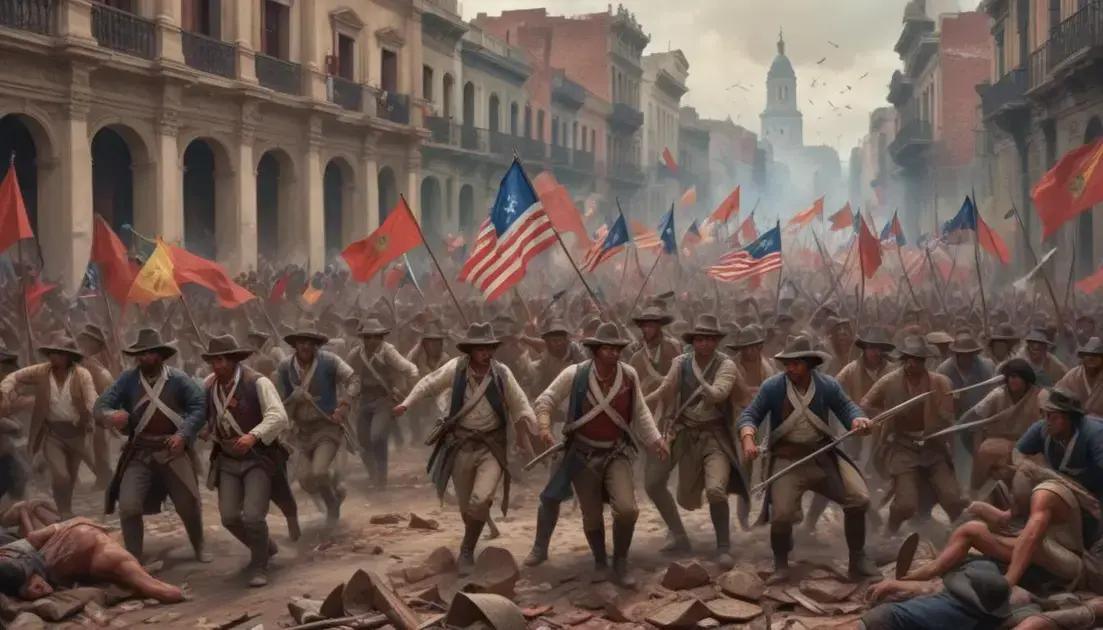
Latin America Between Revolutions and Dictatorships
The historical conflicts in Latin America, including struggles for independence and the rise of dictatorships, have shaped modern political and social issues in the region. The legacy of foreign interventions has created lasting challenges related to inequality, trust in government, and social justice. Understanding these dynamics is crucial for grasping the complexity of contemporary Latin American politics.
Latin America is a tapestry woven with stories of revolution and oppression, where conflicts backed by foreign powers have defined the course of history. Dive in to uncover the rich and tumultuous past that continues to influence present-day politics.
The impact of colonialism on Latin American revolutions
The impact of colonialism on Latin American revolutions is profound. Colonial powers, mainly Spain and Portugal, established strict controls over resources and governance. This created deep social divides and resentment among local populations. Many colonies were rich in natural resources, but the wealth primarily benefited the colonizers.
Throughout the 19th century, these injustices sparked desires for independence. Leaders emerged, inspired by Enlightenment ideas and successful revolutions from other parts of the world. Figures like Simón Bolívar and José de San Martín led movements that challenged colonial rule.
The cries for freedom often intertwined with social justice. The exploitation of indigenous people and African slaves was a common grievance. As revolutions unfolded, these leaders aimed not only for independence but also for a fairer society.
By understanding this impact, we see how colonialism did not just shape the struggle for independence. It also laid the groundwork for the complex social and political issues that many Latin American countries face today.
Key revolutions in Latin America
Key revolutions in Latin America have shaped the region’s identity. The most notable of these revolutions include the Haitian Revolution, the Mexican War of Independence, and the South American wars led by Bolívar. Each of these events had its own causes and outcomes.
The Haitian Revolution (1791-1804) was significant as it was the first successful slave uprising. It set the stage for future revolutions in the Americas. The Mexican War of Independence (1810-1821) was led by figures like Miguel Hidalgo. This revolution fought against Spanish rule, resulting in Mexico gaining its freedom.
Simón Bolívar became an important leader in South America. He fought for independence in countries like Venezuela, Colombia, and Peru. His efforts led to the formation of Gran Colombia, uniting several nations for a brief time.
These revolutions were crucial in challenging colonial powers. They inspired new movements and showed that people could unite for freedom. Many Latin American countries still feel the impact of these historical events today.
The role of foreign powers in Latin American politics
The role of foreign powers in Latin American politics has been significant over the years. Throughout history, countries like the United States and European nations have influenced the region. Their interests often shaped local governments and policies.
In the 19th and 20th centuries, foreign powers intervened in numerous Latin American countries. These interventions often aimed to protect economic interests or promote political agendas. For example, the U.S. backed coups in countries like Chile and Guatemala. This created long-lasting effects on the political landscape.
The Cold War intensified these interventions. The U.S. wanted to prevent the spread of communism. This led to support for dictatorships that aligned with its interests. Unfortunately, this often came at the cost of democracy and human rights in the region.
Even today, foreign powers remain involved. They influence trade agreements, military aid, and diplomatic relations. Understanding this history is vital for grasping current political dynamics in Latin America.
The emergence of dictatorships in the region
The emergence of dictatorships in Latin America followed the struggles for independence. After countries gained freedom, many faced instability. Leaders often promised change, but sometimes they took power by force.
During the 20th century, a wave of dictatorships swept through the region. These leaders often ruled with an iron fist. They suppressed dissent and limited freedoms. Countries like Argentina, Chile, and Brazil experienced brutal regimes.
Many dictators justified their actions by claiming they were fighting against communism. The Cold War era saw significant U.S. support for some of these leaders. This support often came at the expense of local democracy and human rights.
Over time, public resistance grew against these oppressive regimes. Citizens demanded democracy and more rights. Movements emerged to challenge the status quo and to restore democratic governance.
Today, the legacy of these dictatorships still affects many nations. Understanding this history is crucial for addressing ongoing political challenges in the region.
Modern implications of historical conflicts
Modern implications of historical conflicts in Latin America are significant. The struggles of the past continue to affect people today. Many political and social issues trace back to these historical conflicts.
For instance, the civil wars and revolutions led to deep divisions within societies. These divisions can still be seen in current political debates. Issues like inequality and social justice remain hot topics.
Furthermore, the legacy of dictatorships from the past influences governments today. Many citizens still feel the impact of authoritarian rule. Trust in government institutions is often low due to historical abuses.
Additionally, foreign interventions have left a lasting mark. Countries that experienced outside meddling struggle with sovereignty and self-determination. The effects of such actions can lead to resentment and distrust toward foreign powers.
It’s clear that history shapes modern identity in Latin America. Understanding these implications helps us grasp the complex challenges faced by these nations today.
Conclusion
In conclusion, understanding the historical conflicts in Latin America is crucial for grasping today’s challenges. The struggles for independence, the rise of dictatorships, and outside influences have shaped the region’s political landscape. These events left a legacy that affects social justice, inequality, and trust in government.
As we look at modern Latin America, it’s clear that the past still influences the present. By learning from history, we can better understand the complexities of these nations. Recognizing these connections is essential for anyone interested in the region’s future and its ongoing quest for democracy and equality.