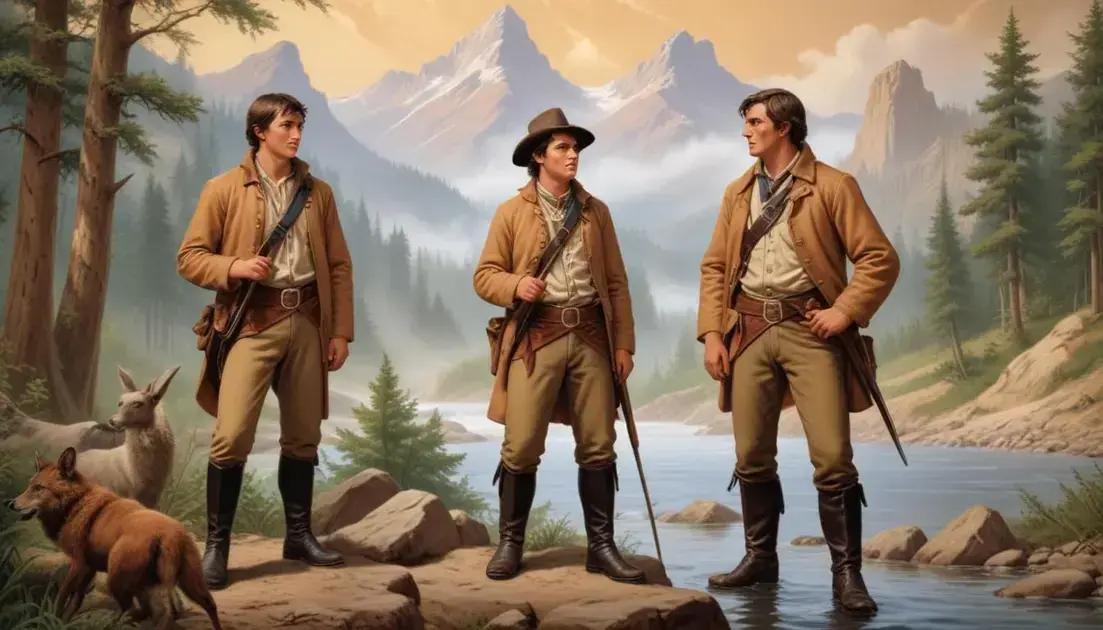
Lewis & Clark: exploring America’s new frontier
The Lewis & Clark Expedition, launched in 1804, played a pivotal role in American history by mapping uncharted territories and fostering relationships with Native American tribes. This journey revealed the vast resources of the West and served as a guide for future explorers. The expedition’s detailed observations helped expand knowledge of the region’s geography and cultures, influencing westward expansion and shaping the nation’s identity.
Lewis & Clark embarked on a groundbreaking journey that not only mapped uncharted territories but also unveiled diverse cultures along the way. Curious about what they discovered? Let’s dive into the adventure!
Introduction to the Lewis & Clark Expedition
The Lewis & Clark Expedition began on May 14, 1804. President Thomas Jefferson organized this journey. His goal was to explore the lands acquired from the Louisiana Purchase. The journey aimed to map the territory and find a water route to the Pacific Ocean.
Lewis, an army captain, led the mission. He chose William Clark as his co-leader. They set out with a team called the Corps of Discovery. This team included soldiers, boatmen, and skilled hunters.
Traveling by river, the group faced many challenges. They navigated through rough terrains and harsh weather. Moreover, they met various Native American tribes along the way. The expedition played a vital role in understanding the cultures and geography of the lands.
Throughout their journey, Lewis and Clark documented their experiences. They noted the plants, animals, and landscapes they encountered. Their reports provided valuable insights into the West.
Significance of the Journey
The Lewis & Clark Expedition holds great significance in American history. This journey was the first to explore the vast lands of the West. It opened the door to westward expansion and new opportunities.
The findings from the expedition changed how Americans viewed the country. Lewis and Clark mapped new routes and documented landscapes. Their work showed the rich resources available in the West.
This journey also helped people understand diverse Native American cultures. The expedition members interacted with many tribes. They learned about their customs and lifestyles.
Additionally, the expedition laid the groundwork for future exploration. It inspired others to travel west. Many pioneers followed the paths they created in search of new homes and fortunes.
In essence, the significance of the Lewis & Clark journey goes beyond maps. It symbolizes adventure, discovery, and the spirit of exploration.
Challenges Faced
The Lewis & Clark Expedition faced many challenges during their journey. First, they had to travel through unfamiliar and rugged terrain. Hills, rivers, and forests often slowed their progress.
Weather played a big role too. They dealt with rain, snow, and extreme heat. These conditions made it tough to keep their supplies dry and safe.
Another challenge was finding food. The team had to hunt and fish to survive. They faced shortages, especially in winter. This forced them to rely on Native American tribes for help.
Communication barriers also existed. Many Native American tribes spoke different languages. This made it hard to build friendships and share information.
Lastly, the group had to manage conflicts. They encountered hostile tribes and had to navigate these tense situations. Despite these obstacles, the expedition pushed forward and achieved remarkable goals.
Cultural Encounters
The Lewis & Clark Expedition included many cultural encounters that shaped their journey. As they traveled west, they met various Native American tribes. Each tribe had its own customs, beliefs, and languages.
One of the first tribes they encountered was the Mandan. The Mandan welcomed the explorers and provided them with food and shelter. This friendship was crucial for the team to rest and gather supplies.
Along the way, Lewis and Clark learned important skills from these tribes. They discovered how to hunt local animals and find edible plants. These skills helped them survive in the wilderness.
While most encounters were positive, some were tense. Misunderstandings and cultural differences sometimes led to conflicts. The explorers had to be careful and respectful to keep peace.
Overall, these encounters enriched the expedition. They allowed Lewis and Clark to document cultures and share stories of their experiences with the world.
Mapping New Territories
During the Lewis & Clark Expedition, mapping new territories was a key goal. This journey took them through uncharted lands in the West. The maps created during this expedition were vital for future explorers.
Lewis and Clark used different tools to help with mapping. They had compasses to find directions and sextants to measure angles. These tools helped them understand the geography of new lands.
They carefully noted rivers, mountains, and plains as they traveled. Each landmark was recorded to create a detailed picture of the area. This information was crucial for anyone traveling west in the future.
The journey also revealed important routes. The maps showed how to move through difficult terrains, which was useful for settlers and traders later on.
This mapping effort changed how people viewed the American landscape. It opened doors for expansion and exploration that followed.
Legacy of the Expedition
The Lewis & Clark Expedition left a lasting legacy on America. Their journey changed the way people viewed the western lands. Before the expedition, much of the West was a mystery. Afterward, it became known and mapped.
One major impact was on future exploration. Their maps and notes guided later pioneers and settlers. This opened the doors for westward expansion, leading to the growth of new towns and farms.
Also, the expedition helped people understand Native American cultures. Lewis and Clark documented their interactions and relationships with various tribes. This information educated many Americans about the diverse cultures that existed in the West.
Moreover, their findings sparked interest in the natural resources of the region. The expedition highlighted the rich lands and wildlife. This interest led to more exploration and exploitation of these resources in the years that followed.
Lastly, the expedition is celebrated in American history. It symbolizes adventure, exploration, and the quest for knowledge.
Conclusion
In conclusion, the Lewis & Clark Expedition played a crucial role in shaping American history. Their journey opened up the West and revealed new lands and cultures. With their detailed maps and observations, they helped others explore the vast territories that lay ahead.
Their experiences with Native American tribes enriched our understanding of the diverse cultures in America. The expedition’s legacy inspires future generations to value exploration and adventure. It shows us the importance of curiosity and the desire to discover the unknown.
As we reflect on their journey, we can appreciate the challenges they faced and the knowledge they gained. The lessons learned during this historic expedition continue to influence how we view our nation and its rich history.